The AAUP's 2026 "Faculty in the South" survey finds growing fear among Southern college faculty for their safety and careers amid an escalating conservative campaign targeting higher education. About 59.4% of respondents would not recommend their state as a workplace and 19.1% do not plan to remain in academia long-term. Top concerns are state political climate (63%), threats to academic freedom (61.3%), and salary (50.9%), and the survey includes firsthand accounts of classroom intimidation and threats.
Southern College Faculty Report Rising Threats and Career Uncertainty Amid GOP-Led Culture War
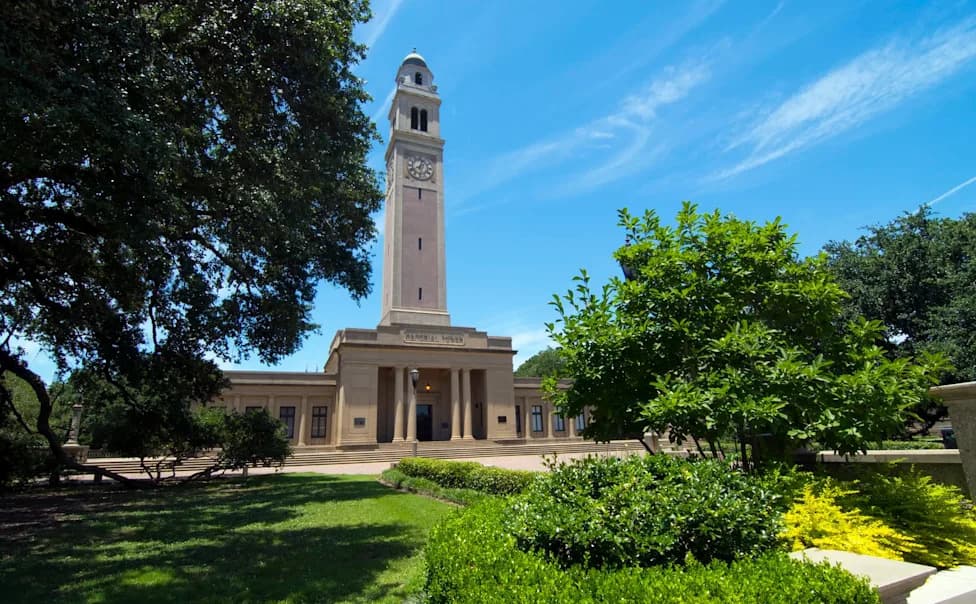
Louisiana State University Memorial Tower in Baton Rouge.
The conservative campaign against higher education has raised the threat level for college faculty, especially across the American South, where efforts to reshape curricula and campus policy have intensified. New data from the American Association of University Professors' (AAUP) 2026 "Faculty in the South" survey show a notable rise in instructors who say they fear for both their personal safety and their professional futures.
Survey Findings
The AAUP poll, which gathered responses from faculty at institutions in Alabama, Arkansas, Florida, Georgia, Kentucky, Louisiana, Mississippi, North Carolina, Oklahoma, South Carolina, Tennessee, Texas and Virginia, documents growing concern about the political climate on campus. Roughly 59.4% of respondents said they would not recommend their state as a desirable place to work for colleagues or graduate students—an increase of about five percentage points from the prior year. Nearly one in five (19.1%) reported that they do not plan to remain in academia long term.
Top Drivers Of Disillusionment
According to Matthew Boedy, AAUP president in Georgia, the three leading reasons faculty cited for their disillusionment were the state's broad political climate (63%), threats to academic freedom (61.3%), and salary concerns (50.9%). More respondents cited political climate and academic freedom in 2026 than in 2025 (56.6% and 45.4%, respectively). Issues tied to diversity, equity and inclusion (DEI) and shared governance also ranked among the top five concerns.
Firsthand Accounts Of Intimidation
The survey included open-ended responses in which faculty described escalating pressure and, in some cases, direct threats. One professor in North Carolina reported:
I teach a subject that is now considered 'controversial.' As a result, I have had a non-student with a gun enter my classroom to intimidate me. I have received an email death threat from a student.
Reports like this illustrate that concerns are not only about professional consequences but also about physical safety for instructors and students.
Political Context
Conservative leaders, including President Donald Trump and Vice President J.D. Vance, have publicly characterized some universities and campus employees as hostile to their political aims. The administration has pursued policy initiatives aimed at influencing K–12 and higher-education curricula and oversight, and several Republican-led Southern states have enacted laws and policies critics say are intended to reshape campus demographics, restrict academic programming, or curtail DEI efforts.
Implications
Faculty attrition, growing reluctance to recommend Southern states as places to work, and rising reports of intimidation could have longer-term effects on recruitment, academic freedom and the quality of higher education in affected states. The AAUP data suggest that the ongoing culture war over curriculum and governance is contributing to a more hostile environment for many educators in the region.
Reporting referenced: American Association of University Professors (AAUP) 2026 "Faculty in the South" survey and coverage by the Louisiana Illuminator.
Help us improve.