Scientists have formally described a new tiny marsupial, Planigale petrophila, after combining genetic analyses with a re-examination of museum specimens. Known from only three specimens — two from Kakadu and one collected in the 1970s — the species appears to be a rock‑plateau specialist restricted to West Arnhem Land. Distinctive features include very long tails, unusually flat heads, and dark grey fur, and the animal may be rare enough to warrant threatened status pending a formal conservation assessment.
New Tiny Marsupial, Planigale petrophila, Identified From Museum Specimens — A Rare Rock‑Plateau Specialist
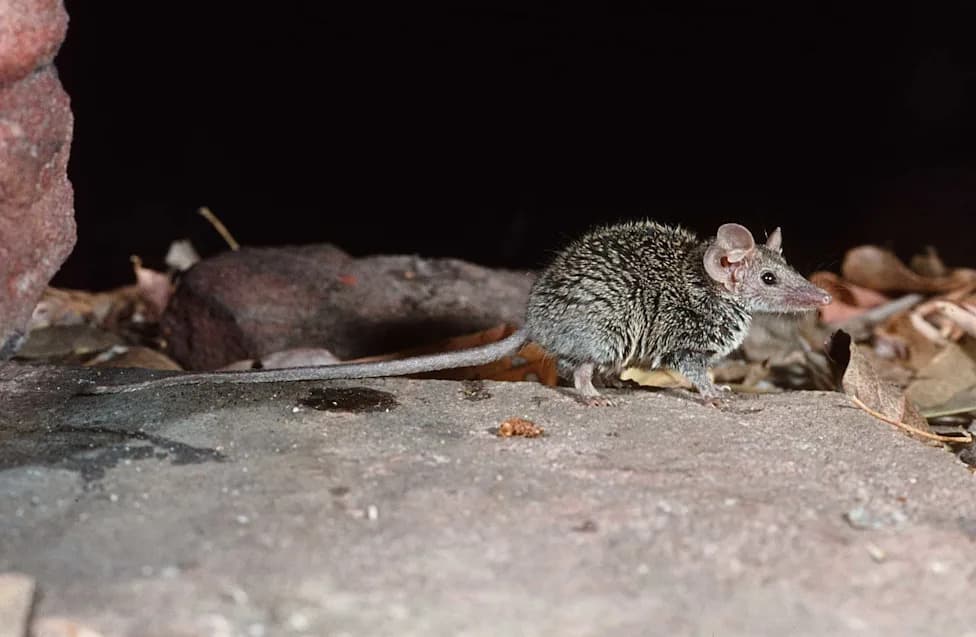
Planigale petrophila © Pat Woolley© Planigale petrophila © Pat Woolley
Even in a country celebrated for its unusual wildlife, scientists continue to uncover new species — sometimes not in the field but in museum drawers. That is the case for Planigale petrophila, a diminutive carnivorous marsupial recently described from the sandstone plateaus of northern Australia. Its discovery, decades in the making, highlights how much remains unknown about Australia’s fauna.
How the Species Was Discovered
Research Associate Dr. Linette Umbrello of the Western Australian Museum led a team that conducted the first broad genetic assessment of Australia’s carnivorous marsupials. The project, building on work that began in the 1990s and funded by the Australian Biological Resources Study in 2021, combined genetic sampling across the continent with careful re-examination of museum specimens.
“We obtained many genetic samples from all planigale species across Australia, which gave us more power to detect the different lineages and to identify where they occurred,” Dr. Umbrello said. “We didn't find any other individuals that were genetically the same as the two Kakadu samples. This indicated that the undescribed species was likely to be quite rare.”
What Makes Planigale petrophila Distinct
The team re-examined two specimens at the Museum and Art Gallery of the Northern Territory and identified clear morphological differences from other northern planigales: unusually long tails, particularly long and very flat heads, and darker grey fur compared with the browner, paler-bellied relatives. After recognizing these traits, researchers located a third specimen in the Queensland Museum collected from the same Kakadu location in the 1970s.

Dr. Linette Umbrello of the Western Australian Museum worked with a pioneering team to examine, for the first time, the genetic relationships among Australia's carnivorous marsupial species.©Dr Linette Umbrello © Western Australian Museum –Original/License
Ecology and Habitat
Most planigales inhabit flat, cracked clay plains where they shelter in deep soil fissures. By contrast, Planigale petrophila is only known from rocky plateaus on the West Arnhem Land escarpment (Kakadu region) and appears to be a habitat specialist, probably sheltering beneath slabs of sandstone. This rocky plateau specialization suggests the species may be endemic to the Arnhem Escarpment, joining other mammals and reptiles restricted to that landscape.
Biology and Conservation Concerns
Only three museum specimens are currently known, so much about the species remains unknown. By analogy with related planigales, researchers suspect Planigale petrophila is a nocturnal, generalist insectivore that preys on small invertebrates. Reproductive biology is unrecorded, but related species produce roughly 6–12 young and often live about two years in the wild.
Because the species is genetically distinct and known from so few specimens, the team suspects it could be rare and may qualify for threatened status. Northern Australia has experienced alarming mammal declines, including within Kakadu National Park, and researchers will undertake a formal conservation assessment to determine whether the species should be listed on the IUCN Red List.
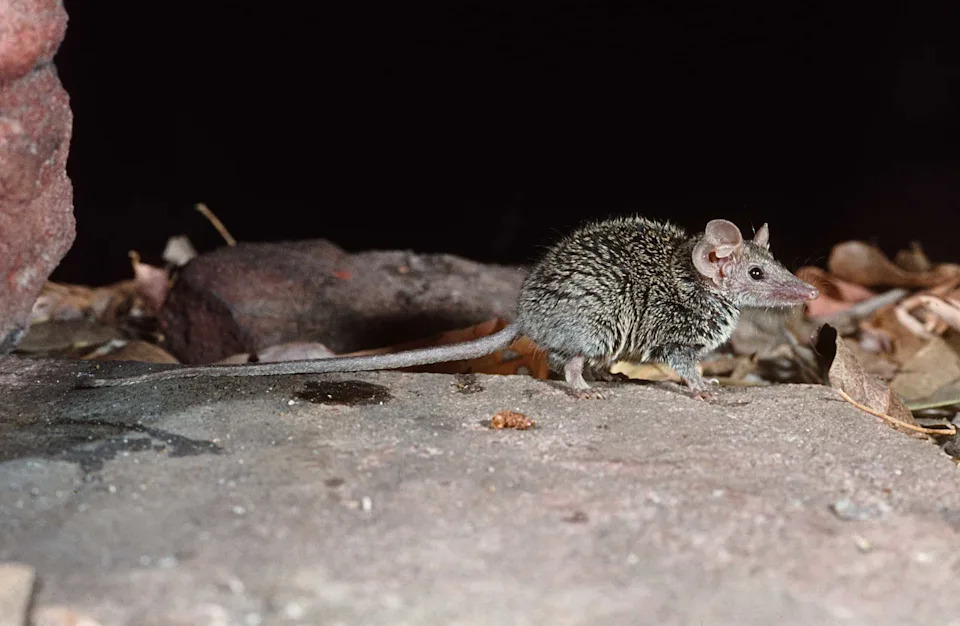
Planigale petrophilaturned out to be a distinct species, not just a local variation.©Planigale petrophila © Pat Woolley –Original/License
The Importance of Museum Collections
This discovery underscores the value of museum collections. Without the preserved specimens in multiple institutions, Planigale petrophila might still be undescribed. Museum archives also solved other taxonomic puzzles during the study: with curator assistance, the team confirmed Kimberley planigales matched the historic specimen of Planigale subtilissima rather than Planigale ingrami, demonstrating how collections preserve vital reference material for biodiversity research.
Next Steps
Researchers plan targeted surveys on the Arnhem Escarpment to search for living populations, document habitat requirements and natural history, and complete a formal conservation assessment. These steps will be critical for understanding the species’ status and informing any protective measures.
Bottom line: Planigale petrophila is a newly described, likely habitat-specialist planigale known from only three museum specimens. Genetic data and morphology confirm it as a distinct, potentially rare species restricted to rocky plateaus of West Arnhem Land; further fieldwork and conservation assessment are urgent.
Help us improve.