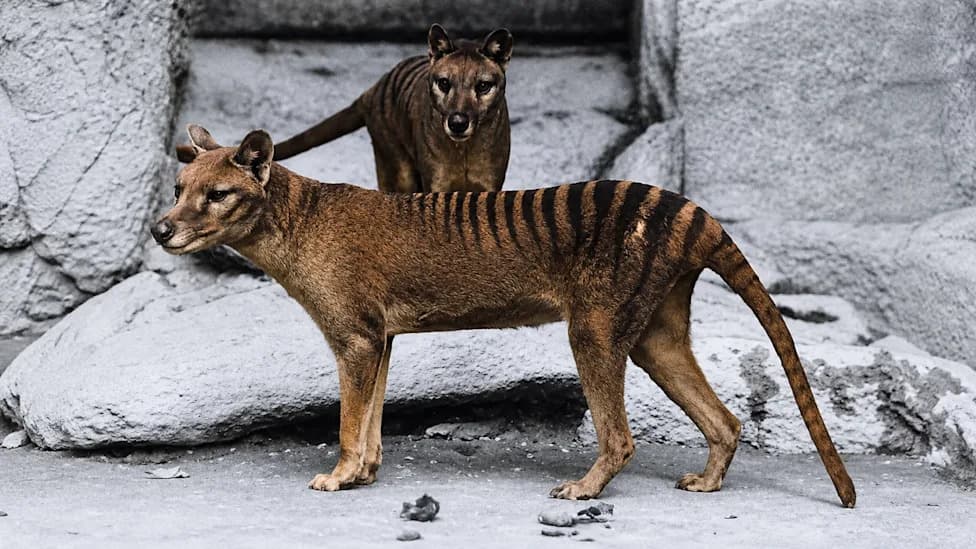
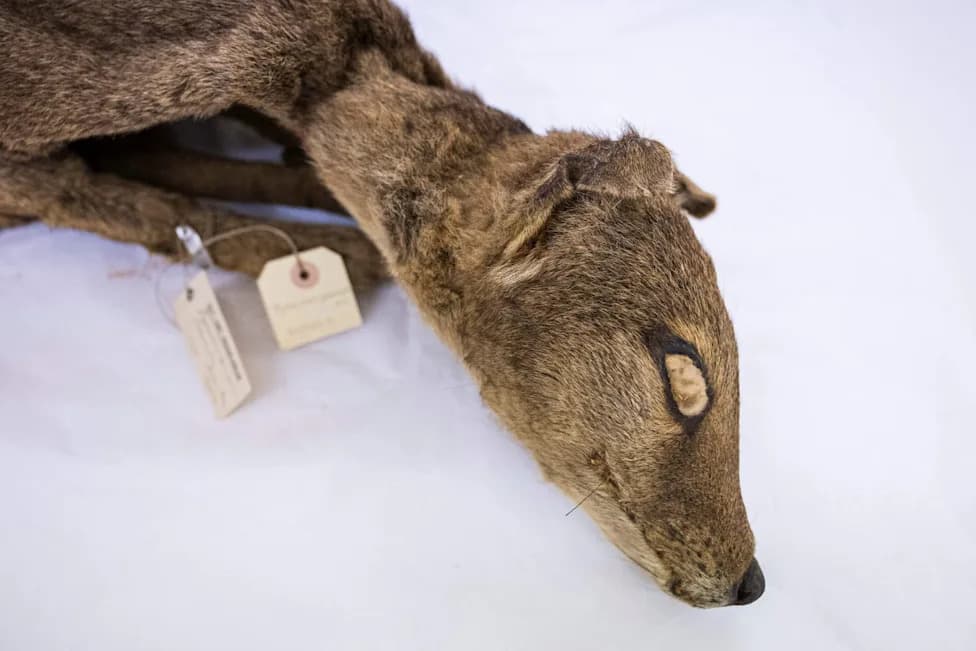
Key finding: A new study shows the thylacine had a very large skull and an elongated upper jaw that amplified bite speed and impact at the jaw tip—adaptations suited to catching small, fast prey rather than subduing large animals. Though it resembled wolves in silhouette, the thylacine was a marsupial closely related to kangaroos. The species vanished from mainland Australia about 2,000 years ago and survived on Tasmania until 1936. Researchers say reexamining thylacine biology can improve understanding of past extinctions and guide conservation of threatened marsupials.
New Study Recasts The Thylacine: Large Skull, Slender Snout—Built For Small, Agile Prey
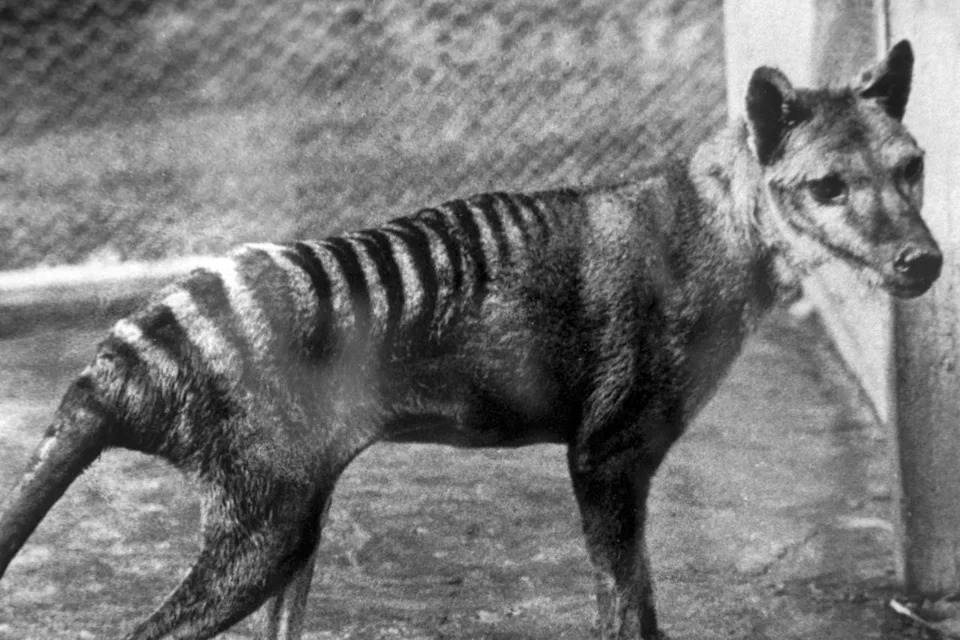
A photo of a Tasmanian tiger.Credit: Dave WATTS/JACANA/Gamma-Rapho via Getty
A recent study revisits the biology of the thylacine (commonly called the Tasmanian tiger) and finds its skull and jaw were adapted for fast, powerful bites aimed at small, agile prey rather than the sustained grappling typical of large-wolf predators.
Skull Shape and Feeding Style
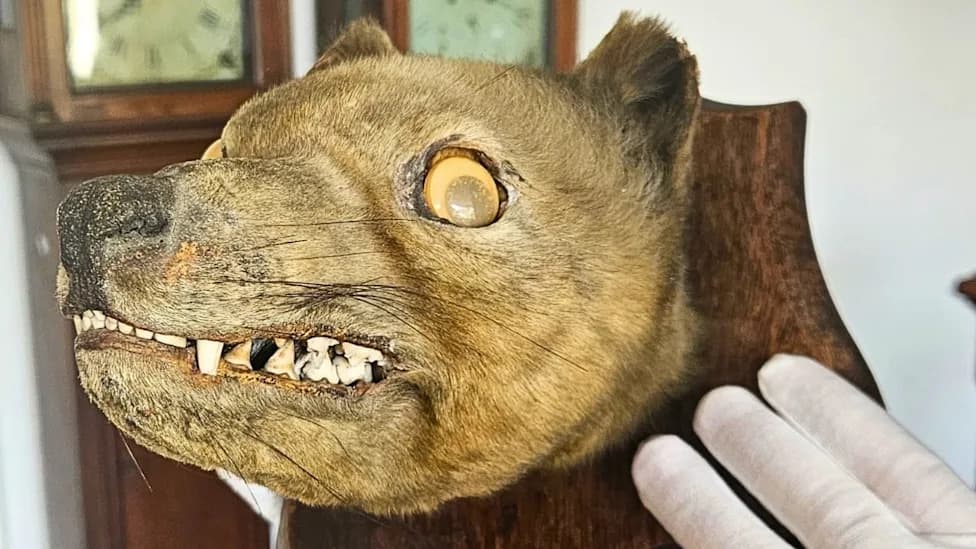
Researchers describe the thylacine as having an unusually large skull — "far larger than all but the grey and maned wolves" — but paired with a long, slender snout and an elongated upper jaw. According to the team, these proportions would increase the speed and impact at the jaw tip, making the animal especially effective at striking quick, compact prey such as bandicoots and rabbit-sized marsupials.
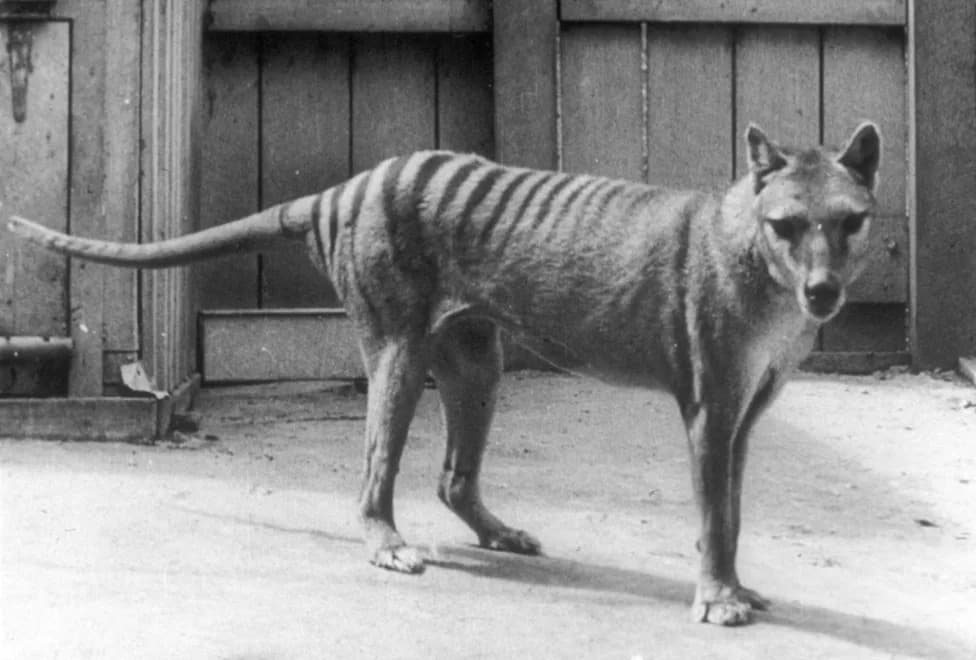
A photo of a Tasmanian tiger at the Hobart Zoo in Tasmania in 1928.Credit: Hugh Clark/imageBROKER/Shutterstock
"The longer a jaw is, the faster its tip moves when an animal bites. This increases the impact of the strike," said Dr. Vera Weisbecker, the study's lead author. She added that the thylacine's large skull likely helped it withstand these concentrated bite forces.
Appearance Versus Function
Although thylacines looked superficially wolf-like, co-author Dr. Douglass Rovinsky emphasized that the skull proportions were not those of a robust large predator. "Its snout was long and slender, almost delicate — not robust like the snout of a grey wolf. It very much looks like the snout of a fox or jackal," he said, underlining that similar silhouettes can hide very different feeding strategies.
Independent experts, including evolutionary genomics professor Love Dalén, have endorsed these interpretations, noting the morphology supports a hunting style focused on speed and precision rather than overpowering large prey.
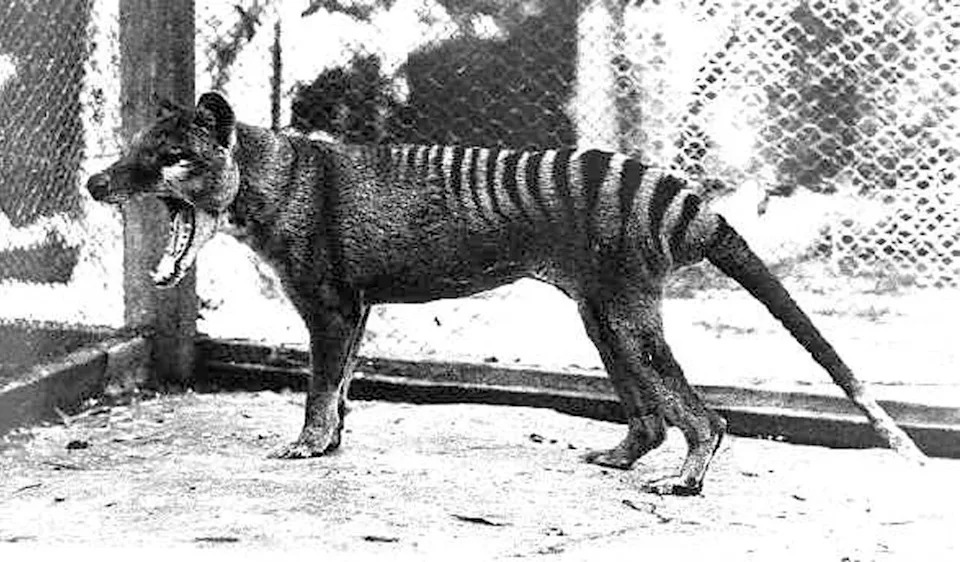
A photo of a Tasmanian tiger.Credit: John Carnemolla/Corbis/Getty
Evolutionary Context And Extinction
The thylacine was a marsupial more closely related to kangaroos than to placental carnivores like dogs. Fossil records indicate the species disappeared from mainland Australia about 2,000 years ago and persisted on Tasmania until human pressures reduced its numbers. The last known thylacine died in captivity in 1936 at Beaumaris Zoo in Hobart.
Claims that thylacines regularly preyed on sheep and poultry after European colonization are now considered likely exaggerated. Photographs and cultural perceptions helped cement that reputation; colonists often judged unfamiliar Australian fauna by analogy to European species, which contributed to bounty-driven persecution.
Why This Matters
Studying thylacine anatomy and ecology helps researchers better understand past extinctions and informs conservation strategies for threatened Australian marsupials. As Dr. Weisbecker notes, Australia has lost more mammal species than any other country, and a substantial share of its marsupials remain at risk.
Sources: The study described by CNN and coverage in People; contextual information from the Australian Museum and conservation institutions.
Help us improve.