Bear #910’s adoption of her sister’s yearling in late 2022 created an uncommon blended family at Katmai, where sisters taught their combined litters to fish through 2023. A study of the group was published in BioOne in 2025. The adopted Bear #609 (Bean) and cousin #620 are now independent, offering researchers a rare chance to observe their development — even as the season included tragic infanticide events that highlight the risks young cubs face.
Katmai’s ‘Brady Bunch’ Bears Grow Up After Rare Wild Adoption
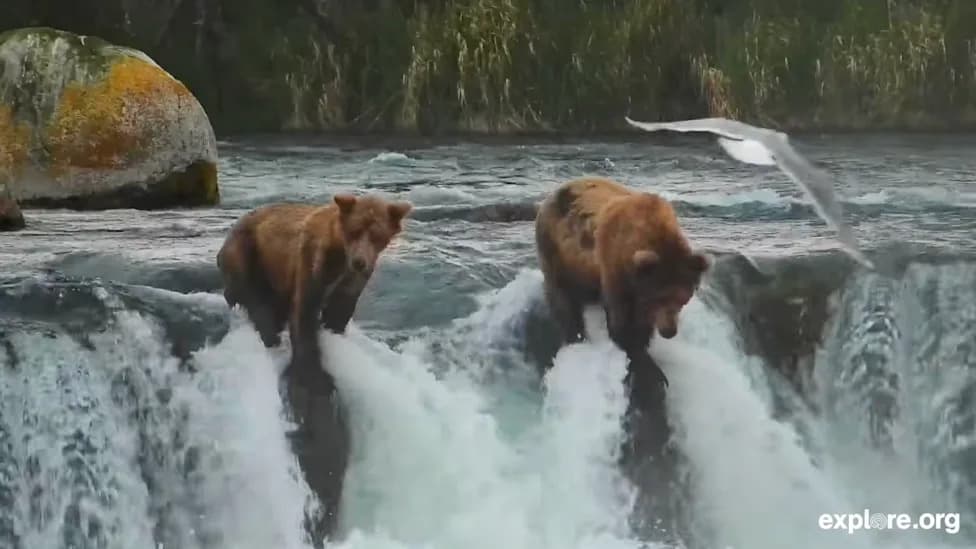
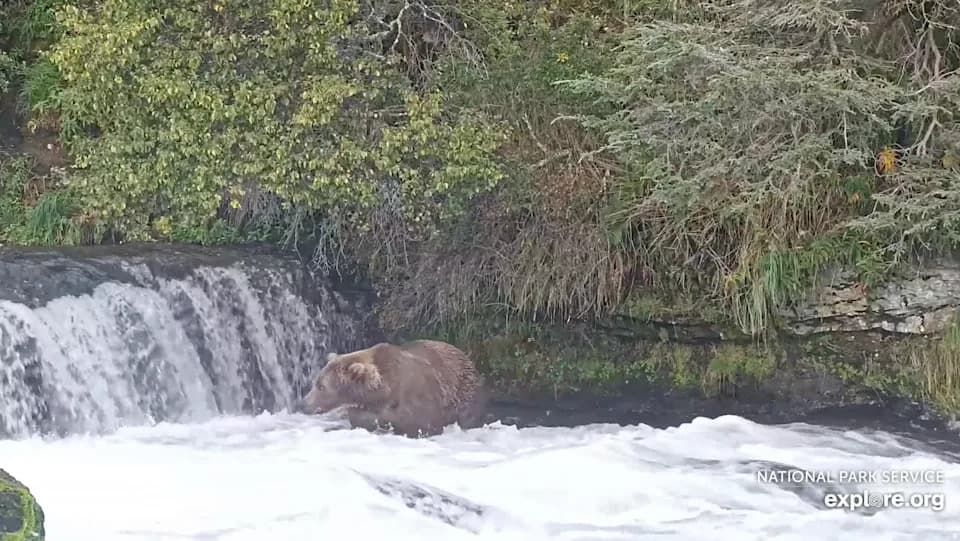
Bear #609 (Bean) and Bear #620 fishing at Brooks River Falls.
Two young female brown bears at Alaska’s Katmai National Park and Preserve — Bear #609 (nicknamed Bean) and Bear #620 — were raised in an unusually cooperative, "Blended Family" arrangement after a rare wild adoption. The story combines a remarkable example of maternal care with the harsher realities of life on Brooks River.
A Rare Adoption
Between mid‑August and October 2022, Bear #910 merged her brood with that of her sister, Bear #909. During that period she adopted her sister’s 2.5‑year‑old yearling while also nursing a spring cub. Such adoptions among brown bears are exceptionally rare and this event is believed to be only the second documented adoption at Katmai; similar behavior has been observed in polar bears.
Learning To Fish Together
Throughout 2023 the two sisters were frequently seen fishing side‑by‑side and teaching their cubs to catch salmon. Observers noted the youngsters often learned alongside both mothers, sharing lessons in foraging and river use. A scientific study of this unusual family was published in the journal BioOne in 2025.
Meet The Young Bears
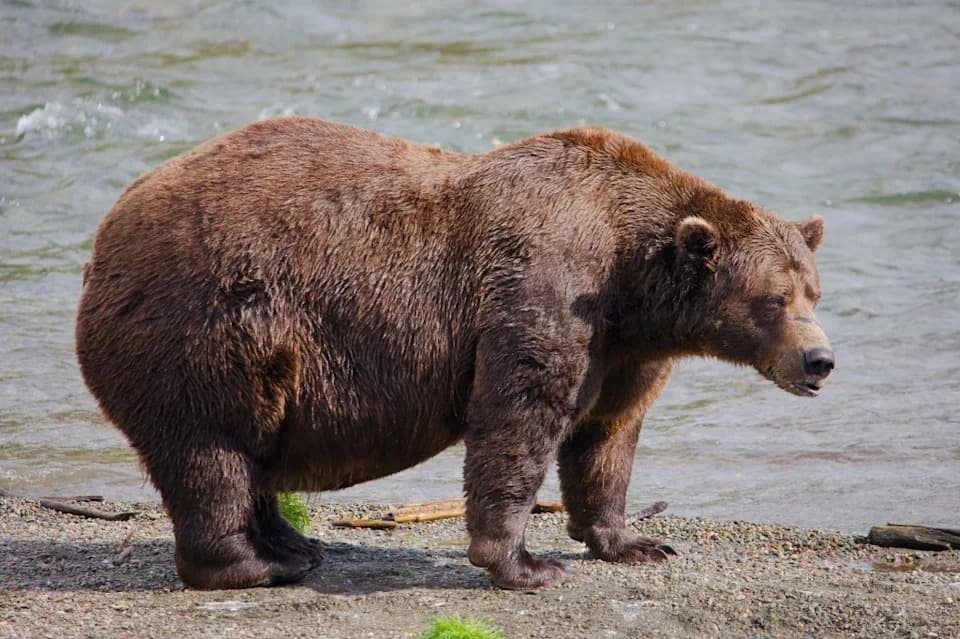
Bear #609 (Bean) — The adopted cub known as Bean is a dark‑coated female with blonde grizzling and large, oval ears tipped slightly blonde. By autumn she often shows a fluffy "headband" of fur. Bean previously won the Fat Bear Week Junior recognition in 2022 and is now regarded as a fully independent young bear.
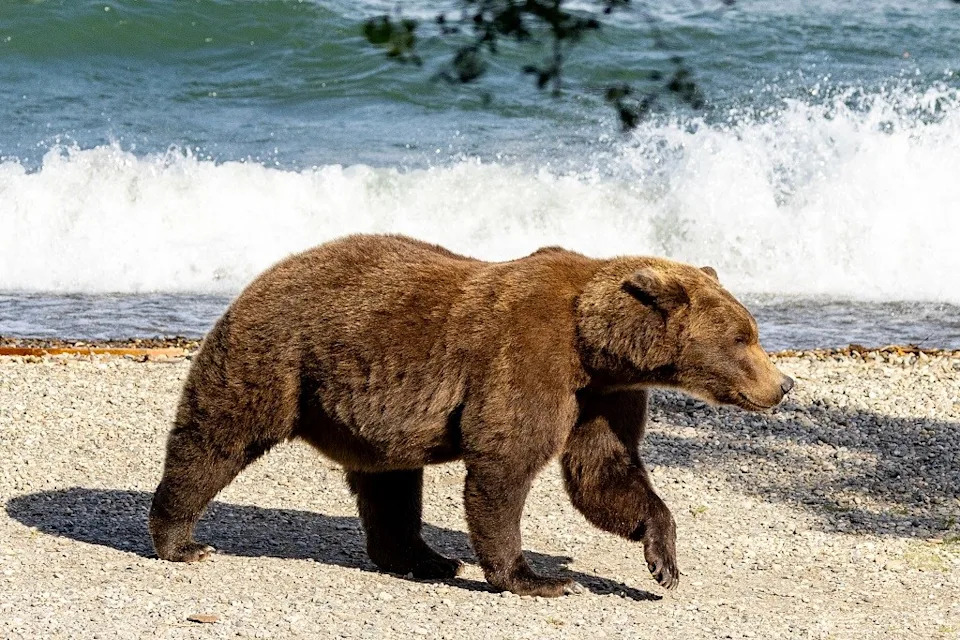
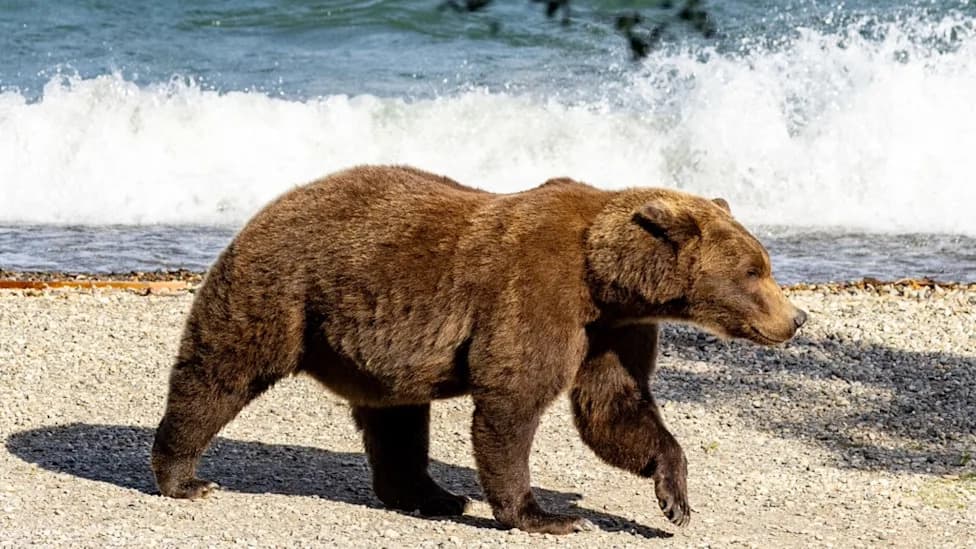
Bear #910 walking along the beach.Image: NPS/Cory CravattaCory Cravatta
Bear #620 — Believed to be a biological daughter of Bear #910 and a cousin to Bean, #620 is identified by a slightly upturned, narrow muzzle, tall oval ears and a semi‑prominent shoulder hump. Her head and mane are lighter in early summer, taking on a fluffier, grizzled appearance by fall.
Risks And Losses On Brooks River
While the blended family shows cooperation, the 2025 season also brought tragedy. On July 28, park live‑cams recorded an unrelated adult female, Bear #806, killing and consuming a spring cub who had been one of Bear #909’s offspring. Bear #909 began the season with two cubs but ultimately lost both. On August 2, one of Bear #335’s ("Jolly") cubs died after following unrelated cubs up a tree and being attacked by the mother of those cubs. Park staff were not able to identify the specific mother involved in that second attack.
Park naturalist Mike Fitz and rangers Christine Loberg and Sarah Bruce noted that, although infanticide by adult females does occur, these incidents are likely the first documented cases at Brooks River. Experts say there is no single explanation for such attacks; contributing factors may include competition for food, dominance conflicts, or complex social dynamics related to adoption and maternal investment.
"If #609 and #620 continue to make Brooks River part of their home range, then we will have a special opportunity to watch the growth and maturation of two especially social young female bears in the same place that their mothers make a living," Fitz said. "Familiarity with each other and the river — and sharing space with their large, successful mothers — may prove to be keys to their survival, longevity, and success."
Looking Ahead
Researchers will closely monitor whether Bean and #620 establish overlapping home ranges along their mothers’ matrilineal lines — a pattern that can influence tolerance, hierarchy and long‑term survival. It is also not yet known whether members of this historic family will compete in Fat Bear Week 2026; the tournament bracket is scheduled to be announced on Friday, September 18.
Photo credit: NPS / Cory Cravatta
Help us improve.