The Singapore High Court dismissed a CEO’s claim to recover nearly $370,000 (SGD $468,090) he says he spent on his ex-girlfriend, ruling the payments were gifts, not loans. The judge rejected a handwritten document presented as evidence and found no proof Lee had asked for or agreed to repay the money. The court noted Agarwal purchased luxury designer items, paid for first-class travel and other expenses, and described his case as lacking credible written support.
Singapore High Court Rejects CEO’s Bid To Reclaim Nearly $370,000 Spent On Ex-Girlfriend
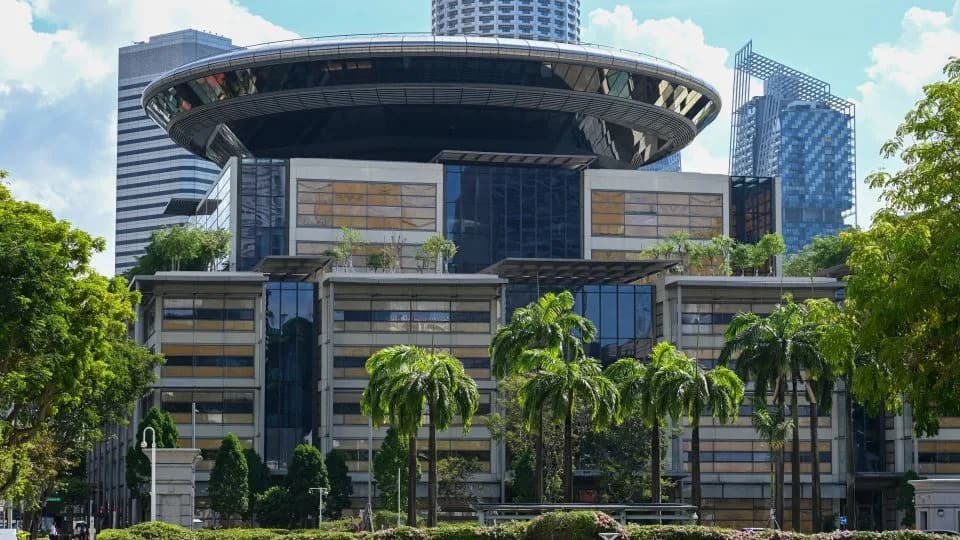
This picture shows the Supreme Court building in Singapore on April 2, 2024. - Roslan Rahman/AFP/Getty Images
A Singapore High Court judge has dismissed a CEO’s attempt to recover nearly $370,000 (SGD $468,090) he says he spent on his former girlfriend, finding the payments were gifts rather than loans.
Case Details
Chander Agarwal, chief executive of an Indian logistics firm, sued his former partner, Felicia Lee, in Singapore’s High Court seeking repayment for luxury purchases and other expenses he paid for during their relationship. Court documents show Agarwal bought designer items from Hermès, Dior and Prada, booked first-class air tickets, and charged personal expenses on his American Express card.
Court Findings
Senior Judge Lee Seiu Kin delivered a written judgment dismissing Agarwal’s claim. The judge concluded the evidence showed the payments were gifts. He found Agarwal had not demonstrated that Lee asked for the sums or agreed to repay them, and gave little weight to a handwritten document Agarwal produced that purported to contain both parties’ signatures.
“It is incredible that for a relationship that lasted for more than a year with so many WhatsApp messages exchanged between them, the Claimant could not point to any written evidence to support his case,” the judge said.
Key Issues And Context
Among the disputed expenses were life insurance premiums, fees for a university programme, domestic expenses charged to Agarwal’s credit card, and thousands paid to a feng shui master to "spiritually harmonise" Lee’s apartment. Agarwal told the court the feng shui payment "must have been a loan" because, he said, he is Indian and does not practise feng shui. The judge rejected that reasoning as implausible.
Background
The pair reportedly met on a flight in 2019, began dating in 2022, and broke up at the end of 2023 after Agarwal suspected Lee of infidelity. The court noted occasions when Lee was reluctant to accept expensive gifts, and that Agarwal appeared "smitten" and generous during the relationship.
Outcome
With those findings, the High Court dismissed the claim and Agarwal’s attempt to recover the nearly $370,000 he says he spent on the relationship.
What This Means: The ruling underscores that, absent clear written agreements or evidence of a loan, extravagant payments made during a romantic relationship are likely to be treated as gifts in court.
Help us improve.