Qatar's prime minister completed a two-day visit to Beijing that both sides described as ushering in a "golden decade" in relations, with expanded cooperation planned across energy, investment and advanced technologies. Talks were dominated by the regional fallout from the US-Israeli war on Iran and Doha's mediation role; China pledged closer coordination to help restore stability. Energy ties remain central—bilateral trade reached $23.8 billion last year and Qatar supplied 19.4 million tonnes of LNG to China in 2025—while strategic differences over how to handle Tehran limit Beijing's leverage.
China and Qatar Aim for a 'Golden Decade': Energy Deals, Diplomatic Coordination and the Limits of Influence
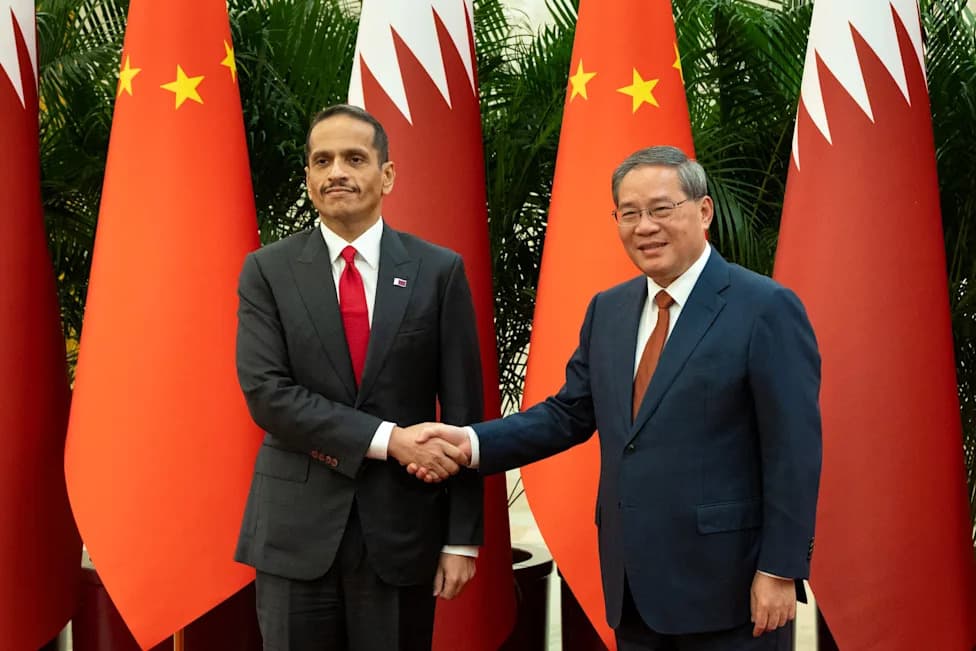
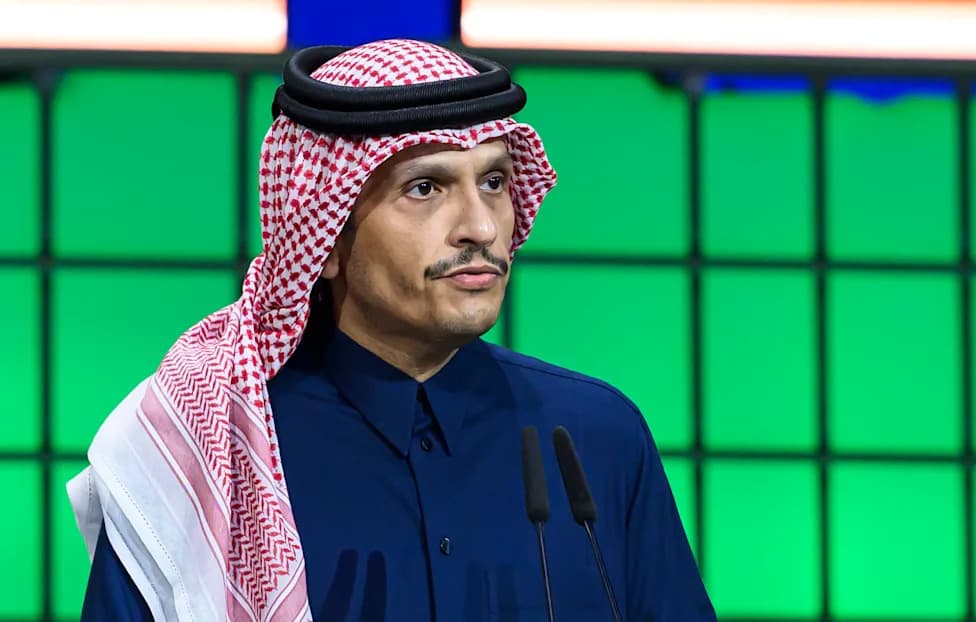
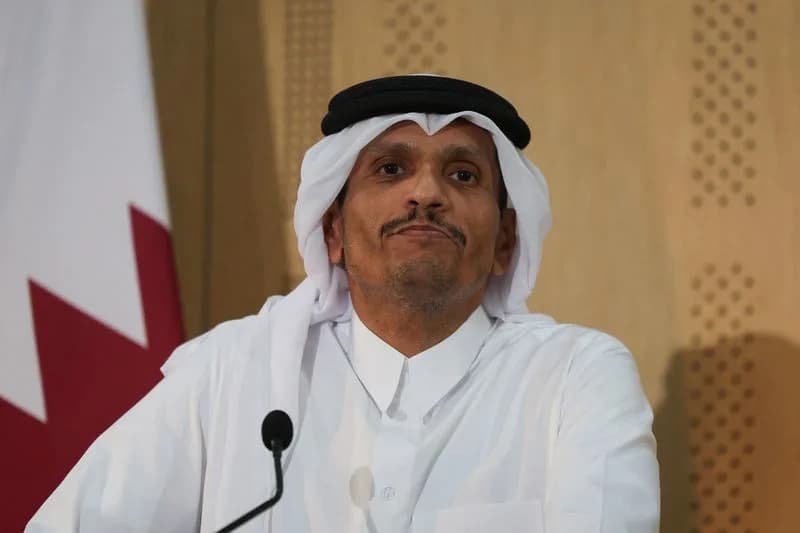
Qatar's Prime Minister and Foreign Minister Sheikh Mohammed bin Abdulrahman bin Jassim Al Thani shakes hands with Chinese Premier Li Qiang before their meeting in Beijing this week [File: AFP]
Qatari Prime Minister and Foreign Minister Sheikh Mohammed bin Abdulrahman Al Thani concluded a two-day visit to Beijing this week, with officials from both capitals describing bilateral ties as entering a new "golden decade." Leaders in Beijing called Qatar an "important strategic partner," and both sides pledged to broaden cooperation across energy, investment and advanced technologies.
Diplomacy and the Iran Conflict
The meetings were heavily shaped by the regional fallout from the US-Israeli war on Iran and Doha's active role as a mediator between Tehran and Washington. Qatar reiterated its commitment to diplomatic engagement. "It's not acceptable at all to have this state of no war and no peace," said Ibrahim bin Sultan al-Hashmi, director of media and communications at Qatar's Foreign Ministry. "Qatar is working hard with its partners, including China. Diplomatic efforts are being exerted and new ideas are being discussed."
Beijing urged diplomatic solutions: Chinese Foreign Minister Wang Yi emphasized that "pressure exerted through military means is not a solution; dialogue and negotiations are the only viable path."
Energy: The Foundation of the Partnership
Energy remains the backbone of China-Qatar relations. China is Qatar's largest trading partner, with bilateral trade valued at $23.8 billion last year. Qatar supplied 19.4 million tonnes of liquefied natural gas (LNG) to China in 2025. Long-term contracts reinforce this link: QatarEnergy has signed 27-year LNG supply agreements with Chinese state-owned firms CNPC and Sinopec, which also hold stakes in Qatar's North Field expansion.
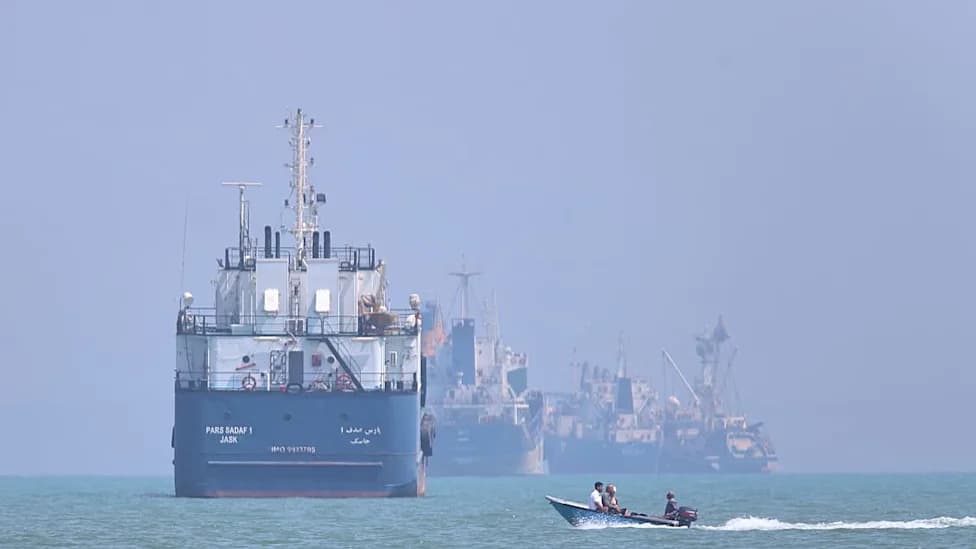
The stability of the Strait of Hormuz is a core shared interest: roughly one-fifth of global oil and LNG flows typically transit that waterway. Disruptions to shipping therefore raise the stakes for both supplier and importer.
Security, Mediation and Competing Ties
While Doha seeks broader diplomatic backing, its security relationship with Washington remains strong. Qatar hosts Al Udeid, the largest US military base in the Middle East. On March 3, Iran fired two ballistic missiles at Qatar; one was intercepted while the other struck Al Udeid, causing no casualties and prompting Doha to seek closer security coordination with the United States.
China, for its part, appears intent on positioning itself as an additional political and economic partner rather than a security guarantor. Analysts note Beijing has limited appetite for using its leverage to pressure Iran—Beijing remains a major economic and diplomatic partner for Tehran and opposes unilateral sanctions.
Economic Expansion Beyond Energy
Both sides signaled a desire to deepen cooperation beyond hydrocarbons. Premier Li Qiang called for stronger collaboration in traditional and renewable energy, infrastructure, artificial intelligence and finance. Qatar highlighted opportunities in high technology and advanced manufacturing.
Invest Qatar reports that 520 Chinese companies operate in the country, with Chinese projects generating over $3 billion in investment and creating more than 3,200 jobs in the past decade—evidence that the relationship is broadening economically as well as strategically.
What This Means
The visit underlined a partnership that is expanding in scope: energetically anchored but branching into technology, infrastructure and finance. For Doha, closer coordination with Beijing offers an additional influential interlocutor in efforts to mediate the Iran crisis—yet China’s reluctance to exert strong pressure on Tehran limits how far Beijing can push its leverage. The coming months will test whether this evolving alignment can deliver both economic benefits and meaningful diplomatic impact amid regional instability.
Help us improve.