Summary: Both Labor Day (first Monday in September in the U.S. and Canada) and International Workers' Day (May 1) grew from a late-19th-century campaign for an eight-hour workday. In 1886, more than 100,000 U.S. workers struck for shorter hours; the Haymarket bombing in Chicago transformed the struggle into an international cause. Over time Labor Day became more mainstream and patriotic in the U.S., while May Day kept stronger ties to international labor activism.
How Labor Day and May Day Both Grew From the 19th-Century Fight for an Eight-Hour Day
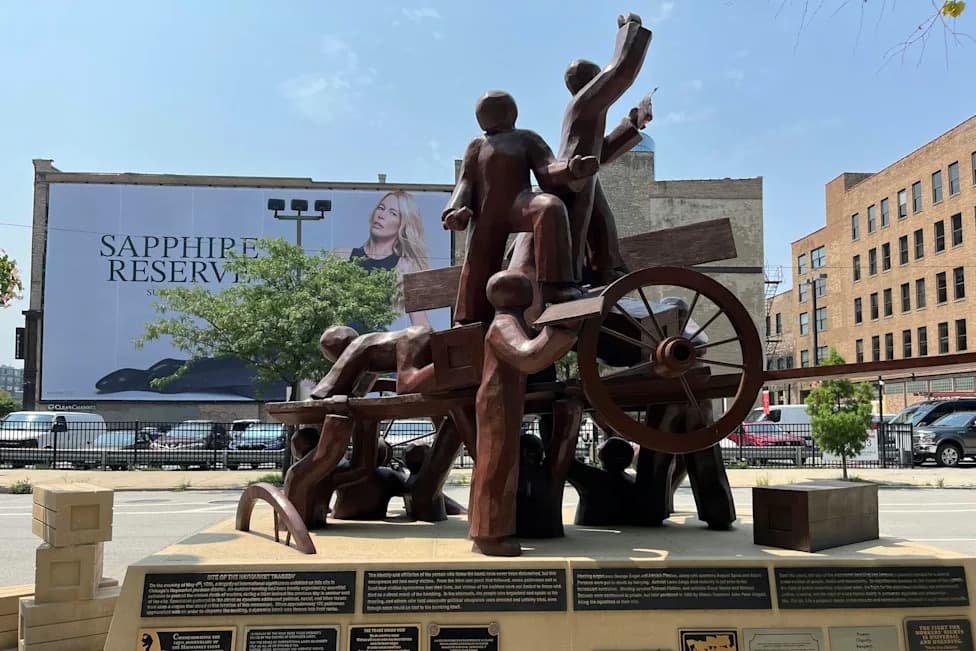
It took more than a century for Chicago's Haymarket Square to get this memorial to the historic labor strife that occurred there. Jeffrey Sklansky
Most readers in the United States and Canada mark Labor Day on the first Monday in September, while much of the rest of the world observes International Workers' Day on May 1. Though their customs differ—barbecues and back-to-school sales in North America versus rallies and labor demonstrations in many other countries—both holidays trace their roots to the same late-19th-century movement for a shorter workday.
Origins: A Coalition for Shorter Hours
In the decades after the Civil War, a broad coalition of skilled craft workers, immigrant laborers, socialist organizers and radical anarchists united behind a single demand: an eight-hour workday. At a time when many Americans worked 10 or more hours a day, six days a week, the eight-hour campaign framed time itself as a worker’s right—"eight hours for work, eight hours for rest, and eight hours for what we will."

On Labor Day, U.S. beaches are crowded with people who spend the late-summer holiday relaxing and having fun. One such destination is Chincoteague Island, Va., seen here on Labor Day weekend in 2018.Bastiaan Slabbers/NurPhoto via Getty Images
Labor Day’s American Beginning
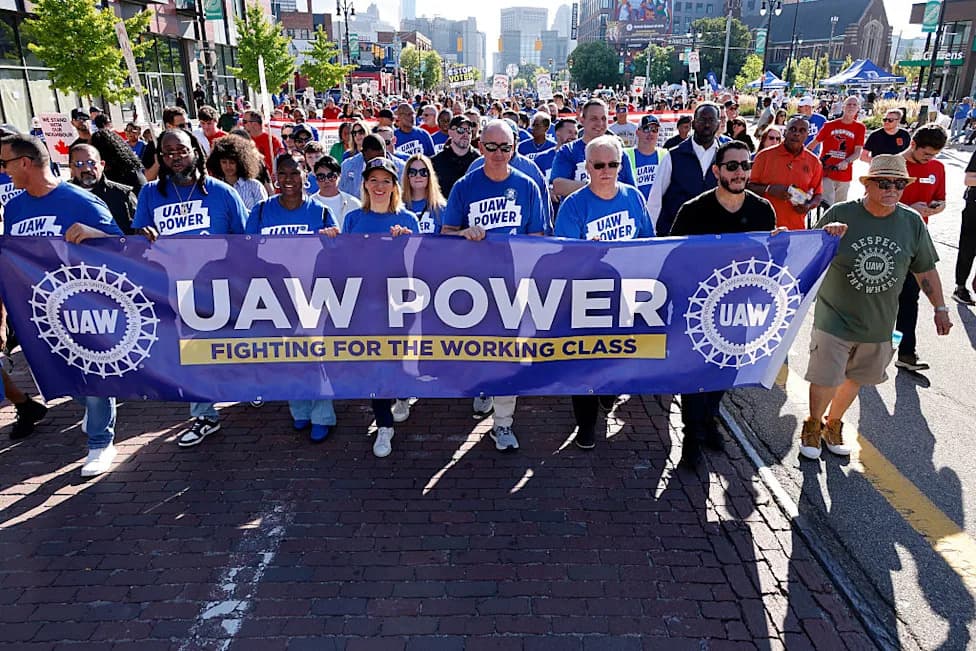
The first Labor Day observance took place on Sept. 5, 1882, in New York City and was organized around a Knights of Labor general assembly. In 1884–1886 labor leaders moved the holiday to the first Monday in September, giving many workers their first regular two-day weekend. Employers did not always recognize the holiday at first; in some cities early observances resembled one-day general strikes.
Haymarket, the 1886 Strikes and the Birth of May Day
On May 1, 1886, more than 100,000 workers across the United States struck for the eight-hour day, with nearly 40,000 workers striking in Chicago alone. On May 4, a bomb exploded at a rally in Haymarket Square, killing seven police officers and prompting a harsh nationwide crackdown on labor activism. Controversial trials followed, and several labor activists were convicted and executed in a case that became emblematic of political repression.
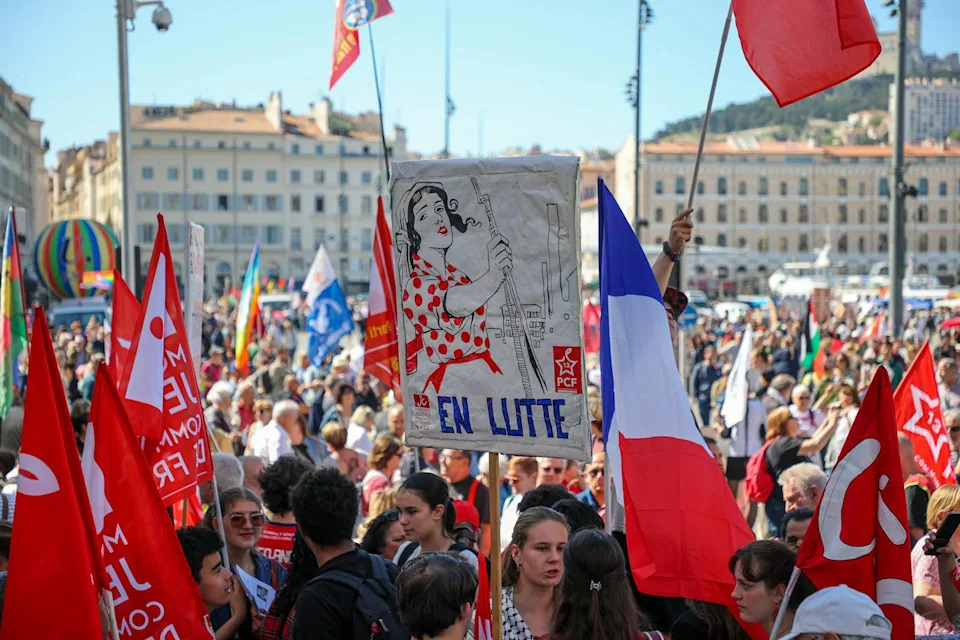
Protesters march through the streets of Marseille, France, with flags and placards on May 1, 2025, to mark International Workers Day.Denis Thaust/SOPA Images/LightRocket via Getty Images
At the 1889 congress of the newly formed Socialist International in Paris, socialists and labor parties designated May 1 as an international workers’ holiday to honor the movement and the memory of the Haymarket defendants. Thus, an American labor struggle took on global significance.
Why the Eight-Hour Day Mattered
The shorter-hours demand crossed class and skill lines: it promised more jobs, higher hourly pay, and time for education, civic life and organization. The campaign also fed other labor reforms—restrictions on child labor and early ideas of pensions and retirement—that sought to limit the span of a lifetime spent in wage labor.
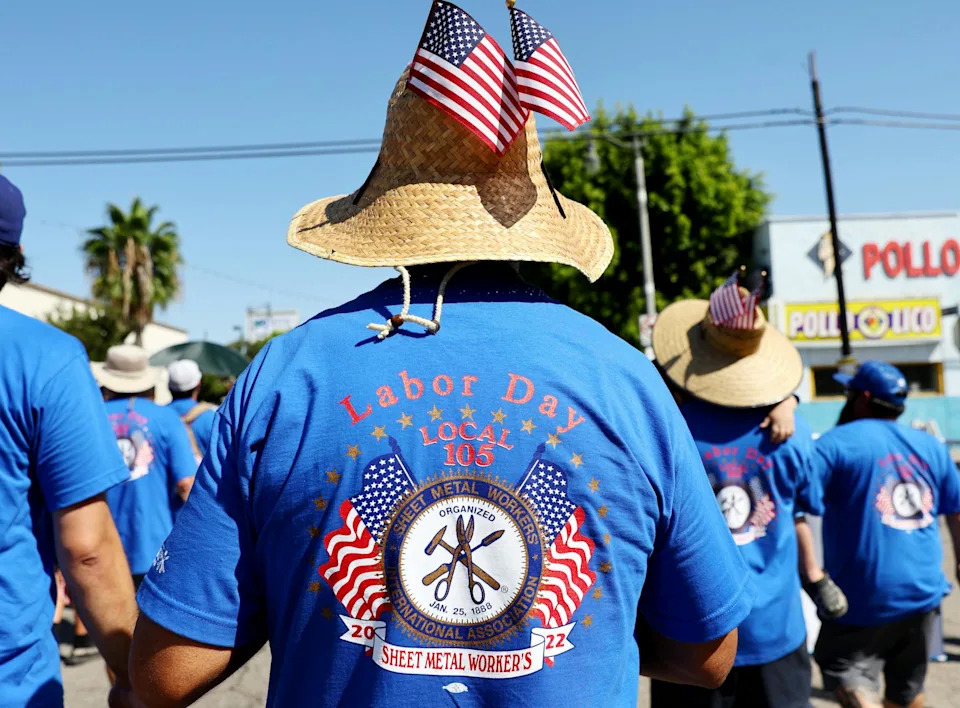
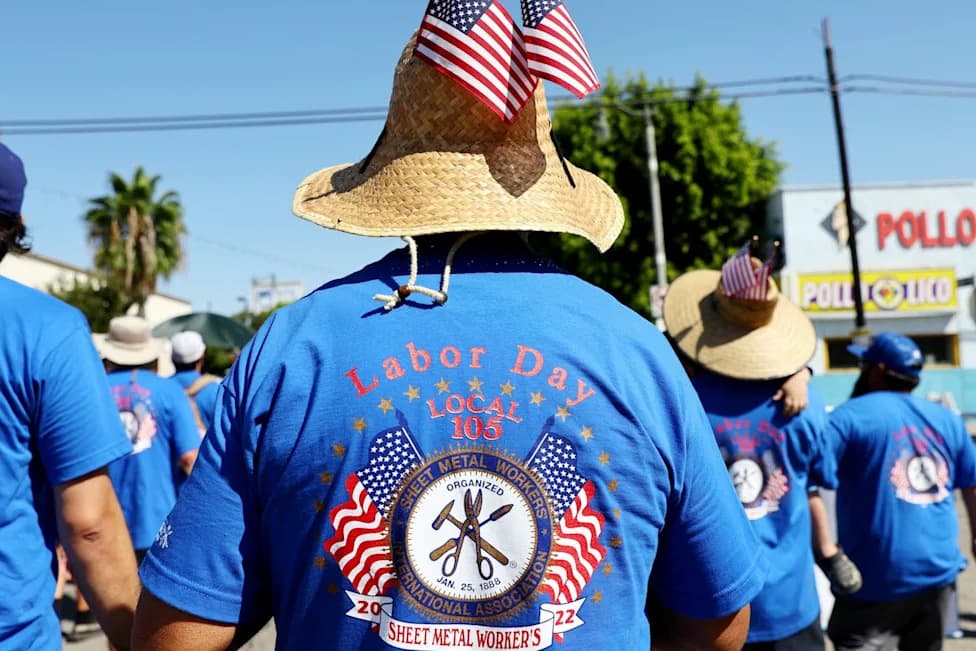
A member of Sheet Metal Workers Local 105 walks in the small annual Labor Day parade hosted by the Los Angeles/Long Beach Harbor Labor Coalition on Sept. 5, 2022, in Wilmington, Calif.Mario Tama/Getty Images
How the Holidays Diverged
After Haymarket the labor coalition fractured. Conservative union leaders who wanted integration into mainstream American life leaned into patriotic displays on Labor Day to distance themselves from radical elements. Meanwhile, radicals and many immigrant workers embraced May Day’s internationalist symbolism. Over the 20th century Labor Day became more domesticated and widely celebrated in the U.S., while May Day retained stronger ties to international labor movements and leftist politics.
Legacy and Legal Reform
Unions achieved major gains over the 20th century: the eight-hour day and a 40-hour workweek became federal standards for many industries amid New Deal reforms in the 1930s. Economists such as John Maynard Keynes once imagined still shorter workdays as productivity rose; though productivity and wages grew for decades, work hours did not fall to the dramatic degree some predicted.
Author: Jeffrey Sklansky, historian, University of Illinois Chicago. This article was originally published by The Conversation.
The shared origin of Labor Day and May Day reminds us that modern holidays can obscure a common past of collective struggle over the basic question of who controls workers’ time.
Help us improve.