Champagne producers have launched the region's earliest recorded harvest after spring frosts and an unprecedented sequence of heat waves and drought accelerated ripening and reduced potential yields. Estates such as Gobillard & Fils are racing to pick by hand, monitor sugar levels and protect Champagne's delicate style while managing strained labor and logistics. Industry leaders say climate change has driven decades of adaptation, and the current stresses may accelerate mechanization despite encouraging quality in many plots.
Champagne's Earliest Harvest on Record: Growers Rush to Protect Quality
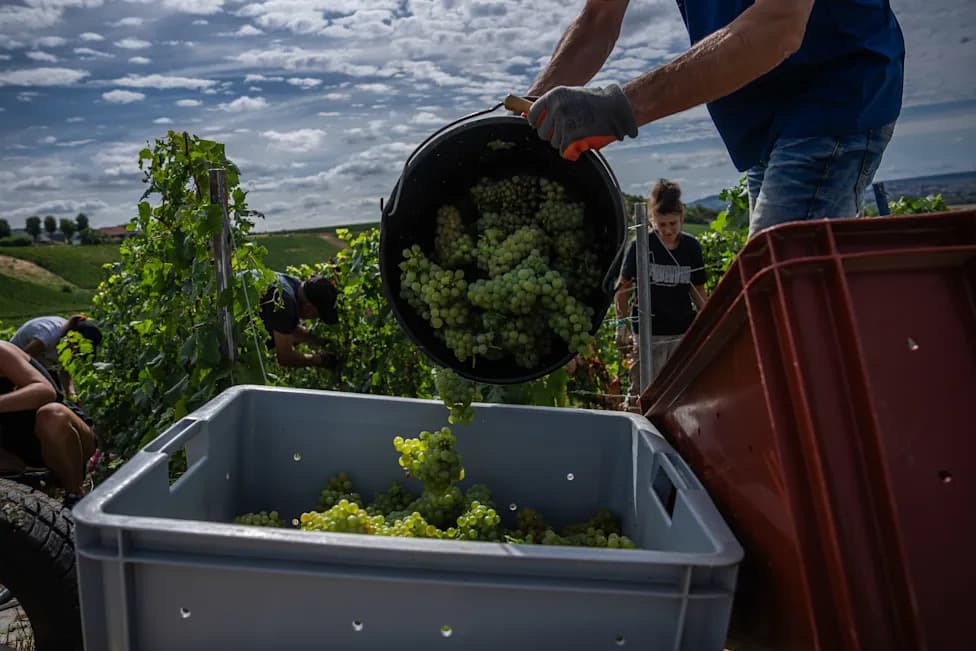
A grape-picker puts Chardonnay grapes into a crate on a plot of the Gobillard vineyard in Hautvillers, Champagne region, France, Tuesday, Aug. 18, 2026. (AP Photo/Aurelien Morissard)(AP Photo/Aurelien Morissard)
HAUTVILLERS, France — Champagne producers have begun the earliest harvest on record, racing to pick grapes after spring frosts, extreme heat and drought accelerated ripening and narrowed the window to preserve the region's celebrated sparkling wine.
On the slopes around Hautvillers — an area designated a UNESCO World Heritage site in 2015 — crews of pickers start work around 6:30 a.m., combing vines that have shaped Champagne's landscape for generations.
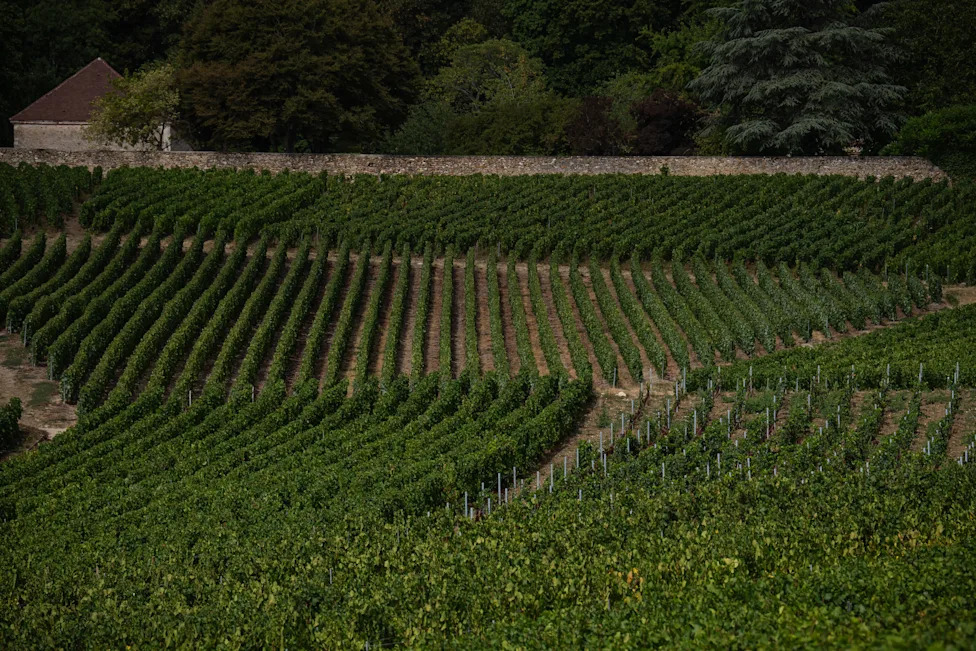
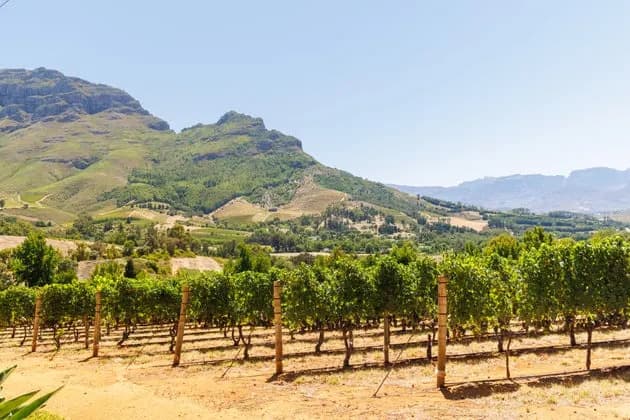
View of vineyard plots with different grape varieties in Hautvillers, Champagne region, France, Tuesday, Aug. 18, 2026. (AP Photo/Aurelien Morissard)(AP Photo/Aurelien Morissard)
Alexandre Gobillard, production director at the family house Gobillard & Fils, said beginning harvest in mid‑August was once unimaginable. "It's historic in Champagne," he said. "I've been working at the estate for 30 years, and when I started, my father used to tell me: 'On Aug. 15, go on vacation.' Today, it's Aug. 18 and we're in full harvest. We've never seen anything like it."
Gobillard & Fils farms 40 hectares (about 100 acres) and produces roughly 1.5 million bottles annually. This year Champagne's official harvest opened between Aug. 12 and Aug. 17, depending on subregion and grape variety — about a month earlier than what was once common across the region.
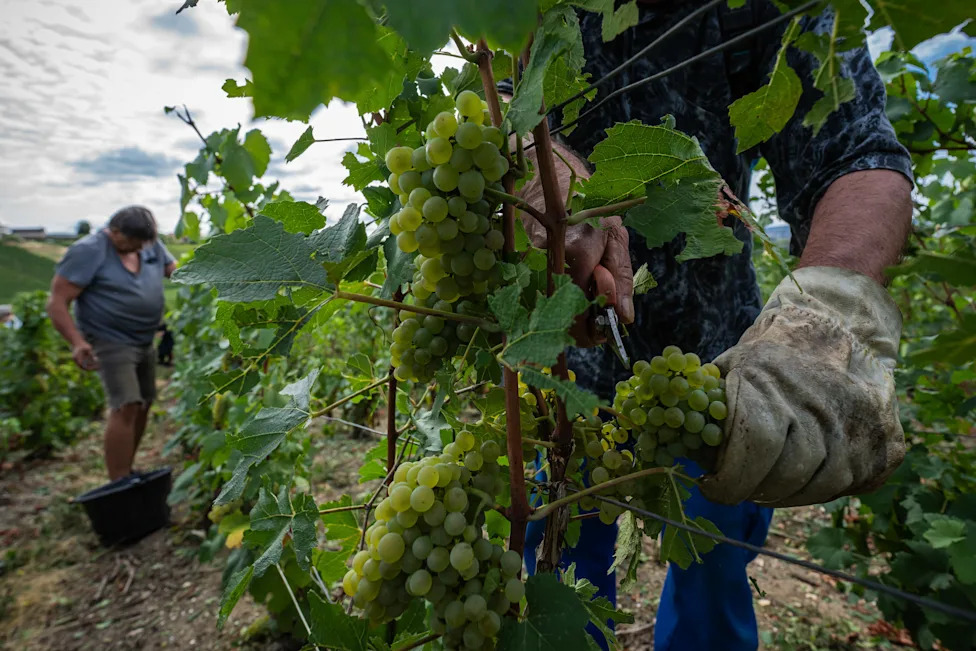
A grape-picker harvests Chardonnay grapes on a plot of the Gobillard vineyard in Hautvillers, Champagne region, France, Tuesday, Aug. 18, 2026. (AP Photo/Aurelien Morissard)(AP Photo/Aurelien Morissard)
Weather, Yields and Ripening
The season was shaped by an unusually warm early spring that triggered early budburst, followed by a damaging late‑March frost that cut potential production. That setback was compounded by four heat waves and a persistent drought, a sequence producers say they have rarely seen.
"We lost 43% of the potential production to the spring frosts, and the drought has clearly made the problem of lower yields even worse,"
— David Chatillon, president of the Union of Champagne Houses.
Heat and drought concentrated sugars in the berries and compressed the ripening window — in some parts of Champagne June temperatures reached 40°C (104°F). Some grapes were sun‑scorched and partially browned, reducing volume more than necessarily harming quality; producers estimate localized losses such as 10% in affected plots.
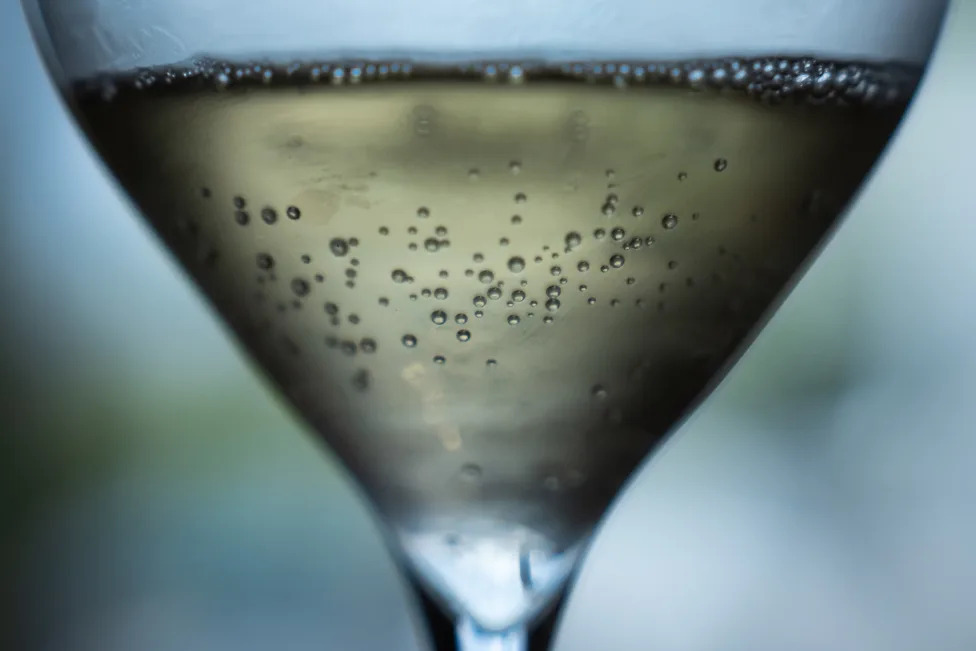
Champagne in a glass is displayed at Gobillard vineyard in Hautvillers, Champagne region, France, Tuesday, Aug. 18, 2026. (AP Photo/Aurelien Morissard)(AP Photo/Aurelien Morissard)
Practical Challenges
The early harvest creates logistical headaches in a region where hand‑picking remains the norm. Seasonal workers are often still on holiday in August, accommodation and transport are strained, and estates must assemble large crews quickly. At Gobillard & Fils, the team expects to complete the harvest in about nine days with roughly 120 workers recruited mainly from France and Poland.
"Hand harvesting comes with a lot of constraints — housing people, feeding them, recruiting them. It's very difficult, especially with early harvests in August," said Geoffrey Bonnet‑Gobillard, the house's commercial director. Those pressures, he added, could push some producers to adopt more mechanization as technology improves.
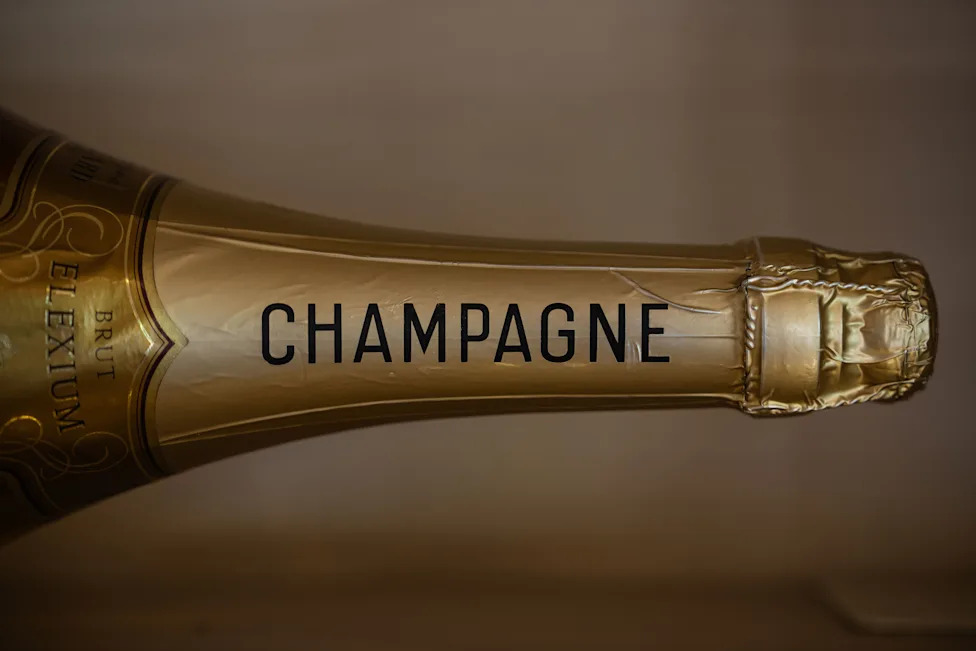
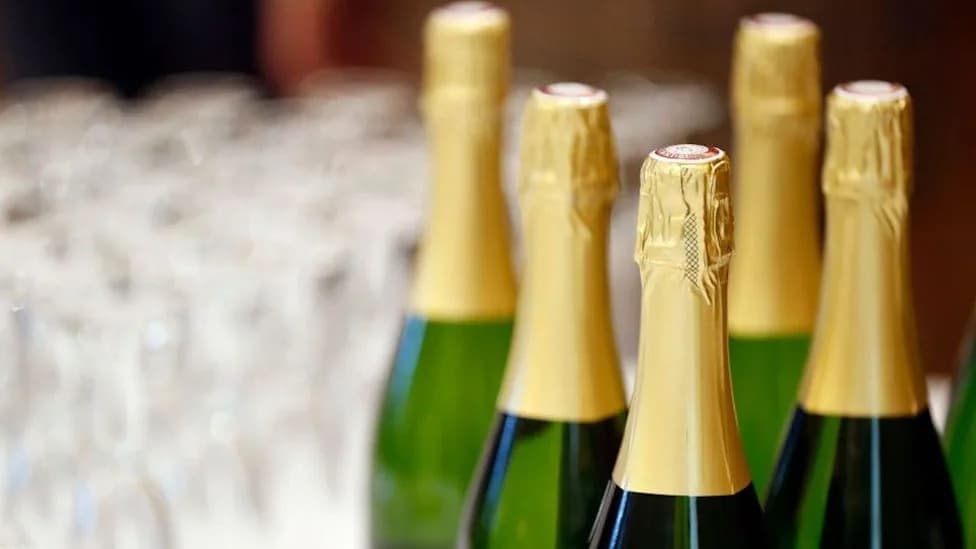
A bottle of champagne in display at the Gobillard vineyard in Hautvillers, Champagne region, France, Tuesday, Aug. 18, 2026. (AP Photo/Aurelien Morissard)(AP Photo/Aurelien Morissard)
Industry Context
Comité Champagne's 2026 industry report shows 266.1 million bottles were shipped last year, generating €5.7 billion ($6.6 billion) in sales; exports accounted for 56.5% of shipments. The sector supports about 30,000 direct jobs and requires roughly 100,000 seasonal workers for the harvest.
Despite the year's losses and the compressed harvest timeline, many producers reported encouraging grape quality in inspected plots. "I'm very happy with what I'm seeing," Gobillard said. "We were worried that the drought would leave us with very light bunches, but in these plots we're really pleased. The quantity should be sufficient and the quality will be there. But it's time to cut them. We're going to have to move quickly."
Help us improve.