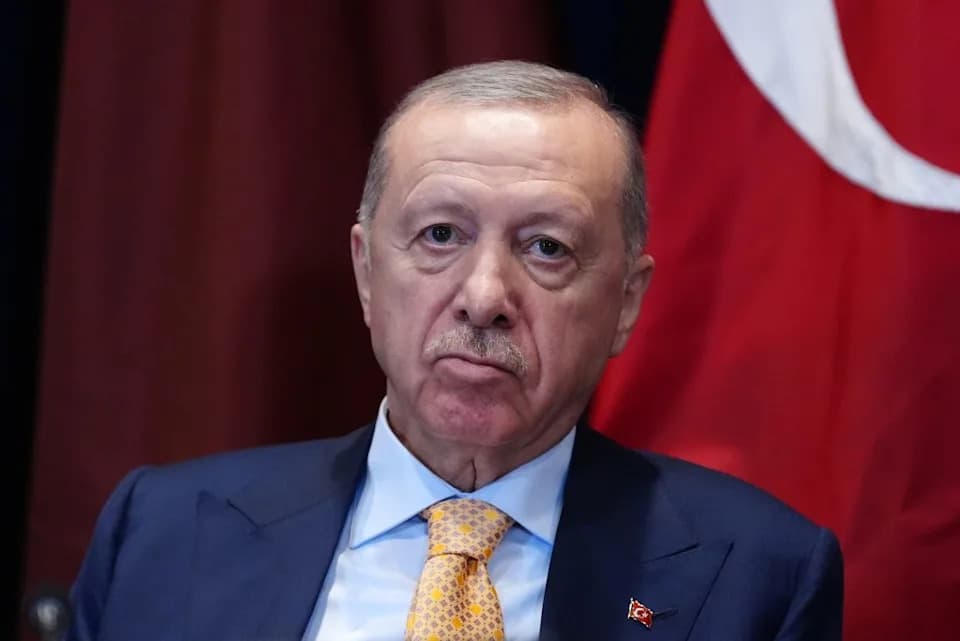
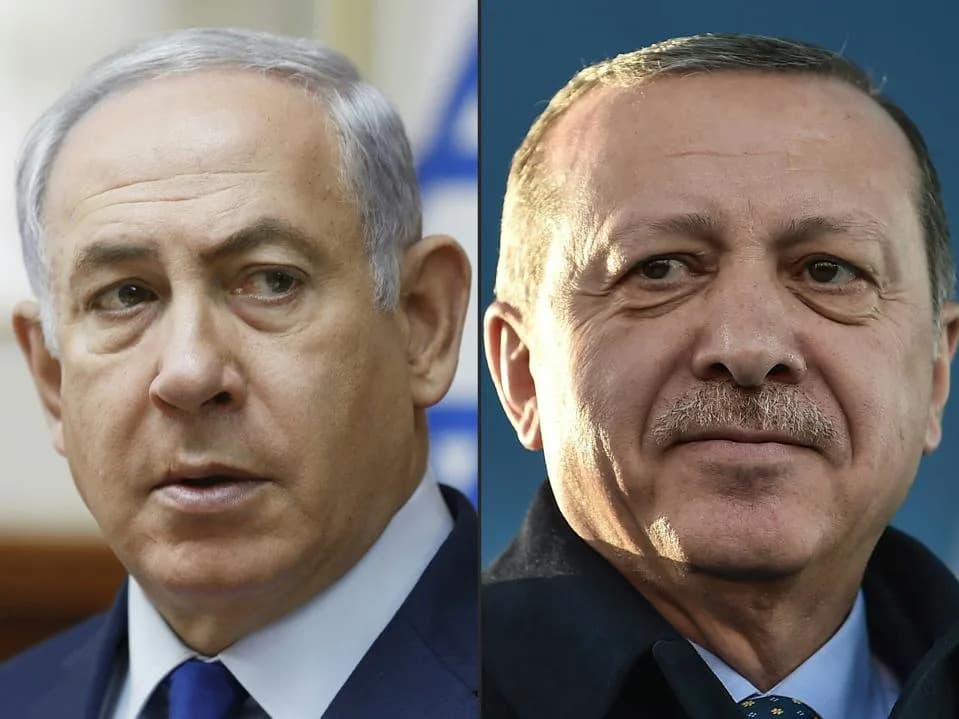
The Israeli strike on Abu al-Duhur airbase in Idlib — visited hours earlier by a Turkish military delegation — has sharpened tensions among Israel, Turkey and the U.S. Turkey condemned the attack and dismissed Israel's justification, while Washington expressed "deep concern." Analysts say the dispute highlights growing divergence between President Trump and Prime Minister Netanyahu, the emergence of new pacts like the "Mecca Pact," and rising risks that regional self-reliance could produce dangerous confrontations.
Israeli Strike on Abu al-Duhur Airbase Deepens Rift Between Netanyahu and Trump as Turkey Protests
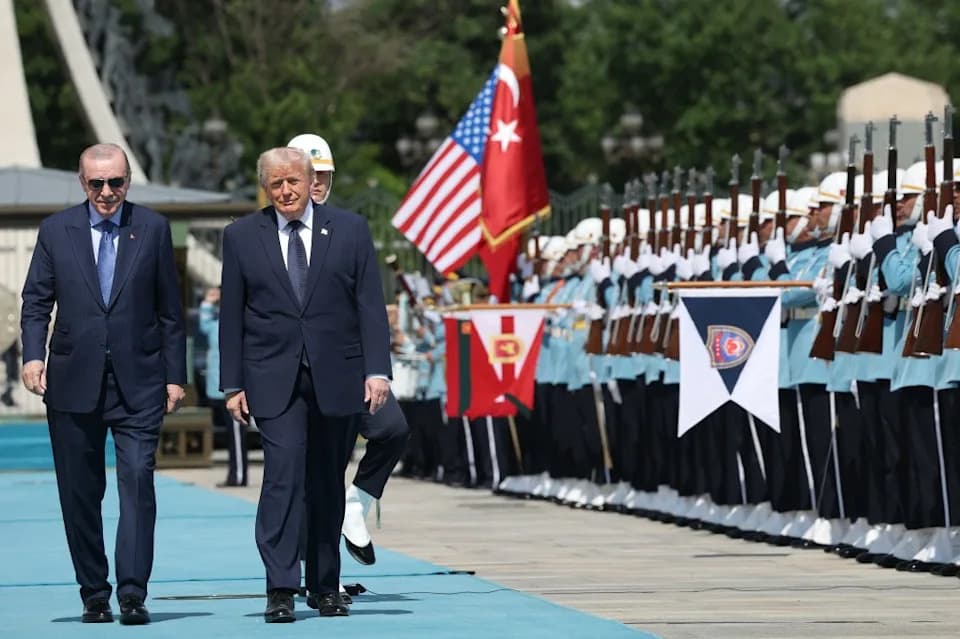
U.S. President Donald Trump walks with Turkish President Recep Tayyip Erdogan at the Bestepe Presidential Complex during the annual NATO Summit on July 7, 2026, in Ankara, Turkey.
An Israeli airstrike on the Abu al-Duhur airbase in Syria's Idlib province — a facility that hours earlier hosted a Turkish military delegation — has intensified tensions among Israel, Turkey and the United States and may signal a broader regional realignment.
Turkish officials condemned the strike after Ankara reportedly sought to rehabilitate the base while cultivating ties with the new Damascus government that ousted Bashar al-Assad in December 2024. The Turkish Foreign Ministry called the operation an unlawful violation of Syrian sovereignty and dismissed Israeli explanations as "frivolous allegations" meant to justify the raid.
Israel's office defended the attack, accusing Syria of "permitting Turkish troops to deploy at an airbase near Aleppo," which it said violated an existing security understanding. Turkey rejected that claim as a pretext.
The United States also publicly criticized the operation. Special Envoy Tom Barrack said Washington was "deeply concerned" about what he described as an "unnecessary escalation." The response underscores how recent Israeli actions have at times drawn rebukes from even close allies.
Strains Between Leaders
The episode comes amid growing signs of dissonance between U.S. President Donald Trump and Israeli Prime Minister Benjamin Netanyahu. Trump has not formally endorsed Netanyahu ahead of crucial Israeli elections scheduled for October, and Washington has occasionally appeared to side with Ankara in disputes with Jerusalem.
"President Trump and Prime Minister Netanyahu are both in weak political positions at home... Netanyahu's standing and reputation remains severely damaged by the October 7 [2023 Hamas] attack and its aftermath," said Brian Katulis, a senior fellow at the Middle East Institute, noting how domestic pressures shape each leader's foreign-policy choices.
Katulis argued that Netanyahu is pursuing an aggressive posture to demonstrate he can protect Israeli citizens, while Trump — facing a war-weary American public and economic strains tied to the conflict with Iran — has signaled a preference for de-escalation.
Wider Geopolitical Shifts
Observers also point to a broader reordering of regional security. Trump has strengthened relations with Turkish President Recep Tayyip Erdogan and moved to engage the new Syrian leadership under President Ahmad al-Sharaa, meeting Sharaa twice and easing some sanctions on Damascus. Those shifts have frustrated Israeli leaders who see U.S. accommodations with Damascus and Ankara as undermining Israeli security interests.
At the July 7, 2026 NATO summit in Ankara, Trump again clashed with Netanyahu's preferences when he indicated he would seek to lift restrictions on potential F-35 sales to Turkey despite Ankara's earlier purchase of Russian S-400 air-defense systems.
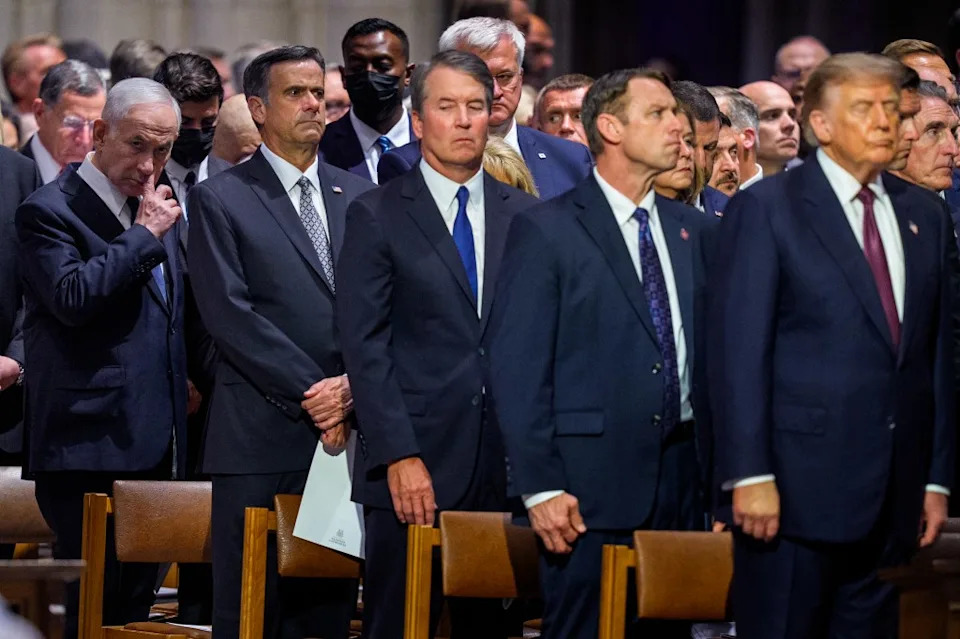
Israeli Prime Minister Benjamin Netanyahu (far left), CIA Director John Ratcliffe (second from left), U.S. Supreme Court Associate Justice Brett Kavanaugh (third from left) and U.S. President Donald Trump (right) attend the funeral service for the Senator Lindsey Graham at the Washington National Cathedral on July 28, 2026.
At the same time, Washington and Jerusalem continue to cooperate on other fronts: the U.S. has supported direct action against Iran at times, including strikes during the June 2025 12-Day War and an ongoing campaign since February of this year. Yet the campaign against Iran has produced no decisive outcome after months of conflict, reinforcing strategic uncertainty.
New Security Alignments
Regional players are forging new security arrangements. The so-called "Mecca Pact," a mutual defense agreement among Turkey, Saudi Arabia and Pakistan, formalizes growing cooperation among Sunni-majority states and appears in part to be a response to Israel's expanding network of partnerships with the United Arab Emirates, India, Greece and Cyprus.
Ali Burak Daricili, an associate professor at Bursa Technical University and a former Turkish intelligence officer, told Newsweek that Türkiye's participation in the pact is a response to Israel's strategic ties in the eastern Mediterranean and could help check what he described as Israel's "increasingly uncontrolled regional actions." He added that a Sunni bloc might also constrain Iran's ability to reestablish influence.
Daricili suggested the United States is seeking a more stable, manageable regional order that would allow Washington to refocus on China and the Indo-Pacific — a goal complicated by dwindling munitions stockpiles and the redeployment of naval assets like the USS Abraham Lincoln.
Risks and Restraints
Analysts warn that Washington's encouragement of regional self-reliance can lower U.S. direct involvement but raise the risk of local confrontations spiraling out of control. Eyal Zisser, vice rector of Tel Aviv University, described the current Israeli government under Netanyahu as more prone to aggressive action than some predecessors and said that friction with Turkey is growing across multiple theaters, including Syria, Sudan and Somalia.
Still, many analysts view a direct Israel-Turkey confrontation as costly and unlikely. Zisser noted that Israel struck a Syrian target rather than Turkey and argued that Trump's influence over Netanyahu reduces the probability that Israel would take steps that would jeopardize its relationship with Washington.
Daricili and others recommend practical measures, such as a formal deconfliction mechanism between Türkiye and Israel, to lower the risk of accidental escalation while regional alignments continue to shift.
Contact: Newsweek editors Tom O'Connor and Dave Siminoff.
Help us improve.