US Ambassador Tom Barrack has proposed a US-facilitated deconfliction mechanism linking Turkey, Syria and Israel after a suspected Israeli strike near Idlib that Washington and Damascus blamed on Tel Aviv. Analysts warn that Israel’s repeated strikes and its occupation of captured territory make such a channel difficult to implement unless the US exerts credible pressure on Prime Minister Benjamin Netanyahu. Experts note the plan mirrors US efforts in Lebanon, but say its success hinges on Washington’s willingness to enforce commitments and deter unilateral military actions.
US Pushes For Deconfliction Channel As Tensions Rise After Suspected Israeli Strike In Syria
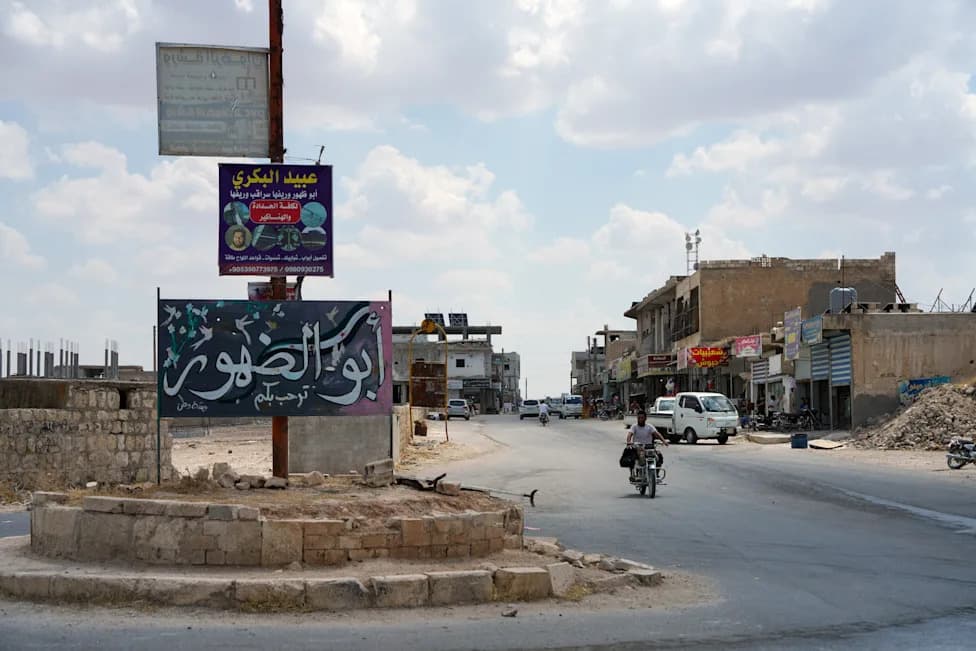
A man rides a motorbike in the town of Abu al-Duhur, Syria, August 18, 2026 [Stringer/Reuters]
A day after a suspected Israeli strike on the Abu al-Duhur airbase near Idlib in northwest Syria, US Ambassador to Turkey Tom Barrack proposed creating a US-facilitated deconfliction mechanism linking Turkey, Syria and Israel. Barrack, who joined Damascus in blaming Israel for the strike, called the attack an "unnecessary escalation."
What Happened
Washington and Damascus blamed the strike on Israel. Analysts warn that, despite the diplomatic move, a formal channel to prevent military incidents may struggle to restrain Israeli operations that have targeted Syrian territory and infrastructure for years.
Why A Mechanism Is Challenging
"It is difficult to have a deconfliction mechanism [when] only one party [is] causing conflict in the first place," said Samy Akil, senior adviser with The Syria Report. Observers argue Israel's repeated strikes and its continued control of captured Syrian land complicate any impartial communications channel.
Analysts and diplomatic sources say Israel has been the main impediment to progress in talks with Damascus, which entered a new political phase after the overthrow of former President Bashar al-Assad in December 2024. After more than a decade of war, Syria is reportedly seeking improved ties with Western states.
Shifts In Israeli Operations
Under the pre-December 2024 government in Damascus, Israel typically struck Iranian-aligned facilities in Syria—such as the Iranian consulate in Damascus in April 2024—while generally avoiding direct attacks on Syrian state infrastructure. That posture changed after al-Assad fled on December 8, 2024, when Israel expanded strikes against Syrian military infrastructure nationwide and warned of possible deployments south of Damascus.
Israeli strategy has also pivoted from focusing primarily on Iranian influence to countering Turkish presence and influence inside Syria. Turkey supported several anti-Assad rebel factions, hosts large Syrian exile communities, and has pursued closer ties with Damascus and the new Syrian president, Ahmed al-Sharaa. Analysts told Al Jazeera that the recent strike appeared calibrated as a message from Tel Aviv to Ankara.
Responses From The Parties
"Israel and Syria agreed to a status quo in security matters, which Syria was on the verge of breaching by permitting Turkish troops to deploy at an airbase near Aleppo," an Israeli Prime Minister's Office statement said, arguing the strike was intended to prevent a security breach.
Turkey rejected that account. "The untenable allegations put forward by the Israeli Prime Minister's Office are intended to legitimise Israel's unlawful airstrikes targeting Syria's sovereignty and territorial integrity," the Republic of Turkiye's Directorate of Communications said, accusing Prime Minister Benjamin Netanyahu of pursuing "expansionist and destabilising policies in the region ahead of the elections in Israel."
Separately, Israeli troops reportedly raided Quneitra in southwestern Syria early on Wednesday and abducted two people, underscoring continuing on-the-ground tensions.
Can The US Make A Mechanism Work?
Barrack's proposal envisions a US-facilitated communication line meant to prevent accidental or deliberate military escalations among Syria, Turkey and Israel. The idea mirrors US efforts to broker deconfliction arrangements between Beirut and Tel Aviv, aimed at curbing Israeli strikes on Lebanon and stabilising southern border areas.
Experts caution that those Lebanon-related efforts have shown limited results, in large part because of Israel's military advantage and a willingness by the Netanyahu government to take unilateral action when it perceives security threats. Galip Dalay of Chatham House told Al Jazeera that Washington would need to apply credible pressure on Israel to make any mechanism effective.
"If the US puts proper pressure on Israel, they would listen," Dalay said, pointing to past cases where coordinated US policy altered Israeli behaviour. The central question, he added, is not only whether Syria needs a deconfliction mechanism but whether Washington is prepared to make such a system credible by holding Israel to its commitments.
Implications
Analysts stress that any deconfliction mechanism requires genuine commitment from all parties and clear enforcement tools. Without sustained US diplomatic leverage and buy-in from Israel, Turkey and Syria, the channel risks becoming another paper agreement that fails to prevent future escalations.
Help us improve.