Rep. Debbie Wasserman Schultz is projected to win the Democratic primary in Florida's newly drawn 20th District after moving into the plurality‑Black seat, sparking protests from Broward County Black leaders and criticism from some Congressional Black Caucus members. She defeated four Black challengers while stressing her seniority and congressional clout. The seat was created after a mid‑decade redistricting pushed by Gov. Ron DeSantis and approved by the Republican‑controlled legislature, which eliminated several Democratic‑leaning districts. Her victory raises questions about representation and the political impact of partisan redistricting.
Wasserman Schultz Wins Contentious Democratic Primary After Moving Into Black‑Plurality Florida District
Longtime Florida Democrat Wins Controversial Primary In New District
Rep. Debbie Wasserman Schultz (D‑Fla.) is projected to have won the Democratic primary in Florida's newly drawn 20th Congressional District after moving into the seat. The reconfigured district is plurality Black, and her decision to run there drew strong objections from local Black leaders in Broward County and criticism from some members of the Congressional Black Caucus. House Democratic Leader Hakeem Jeffries (D‑N.Y.) did not endorse her in the contest.
Local Black political figures framed the move by the white, 11‑term congresswoman as a risk to Black political representation, concerns amplified after the Supreme Court's rollback of elements of the Voting Rights Act. Despite the controversy, Wasserman Schultz prevailed over a divided field of four challengers, all of whom are Black: organizer Ethan Manley; former Rep. Sheila Cherfilus‑McCormick; rapper and activist Luther "Luke" Campbell; and real estate broker Dale Holness.
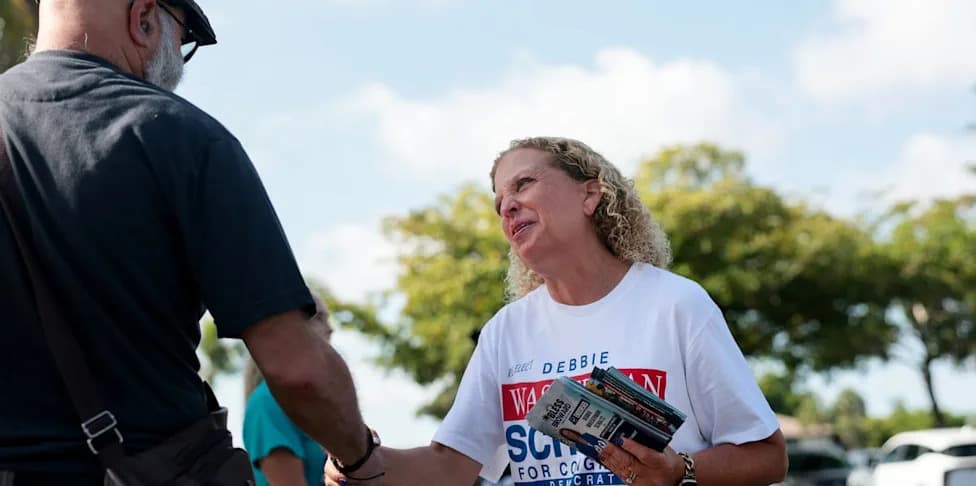
Democratic congressional candidate Rep. Debbie Wasserman Schultz (D‑Fla.) campaigned outside the Kings Point Clubhouse polling station on Aug. 18, 2026, in Tamarac, Florida. Joe Raedle via Getty Images
The former chair of the Democratic National Committee emphasized her seniority and congressional "clout," arguing she can represent diverse communities. She noted that the district she previously represented was plurality Latino and said she would advocate for the new district's priorities.
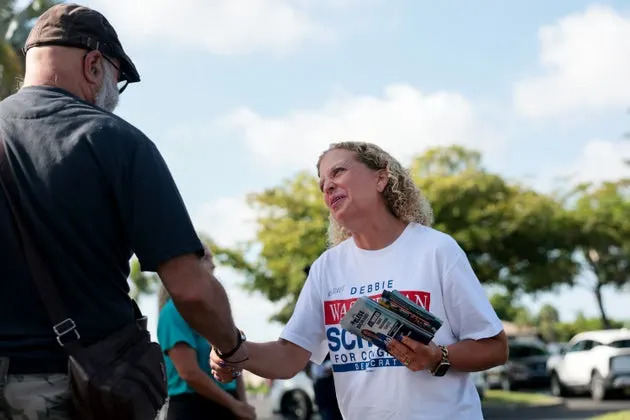
Democratic Congressional candidate Rep. Debbie Wasserman Schultz (D-Fla.) campaigns outside of the Kings Point Clubhouse polling station on Aug. 18, 2026, in Tamarac, Florida. Joe Raedle via Getty Images
Redistricting And Political Context
The new 20th District, centered in Broward County, resulted from a mid‑decade redistricting effort launched by Gov. Ron DeSantis in January 2026. The Republican‑controlled state legislature approved new congressional maps in April that eliminated four districts that had been Democratic‑leaning. One of those eliminated seats was Wasserman Schultz's prior 25th District, a change that shifted Florida's baseline partisan lean from Democratic +5 to Republican +9 and prompted her to seek election in the neighboring 20th.
If Wasserman Schultz takes the seat in November, she would be the only white member of the next Congress representing a plurality or majority‑Black district in 2027. Currently, Rep. Steve Cohen (D‑Tenn.) is the only white member representing a majority‑Black district, but Tennessee Republicans recently targeted and reshaped his district after the Supreme Court decision.
What This Means
The race highlights tensions over representation, race, and strategy within the Democratic Party as lawmakers and community leaders respond to aggressive redistricting by state Republicans. Supporters of Wasserman Schultz point to experience and committee influence; critics say the move undermines Black electoral opportunity at a time when legal and legislative changes have made such protections more fragile.
Help us improve.