Liberia has agreed to accept up to 1,200 third‑country deportees relocated from the United States, with the first 20 expected this week and all arrivals scheduled within a year. Officials say the group includes Africans and nationals from the Americas and the Caribbean and that Liberia screened the list in advance. The U.S. will provide support to manage the reception program. Advocates warn such transfers can bypass protection orders and expose migrants to safety risks.
Liberia to Receive Up to 1,200 Third‑Country Deportees From the U.S.; First 20 Due This Week
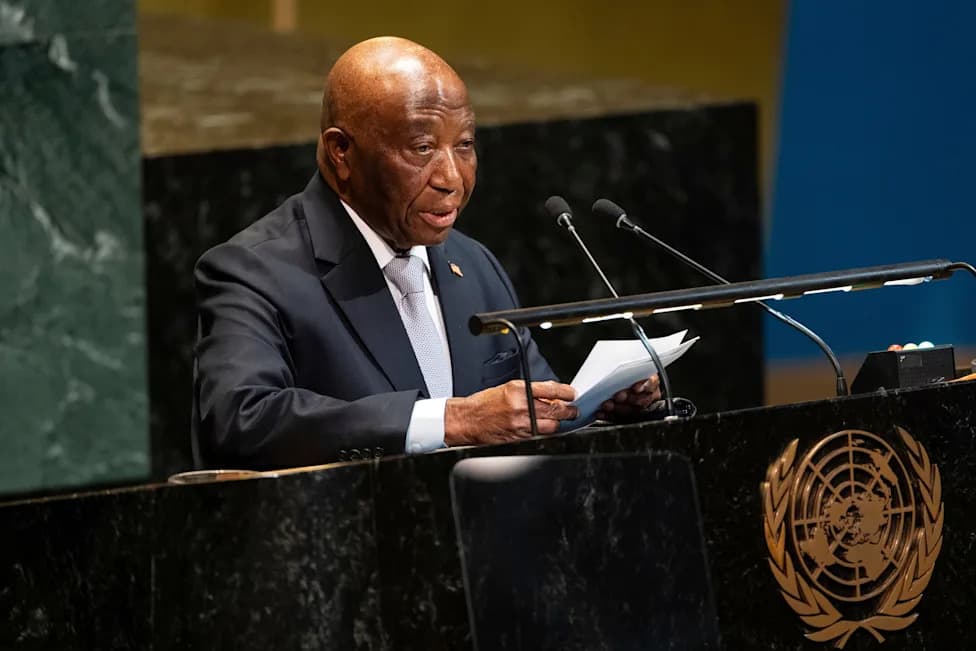
FILE -Liberia's President Joseph Boakai addresses the 80th session of the UN General Assembly at United Nations headquarters, Sept. 22, 2025. (AP Photo/Angelina Katsanis, File)
Monrovia, Liberia — Liberia has agreed to accept up to 1,200 third‑country deportees relocated from the United States, officials announced Tuesday. The arrivals are expected over the course of a year, with an initial group of 20 due this week, Information Minister Jerolinmek Piah told reporters.
Details of the Transfer
Piah said the group will include nationals from Africa as well as from North America, South America and the Caribbean. He added that Liberia screened the list of migrants ahead of their arrival and that the U.S. will provide support to help manage the reception program and strengthen Liberia's migration systems.
"Liberia's gesture is entirely humanitarian and in keeping with the country's longstanding traditions," Piah said. "The government of Liberia intends to provide the transferred persons with the necessary support to seek protection in Liberia and to be safe during their stay here."
Government Screening and Options for Arrivals
Justice Minister Natu Oswald Tweh told reporters that Liberian authorities reviewed the migrants' list in advance. He said most of those on the roster had immigration violations or related offenses. Piah noted that some arrivals may seek asylum in Liberia while others will be free to leave the country if they choose.
Concerns From Advocates and Lawyers
Advocates and immigration lawyers have raised concerns that the Trump administration used a series of often‑secret agreements to relocate thousands of people to countries that are not their own. A key worry is that some migrants may hold U.S. immigration protection orders that bar their return to their home countries because of safety risks; it was not clear whether any individuals bound for Liberia hold such orders.
Critics say third‑country deportations can function as a legal workaround that exposes people to danger or leaves them with little realistic option but to return to the countries they originally fled. About two dozen countries have received similar transfers, with roughly 10 located in Africa, advocates say.
What Comes Next: Liberia and the United States plan to coordinate the reception and support for the transferred people. Liberian officials say they will provide aid and protection options for those who seek asylum or need assistance while in the country.
Help us improve.