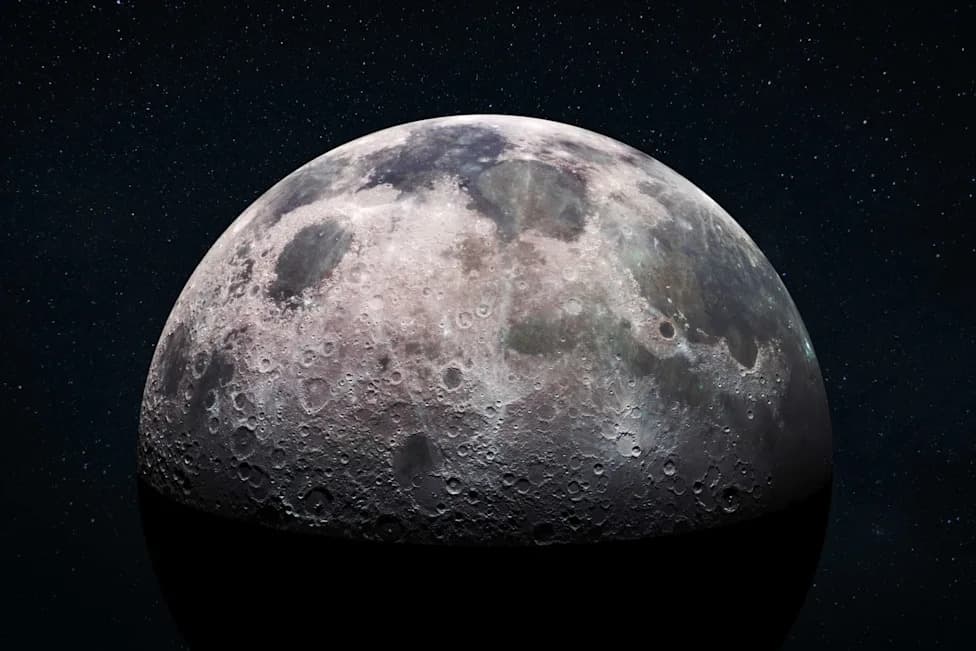
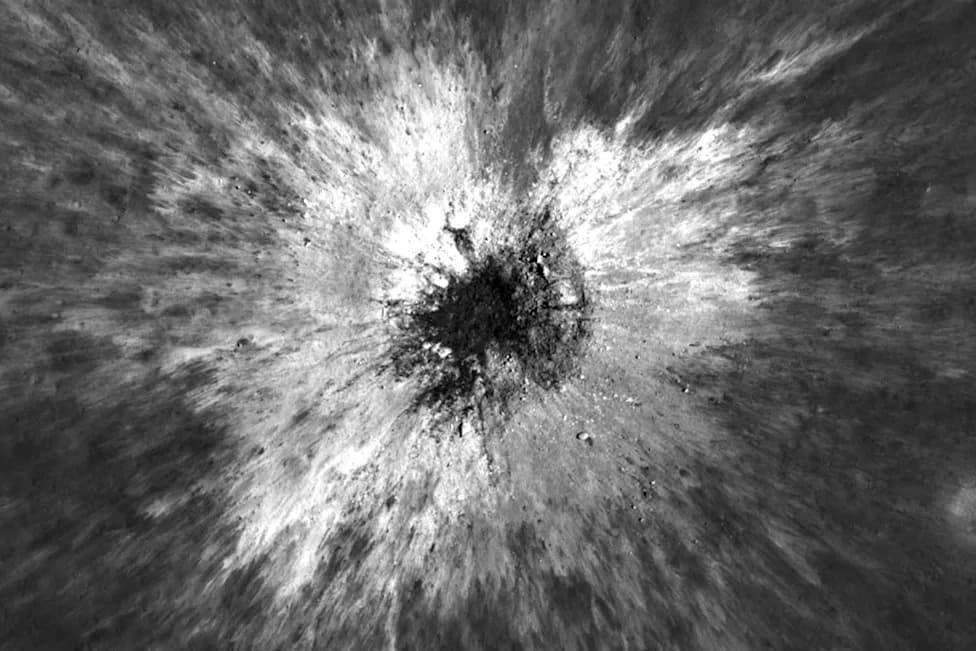
NASA's Lunar Reconnaissance Orbiter has released high-resolution images of a roughly 60-foot-wide crater created when an 8,800-pound Falcon 9 booster struck the Moon at about 5,400 mph on Aug. 5. The crater is under 10 feet deep and shows dark and bright rays that reveal surface-altered material and fresher subsurface ejecta. LRO photographed the site one week after impact from ~60 miles up; South Korea's Danuri probe returned the first images.
NASA Releases Sharp Images of 60‑Foot Lunar Crater Created by SpaceX Booster Impact
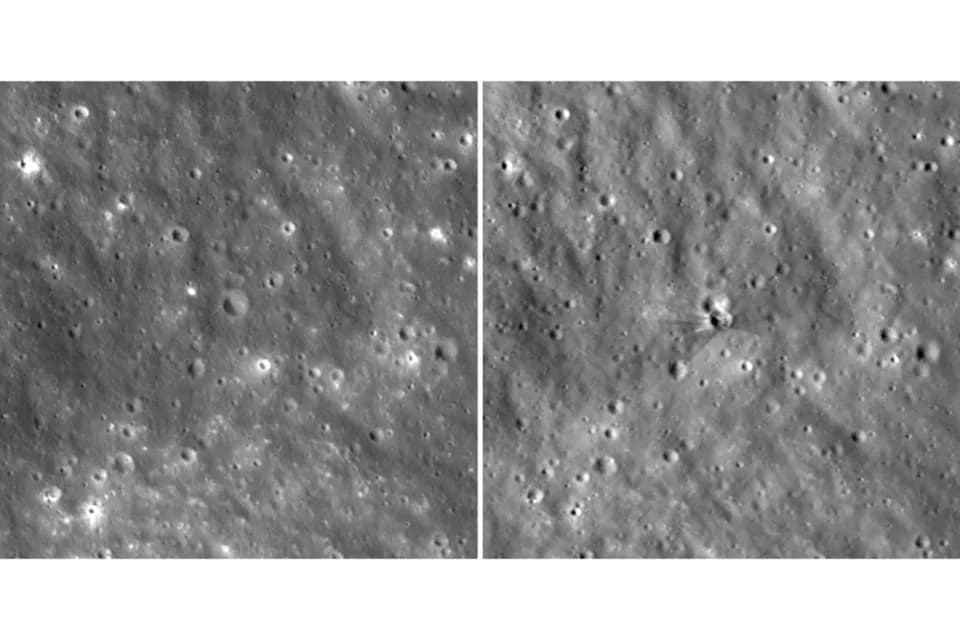
This combo, made with photos provided by NASA on Aug. 18, taken by the Lunar Reconnaissance Orbiter, shows before-and-after images of a fresh crater on the moon created by a collision with a SpaceX rocket. / Credit: NASA via AP
A NASA spacecraft orbiting the Moon has returned the clearest images yet of a crater formed when a SpaceX Falcon 9 rocket booster struck the lunar surface.
The agency released before-and-after photographs of the impact site on Tuesday, showing a fresh crater about 60 feet (roughly 18 meters) across and under 10 feet (about 3 meters) deep.
What Happened
On Aug. 5 the roughly 8,800-pound (≈4,000 kg), 45-foot-long upper stage of a Falcon 9 slammed into the Moon at about 5,400 mph (≈8,700 km/h) after drifting through space for more than a year. Scientists estimate the collision delivered energy comparable to nearly 3 tons of TNT. While the Moon regularly receives natural impacts from meteoroids, documented artificial collisions like this remain uncommon.
Images and Observations
Photos from NASA's Lunar Reconnaissance Orbiter (LRO) taken a week after the impact from an altitude of roughly 60 miles (≈100 km) show distinctive dark and bright rays radiating from the crater in a pattern likened to butterfly wings. The dark streaks are surface material that had been altered by long exposure to sunlight, cosmic rays and micrometeorite bombardment. Brighter rays mark fresher rocks and regolith excavated from deeper below the surface.
Flight controllers tilted LRO so its cameras could be aimed directly at the site; because of orbital timing, it took six days for the impact area to rotate into view. South Korea's Danuri probe was the first spacecraft to return photos of the crash site.
Context
The Falcon 9 upper stage had launched two private lunar landers in January 2025 as part of NASA's effort to expand commercial activity around the Moon. The Lunar Reconnaissance Orbiter, launched in 2009, has been NASA's high-resolution surveyor of the lunar surface as the agency prepares to return astronauts to the Moon.
Why it matters: The clear before-and-after imagery helps scientists study how artificial impacts disturb the lunar surface and how ejecta patterns reveal subsurface layering — useful information for future missions and site planning.
Help us improve.