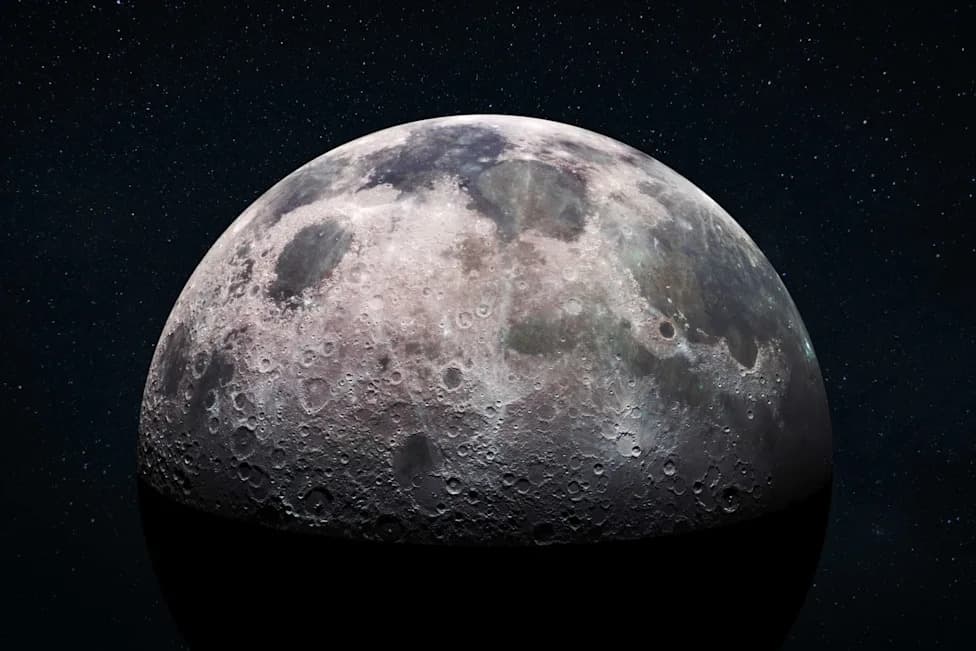
Scientists have discovered a new lunar crater named McGetchin, about 728 feet wide and 141 feet deep, that formed between April 11 and May 22, 2024. The impact is believed to have been caused by an asteroid or comet fragment roughly the size of a three‑ to six‑story building — an event estimated to occur on the Moon about once every 132 years. Researchers also found a roughly four‑mile‑wide cold spot around the crater, 14–16°F colder at night, and evidence that disturbed regolith became less dense. These changes could affect rover traction and the safety of future lunar infrastructure.
Scientists Find Massive New Lunar Crater — Bigger Than the Roman Colosseum, Caused by a ‘Once-in-a-Lifetime’ Impact
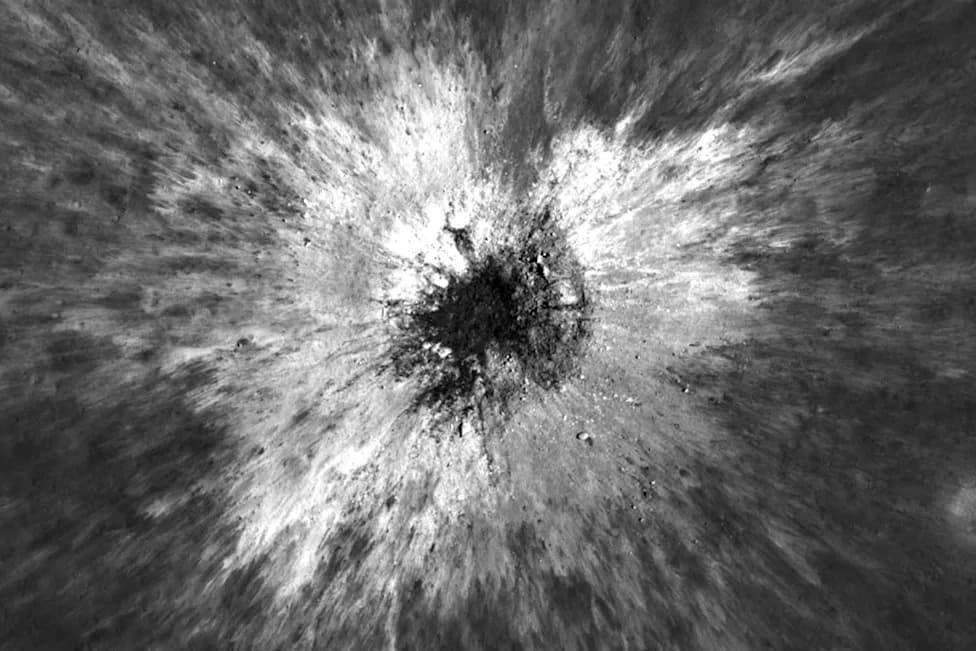
The moon after a newly discovered crater, created in 2024Credit: NASA/Goddard Space Flight Center/Intuitive Machines via AP
Scientists have identified a large new crater on the Moon — named McGetchin — that measures about 728 feet (≈222 m) across and 141 feet (≈43 m) deep. Researchers narrowed the formation window to between April 11 and May 22, 2024, and reported their findings in a study published in Science Advances on Sept. 16.
Discovery
The fresh feature was not observed at the moment of impact. Instead, Robert Wagner, an image-processing specialist with Intuitive Machines who works with NASA's Lunar Reconnaissance Orbiter Camera (LROC), noticed an obvious change while reviewing lunar images on Oct. 24, 2025. By comparing imagery captured before and after the event, Wagner and colleagues confirmed that a new crater had formed.
'I just stopped, dropped everything and started looking into what that spot was,' Wagner said, describing his reaction to the LROC images.
What Caused the Crater
Investigators estimate the impactor was a fragment of an asteroid or comet roughly the size of a three- to six‑story building. Scientists say collisions of this magnitude on the Moon are rare — occurring roughly once every 132 years — which the authors describe as a "statistically rare, effectively once-in-a-lifetime observation."
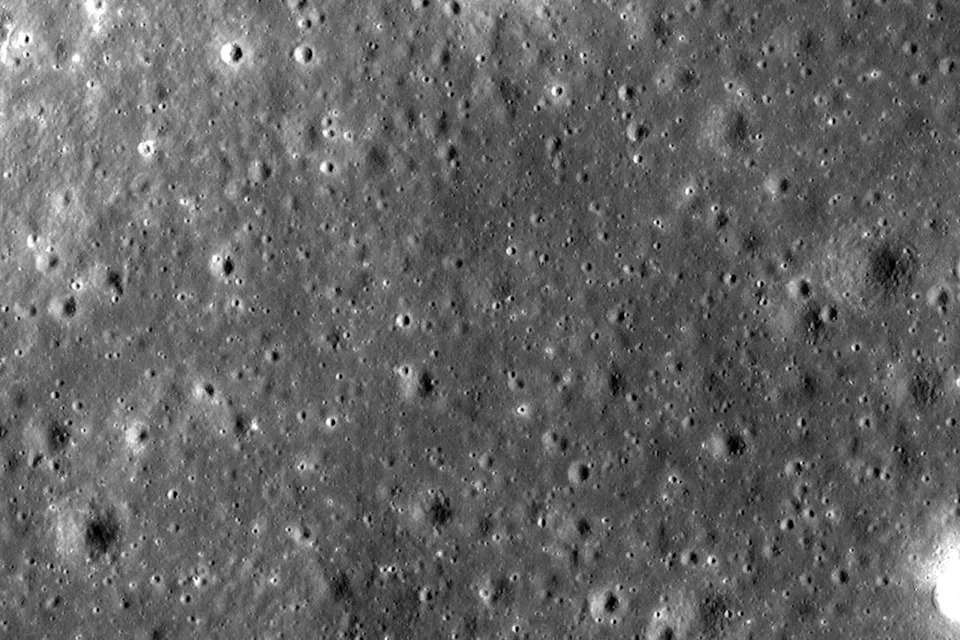
Photo of the surface of the moonCredit: NASA/Goddard Space Flight Center/Intuitive Machines via AP
Wider Effects on the Lunar Surface
Beyond the hole itself, researchers found that the collision altered a region far larger than the crater. Surface changes extend to distances exceeding more than 1,000 times the crater's radius, indicating that ejecta and thermal effects spread widely across surrounding terrain.
A separate analysis published alongside the discovery identified a roughly four-mile-wide (≈6.4 km) "cold spot" encircling McGetchin. At night this zone is about 14–16°F (≈7.8–8.9°C) colder than adjacent undisturbed terrain. The drop in temperature is attributed to changes in the upper layers of regolith: the disturbed material became less dense and less able to retain heat.
Why It Matters
These findings have practical implications for future lunar exploration. NASA notes that changes in soil density and surface properties could affect rover traction and mobility across disturbed ground. Mapping how far debris and thermal effects extend from impacts will help scientists assess hazards to equipment and potential infrastructure on the Moon.
Name And Credit: The crater was named McGetchin in honor of the late Thomas McGetchin, a lunar scientist and volcanologist who served as director of the Lunar and Planetary Institute. Image and data credits: NASA/Goddard Space Flight Center/Intuitive Machines (via AP) and the Lunar Reconnaissance Orbiter Camera team.
Help us improve.