Satellite time-lapse imagery shows Lake Mead and Lake Powell contracting to record-low elevations in 2026. Lake Mead fell below its 2022 low of about 1,040.4 ft, while Lake Powell dropped to 3,519.91 ft, below its 2023 record. Officials have released water from Flaming Gorge and adopted an adaptive Bureau of Reclamation framework through 2036, but experts warn that one good winter won’t reverse decades-long declines.
Satellite Time-Lapse Reveals Lake Mead and Lake Powell Shrinking to Record Lows
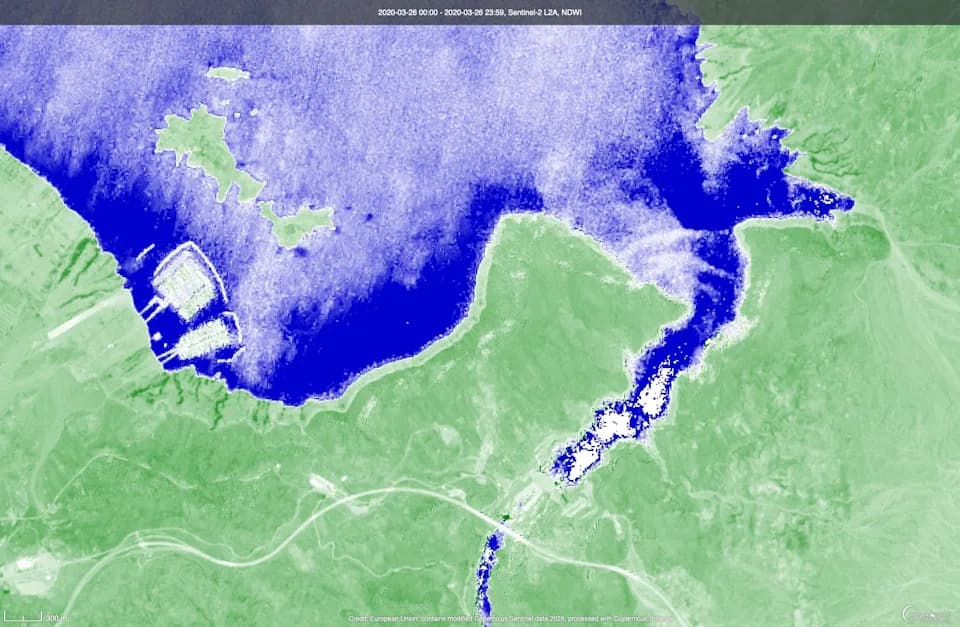
Hoover Dam in August 2026 vs. March 2020. The images were captured by the ESA's Sentinel-2 satellites, part of the Copernicus Earth observation program, and rendered in the Normalized Difference Water Index, which researchers use to track water levels.
Satellite time-lapse imagery confirms that Lake Mead and Lake Powell—the largest and second-largest reservoirs in the United States—have steadily contracted, with both lakes falling to record-low elevations in 2026. The images and data underscore how prolonged drought and long-term hydrologic trends are reshaping the Colorado River basin.
What the Satellites Show
Comparative satellite shots, including imagery of Hoover Dam from August 2026 and March 2020 captured by the European Space Agency's Sentinel-2 satellites, were rendered using the Normalized Difference Water Index (NDWI). NDWI highlights water extent and makes the shrinking shorelines immediately visible.
Recent Records and Expert Response
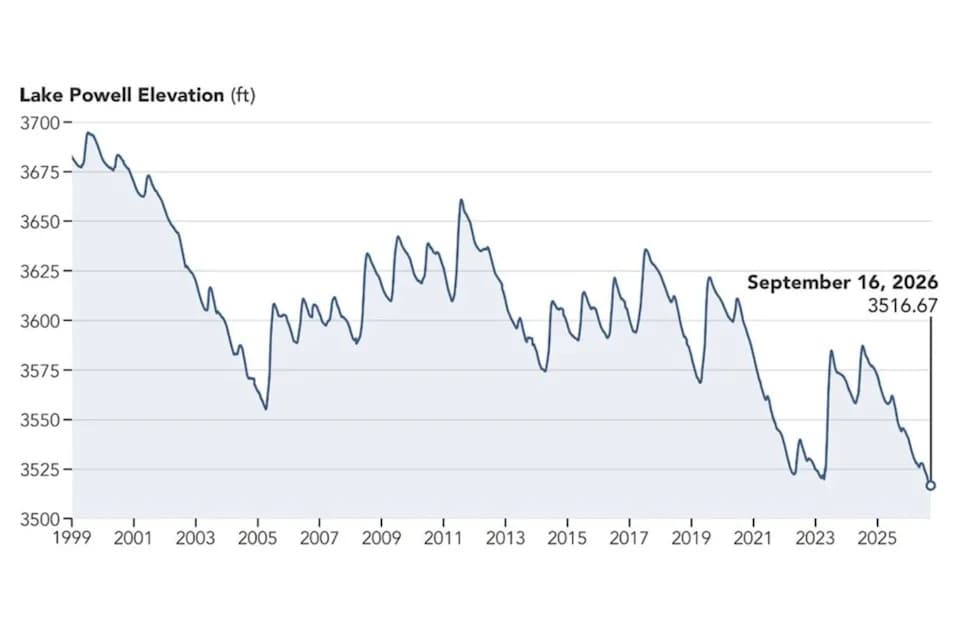
Lake Mead recently slipped below the 2022 record low of about 1,040.4 feet above sea level. Lake Powell also reached a new low, falling to 3,519.91 feet above sea level—surpassing the previous record set in 2023. Sarah Porter, director of the Kyl Center for Water Policy at Arizona State University, called the new lows “discouraging but not surprising,” and warned that one good winter will not reverse a multidecade decline.
“Levels at both Lake Mead and Lake Powell have ratcheted down over the last quarter-century,” Porter said. “One good winter won’t be enough to stabilize the system over the long term.”
Consequences And Management Steps
The Colorado River is a critical waterway for the American West, supplying some or all municipal water for an estimated 35–40 million people across seven U.S. basin states—Arizona, California, Colorado, Utah, Nevada, New Mexico and Wyoming—and parts of Mexico, and irrigating millions of acres of farmland. Declining lake levels also threaten hydropower production at Glen Canyon Dam.
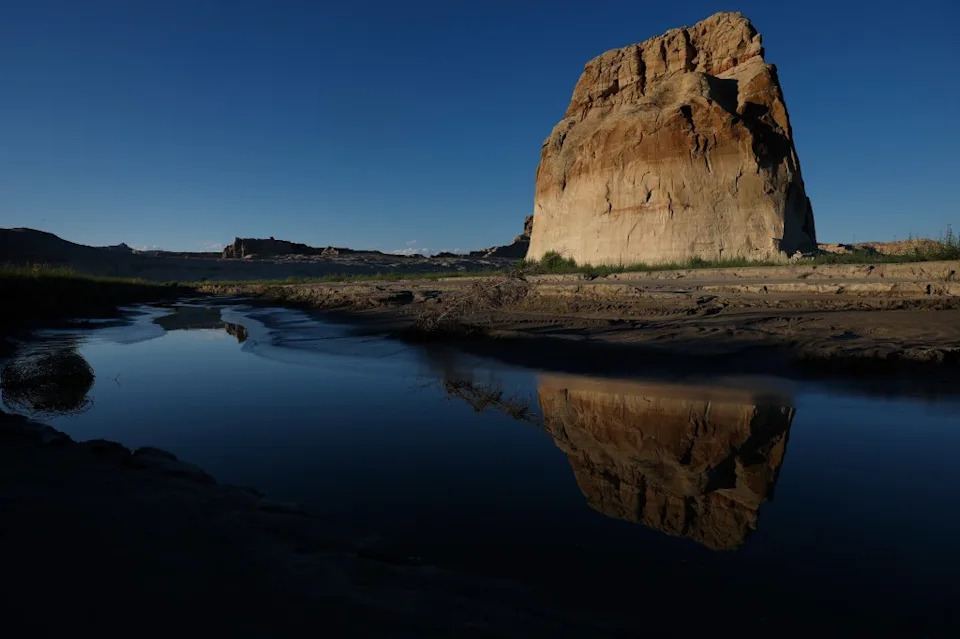
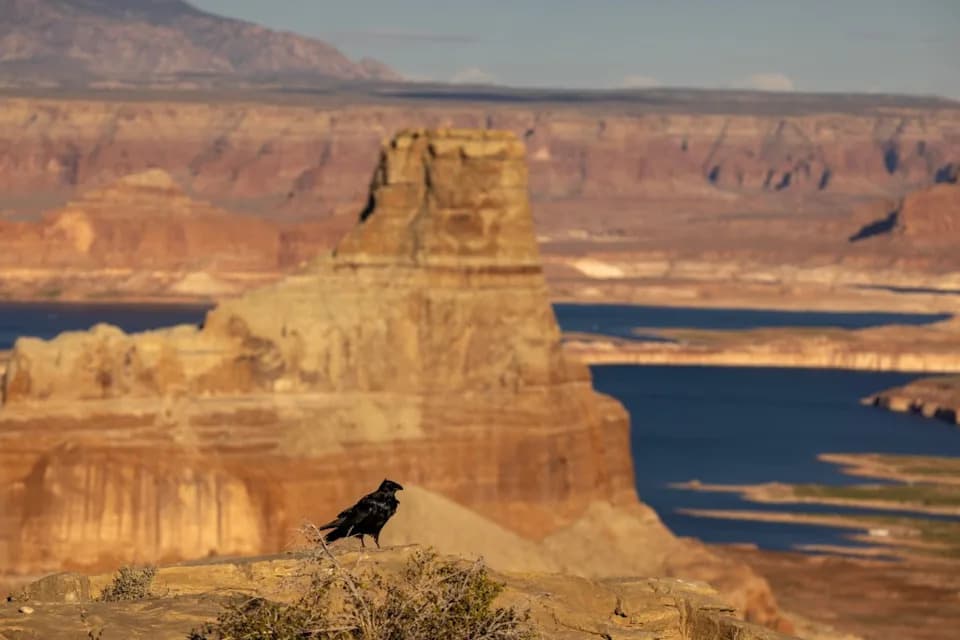
Lone Rock is reflected in a section of Lake Powell that was previously underwater at Lone Rock Beach on July 31, 2026, in Big Water, Utah.
Officials have taken operational steps to support reservoir levels, including releases from upstream Flaming Gorge Reservoir and reduced downstream outflows to Lake Mead. Federal forecasters previously warned that continued declines at Lake Powell could jeopardize hydropower generation at Glen Canyon Dam.
Longer-Term Policy
With several existing guidelines set to expire, the seven basin states and federal agencies have negotiated updated management plans. Last month, the Bureau of Reclamation released a Final Environmental Impact Statement that identifies a preferred approach and establishes an adaptive decision framework to guide operations through 2036.
Interior Secretary Doug Burgum said the department must ensure the Colorado River system remains “reliable and resilient for the millions of Americans, communities and industries that depend on it,” adding that the framework provides flexibility to respond to changing hydrologic conditions while preserving opportunities for the basin states to find consensus-based solutions.
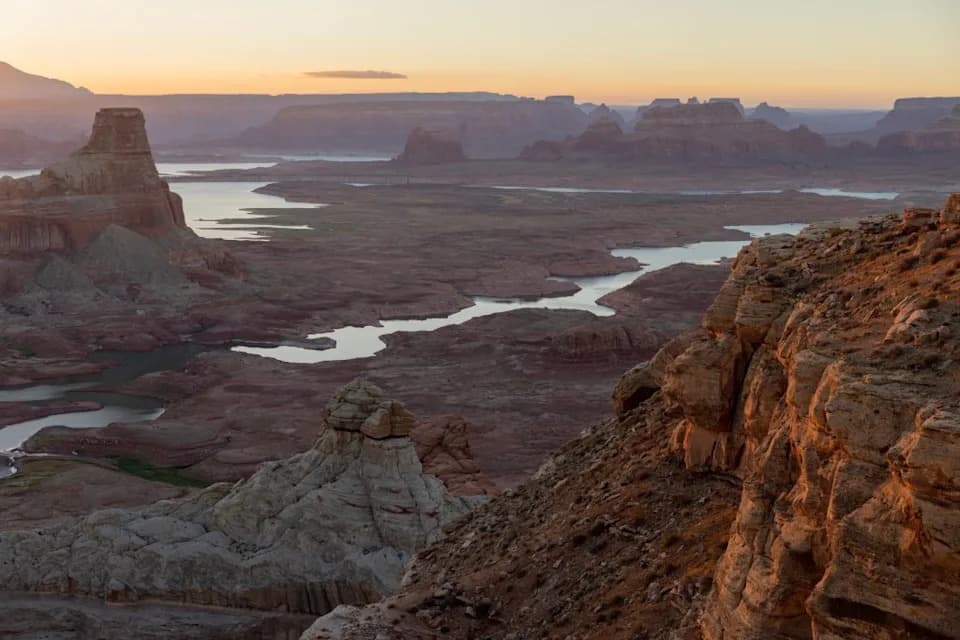
Time-lapse footage from NOAA's JPSS satellites covering 2012–2026 provides a longer-term view of lake recession, illustrating more than a decade of retreating shorelines and offering a visual record of changes that managers must now confront.
Help us improve.