Brookfield Renewable is under renewed scrutiny after a July 27 turbine shutdown at McKay Station caused a significant die-off of juvenile landlocked salmon on the West Branch of the Penobscot River. Critics say the 1996 Ripogenus license lacks modern safeguards such as redundant lines, automatic backup flows and a dam keeper. Conservation groups estimate thousands of fish died and want mandatory limits on low-flow events, independent inspections and system redundancies. Public comments on relicensing are due by Aug. 28 before a Maine DEP water-quality assessment begins.
Brookfield Faces Renewed Scrutiny After Major Fish Kill on Penobscot River

Chris Howe, a local whitewater raft guide, was an eyewitness to the Ripogenus Dam shut down in July that lasted two hours and reportedly killed young fish in the West Branch Penobscot River. The trip event was caused by a power line failure. Photo by Linda Coan O'Kresik of the Bangor Daily News.
Brookfield Renewable, which owns most of Maine's hydroelectric capacity, is facing renewed criticism after a July 27 turbine shutdown at its McKay Station triggered a large fish kill on the West Branch of the Penobscot River. The outage — caused by a broken transmission-line cross-arm — followed a similar malfunction in 2023 and occurred while Brookfield seeks to renew the Ripogenus Dam license.
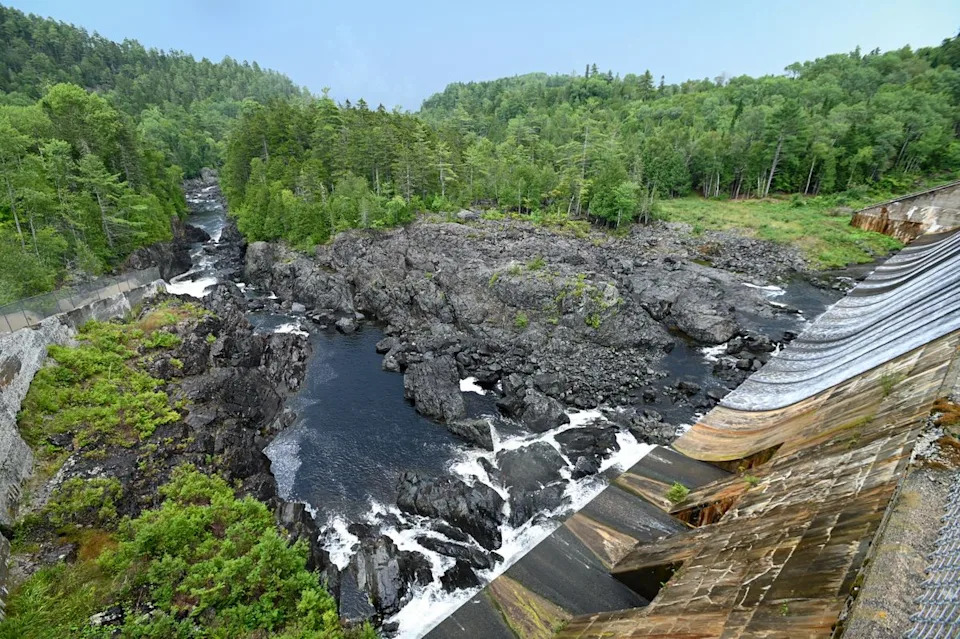
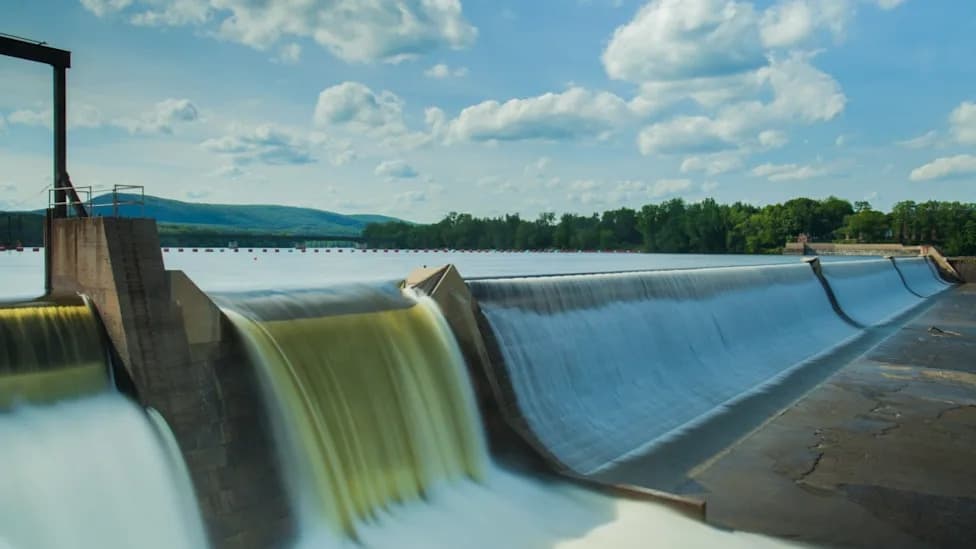
The Ripogenus Dam, which is 30 miles west of Millinocket near the Golden Road, is pictured on August 13. Photo by Linda Coan O'Kresik of the Bangor Daily News.
What Happened
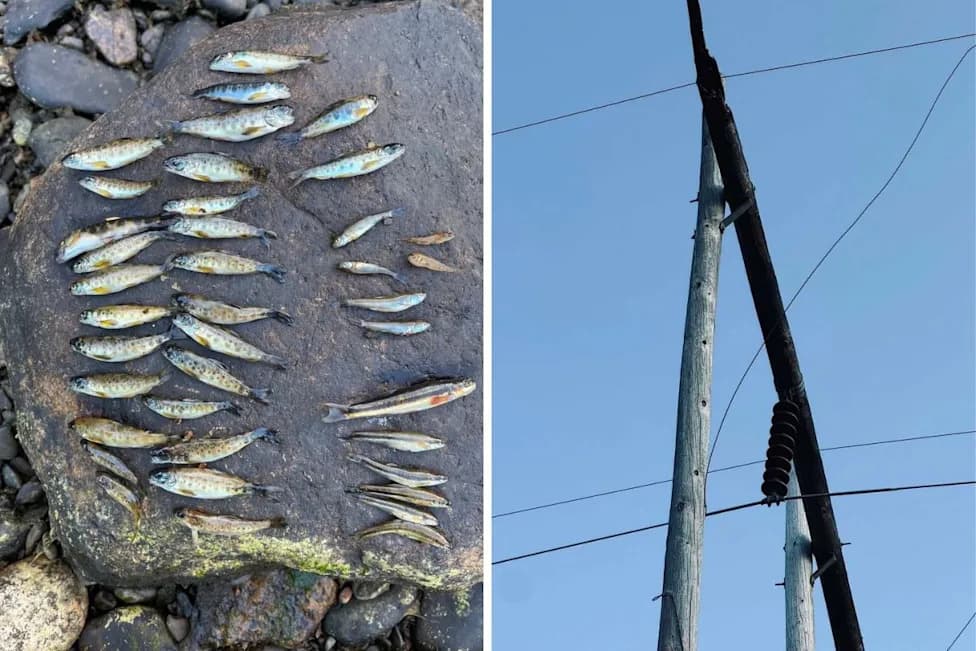
The two-hour shutdown rapidly reduced downstream flows, leaving juvenile landlocked salmon and other fish stranded and dead along riverbanks. Conservationists and local river guides say several thousand juvenile salmon may have been killed and estimate immediate economic losses to lodging, guide services and angling activity at roughly $50,000.
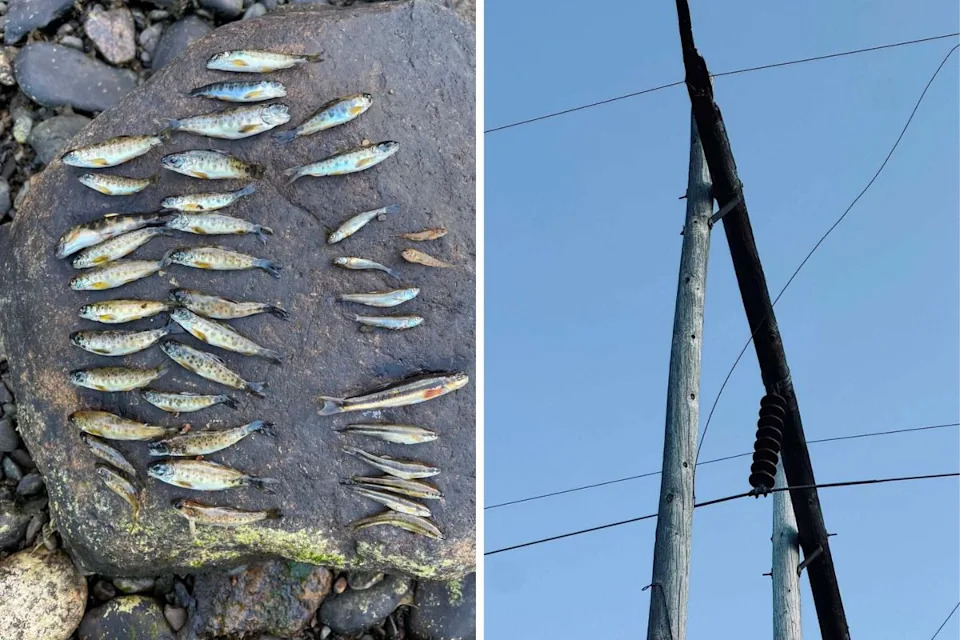
Left: Juvenile fish were found stranded and dead along the West Branch of the Penobscot River after a sudden drop in flows following a turbine shutdown at Brookfield Renewable's McKay Station on Monday, July 27. Right: A charred crossarm is visible atop a utility pole along the transmission line from Brookfield Renewable's McKay Station. Photos courtesy Chris Howe; Todd Mercer.
Why It Matters
Opponents argue that the 1996 license Brookfield inherited when it bought Ripogenus Dam and its transmission station from Great Northern Paper Company in 2010 lacks safeguards now considered essential — such as redundant transmission lines, automatic backups to maintain flow when generators trip, and a dedicated dam keeper for rapid response.
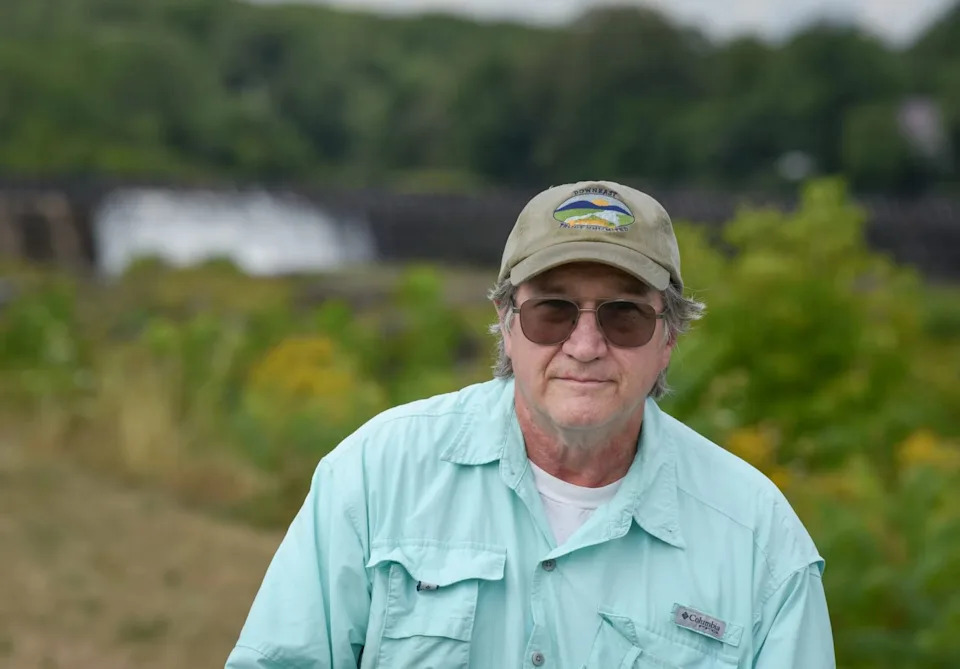
Neal Hagstrom, a retired fish biologist and member of the conservation group Maine Council of Trout Unlimited, is photographed in Old Town with the Milford Dam in the background on Aug. 14, 2026. Photo by Linda Coan O'Kresik of the Bangor Daily News.
"An event happening this close to the end of the process shows there's a need to set some higher standards to prevent this from happening," said Chris Howe, a local whitewater raft guide who has documented recurring system failures during nearly two decades on the river.
Stakeholder Demands
Property owners and conservation groups have filed complaints with federal regulators requesting stronger relicensing conditions. Their requests include limiting malfunction-induced low-flow events to 30 minutes, quarterly independent inspections of powerline equipment, installation of redundant transmission lines between McKay Station and Millinocket, a return of an on-site dam keeper, and an automatic system to restore flows if generators fail.
Brookfield's Response
Brookfield reported the outage to regulators and acknowledged it did not immediately survey the downstream area but said it was "likely that impacts to aquatic life occurred." A company spokesperson noted Brookfield has invested nearly $3 million over the past decade in inspection, maintenance and rehabilitation of transmission lines around McKay Station and that a multi-year pole and cross-arm replacement program is underway.
Regulatory Path Forward
The Ripogenus license, originally issued in 1996, is up for renewal this September. Federal regulators at the Federal Energy Regulatory Commission (FERC) can impose fines, recommend license amendments, or, in extreme cases, suspend operations if they find serious noncompliance. Public comments to federal regulators are due by Aug. 28; afterward the Maine Department of Environmental Protection will conduct a water-quality assessment that will accept public input and may take up to a year.
Local residents emphasize that the relicensing decision will set operational rules for the next three decades. "All we want them to do is take a few steps to protect what's there," said Neal Hagstrom, a retired fish biologist and member of the Maine Council of Trout Unlimited.
Help us improve.