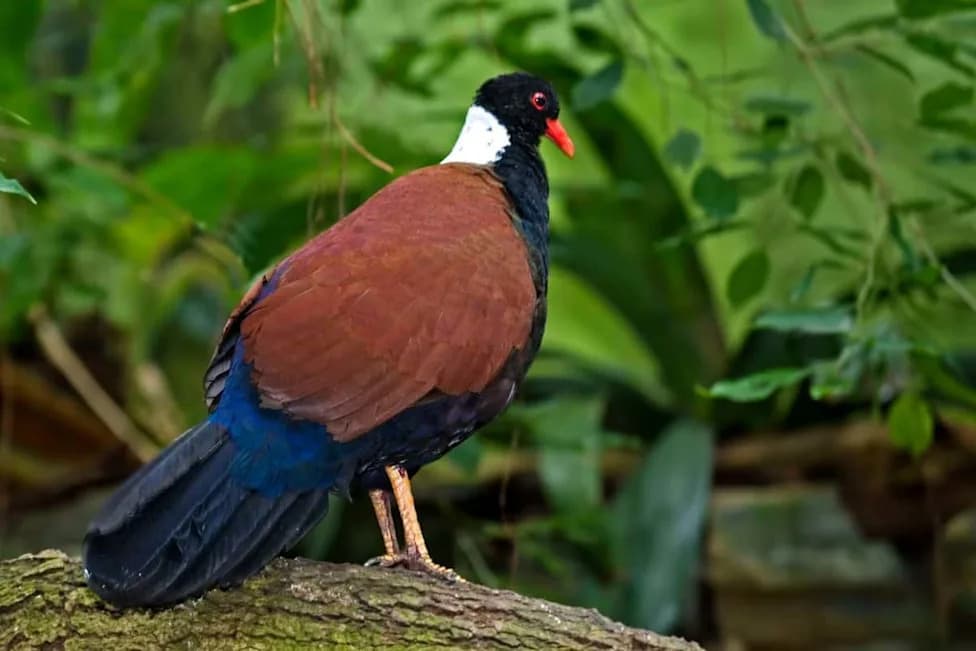
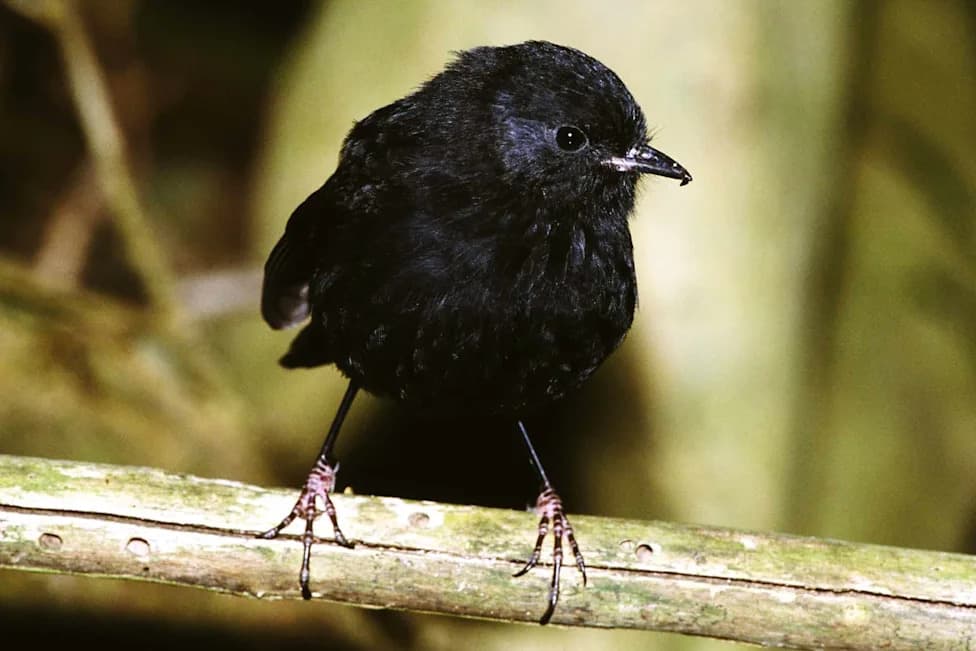
The black-naped pheasant-pigeon ("auwo") was documented on Fergusson Island by camera traps during a 2022 Cornell-led expedition, marking the first verified record in over 140 years. All museum specimens date to 1882, and only a few unverified local sightings were reported into the 1990s. Experts estimate 50–249 individuals remain, concentrated in a single population and threatened by habitat loss and illegal logging. Urgent conservation measures—protected areas, sustainable forestry, habitat restoration and indigenous-led initiatives—are recommended to prevent extinction.
After 140 Years, the 'Auwo' — Black-Naped Pheasant-Pigeon — Is Caught on Camera (2022)
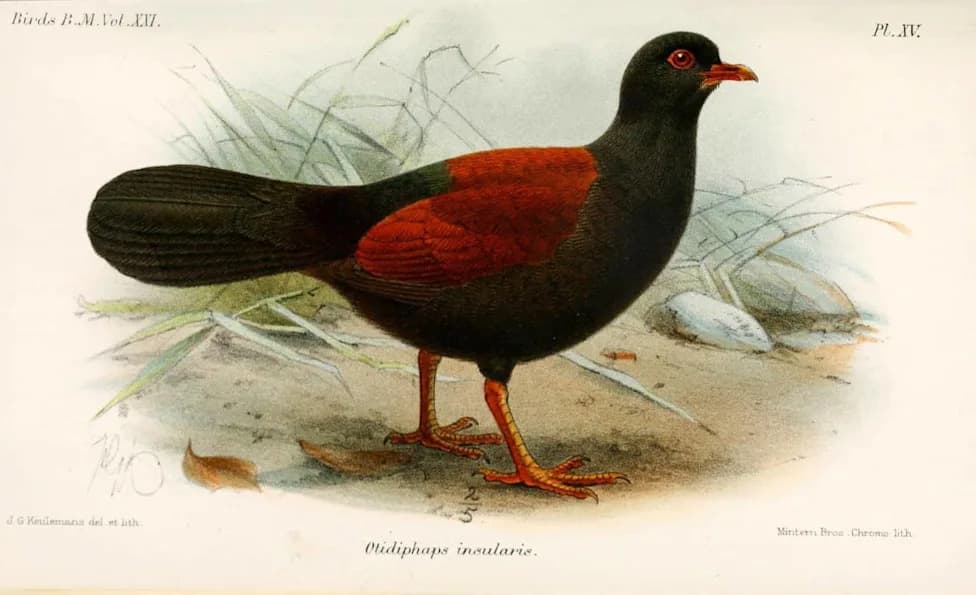
Black-naped pheasant-pigeon© John Gerrard Keulemans, Public domain, via Wikimedia Commons
The black-naped pheasant-pigeon, known locally on Fergusson Island as the "auwo," was captured on camera traps during a 2022 field expedition, confirming a species long absent from formal scientific records. The rediscovery offers hope but also underscores how precarious the bird's survival remains.
Rediscovery
In 2022, a research team led by Jordan Boersma from Cornell University, working with local indigenous communities and biologist Doka Nason, deployed camera traps on Mount Kilkerran, Fergusson Island's highest peak. After several days with no evidence, the final days of the expedition produced decisive images and video: the black-naped pheasant-pigeon, documented by researchers for the first time in more than 140 years. The Cornell Lab of Ornithology later released footage showing the moment of discovery.
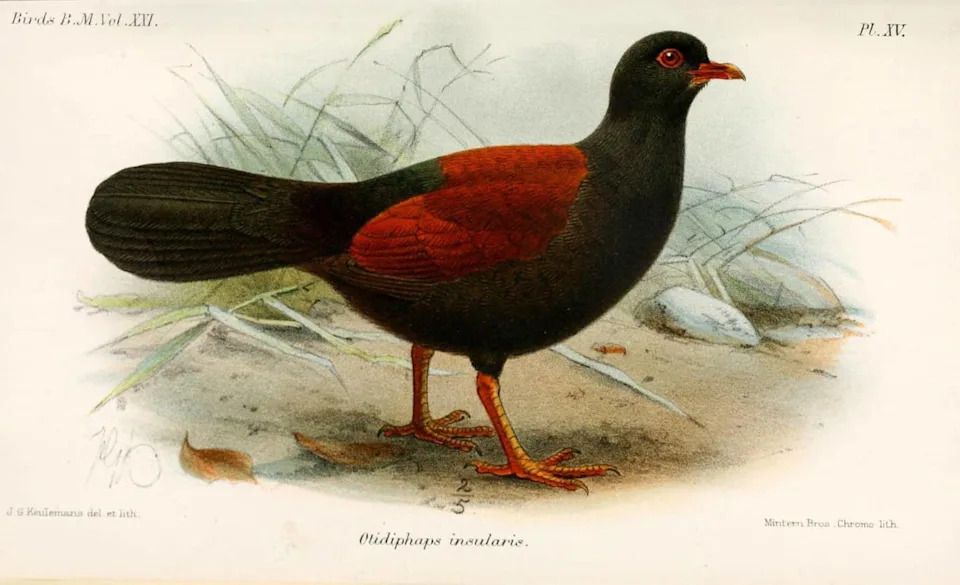
The last time Europeans saw the black-naped pheasant-pigeon was in 1882.©John Gerrard Keulemans, Public domain, via Wikimedia Commons –Original/License
History And Documentation
The species is poorly documented. All known museum specimens were collected in 1882, and European observers last recorded the bird that same year. Occasional unverified sightings by indigenous hunters continued into the 1990s, but until the 2022 camera-trap images there were no scientifically verified records in modern times.
Population Status And Threats
The rediscovery does not imply a secure or large population. Conservation assessments estimate roughly 50–249 individuals may remain, with most birds likely concentrated in a single population. Such concentration makes the species vulnerable to disease, a catastrophic event, or localized threats.
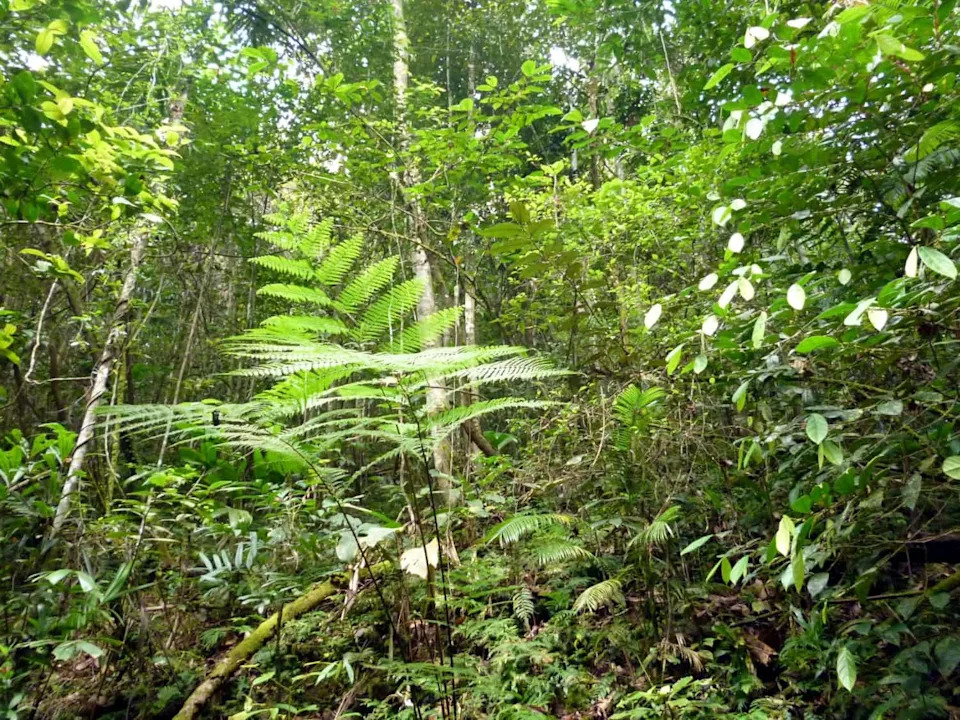
With their rainforest habitat decreasing, in addition to other environmental pressures, the black-naped pheasant-pigeon population is decreasing.©Sebastian 22/Shutterstock.com
Habitat loss is the primary threat. The rainforest the species depends on is shrinking due to logging and land conversion. Studies suggest a large share of timber exported from Papua New Guinea may be illegal, which drives unsustainable extraction and further degrades habitat. Observers also note the species has become absent from areas where it was once reported, indicating a contracting range.
Conservation Actions Needed
Experts urge immediate conservation measures to prevent extinction. Recommended actions include:
- Create and manage protected areas on Fergusson Island focused on key habitat and breeding grounds.
- Reduce illegal and unsustainable logging and promote sustainable forestry practices.
- Restore fragmented rainforest to expand available habitat and improve connectivity.
- Support indigenous-led conservation and include local communities in planning and enforcement.
- Strengthen anti-poaching efforts and monitoring, including expanded camera trapping and population surveys.
The 2022 camera-trap record is a rare and invaluable confirmation that the "auwo" still survives. Without targeted protection, habitat restoration, and community-backed conservation, this rediscovery may be only a temporary reprieve for a species that remains highly imperiled.
Help us improve.