Ukraine says it struck Wildberries’ largest warehouse — a 250,000 m² hub at Koledino near Moscow — as part of a campaign that has put seven of the retailer’s 10 biggest logistics sites out of action since July. Wildberries reported fires and supply-chain disruption, while Kyiv alleges the company supplied components used by Russia’s military. Analysts, including the Institute for the Study of War, say the raids expose gaps in Russia’s rear-area air defences and are adding economic pressure on lenders that financed Wildberries.
Ukraine Strikes Major Wildberries Warehouses Deep Inside Russia, Knocking Out Seven Of Top 10

Ukraine has hit seven of Russian online retailer Wildberries' 10 biggest warehouses, military says
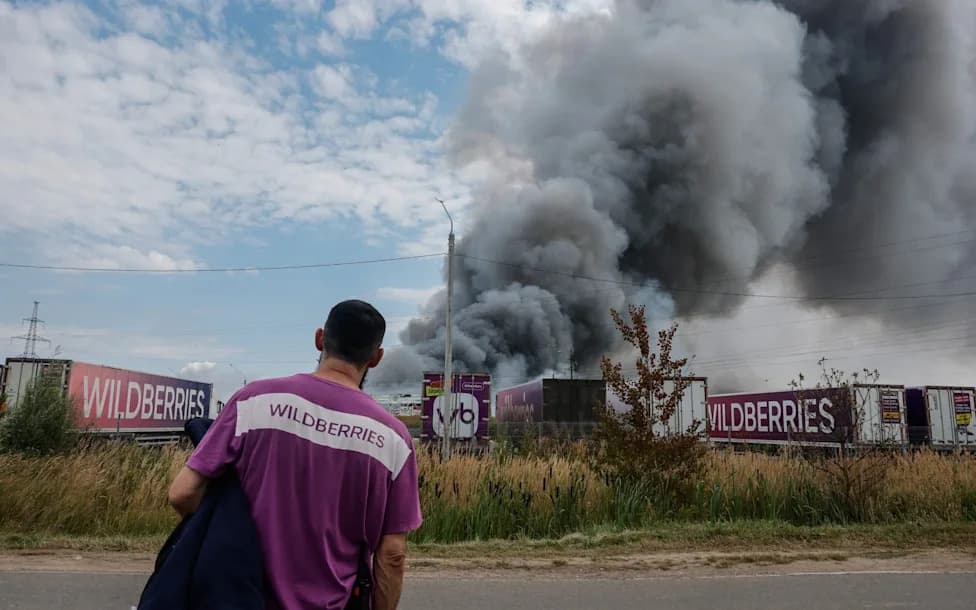
Ukraine’s Ministry of Defence said its forces struck Wildberries’ single largest logistics site — a 250,000-square-metre warehouse at the Koledino Industrial Park in Podolsk, Moscow Region, roughly 420 km from the Ukrainian border. Kyiv says the attack is the latest in a campaign that has disabled seven of the online retailer’s ten biggest hubs since strikes began in July.
What Happened
Wildberries confirmed the strike sparked a large fire and forced the company to reroute portions of its supply chain. Ukrainian forces also struck a second depot in nearby Domodedovo on the same night, according to Kyiv. International reporting indicates roughly 20 Wildberries facilities have been hit since the campaign began.

Smoke rises following a Ukrainian drone attack on a warehouse for online retailer Wildberries in St. Petersburg, 24 July, 2026 - AP photo
Where The Campaign Has Reached
Kyiv says the operation began on the weekend of 18 July, when drones struck sites in Elektrostal (east of Moscow) and in the Tambov region. The campaign has since spread from the Moscow and St Petersburg areas to southern Russia and as far east as Yekaterinburg in the Urals — more than 2,000 km from Ukraine’s territory.
Why Kyiv Says These Targets Matter
Ukrainian officials justify the strikes by alleging Wildberries has been supplying components used by the Russian military, including drone parts and navigation equipment, alongside consumer deliveries. Officials say the aim is to disrupt military supply lines, create domestic pressure and apply a wider financial squeeze on lenders tied to the company.

A woman carrying a package leaves an outlet of Russia's major online retailer Wildberries in Moscow, 22 July, 2026 - AP Photo
Institute for the Study of War: "Moscow simply does not have enough air-defence coverage to shield every piece of infrastructure in its rear, even ten of its most valuable commercial sites."
Economic Impact
Wildberries — often compared to Amazon in scale — reports annual turnover of about €70–75 billion, a figure various estimates place at just over 2% of Russia’s GDP. The marketplace handles roughly half of Russia’s online orders and serves several hundred thousand sellers across eleven time zones, a role that expanded after Western brands withdrew from the market following the invasion.
Analysts and Ukrainian officials warn that damage to Wildberries’s logistics network could ripple beyond the company, disrupting consumer deliveries and straining banks. Lenders such as VTB and Sberbank extended about €13 billion in loans to Wildberries; Kyiv’s campaign seeks to make servicing those debts harder, potentially amplifying financial stress.
What This Reveals
Analysts say the strikes highlight two broader points: Kyiv’s growing capability to reach deep inside Russian territory and gaps in Russia’s rear-area air-defence coverage. The operation is both a tactical effort to disrupt specific supply chains and a strategic attempt to apply economic pressure on Moscow.
Key facts: seven of Wildberries’ ten largest hubs hit; about 20 facilities struck overall; 250,000 m² Koledino warehouse targeted; Wildberries turnover ≈ €70–75bn; roughly €13bn in bank exposure.
Help us improve.