Thailand faces a deep-rooted firearms crisis: an estimated 10 million civilian guns — about 4 million unlicensed — are in circulation. Recent mass shootings and a high-profile killing of a local official exposed major legal loopholes: lifetime possession permits, no mandatory mental-health checks and weak safe-storage rules. A government discount scheme for officials has fuelled imports and a lucrative resale market, while cultural factors and weak enforcement complicate reform.
Thailand's Gun Crisis: About 10 Million Civilian Firearms and Rising Violence
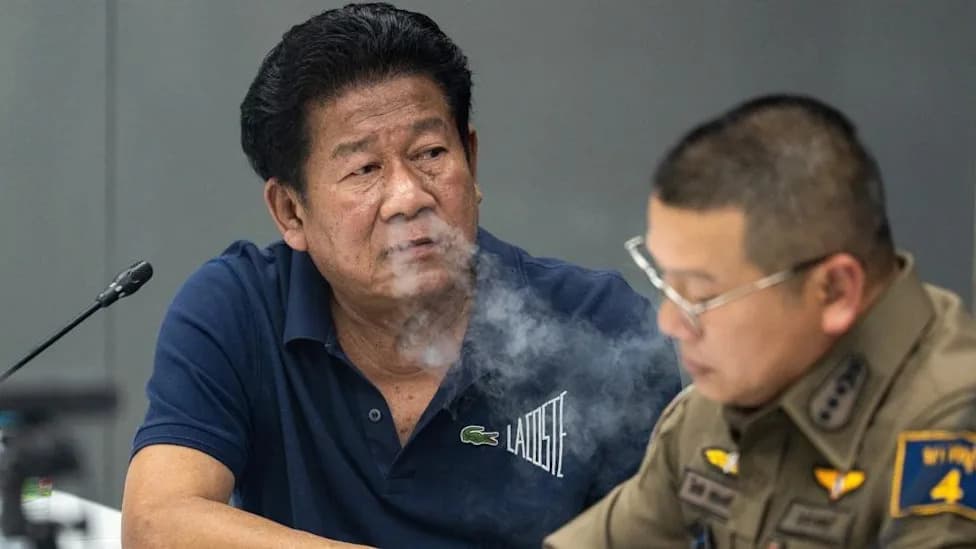
Chalong Riewrang told reporters he had "not intended to shoot his friend" [Reuters]
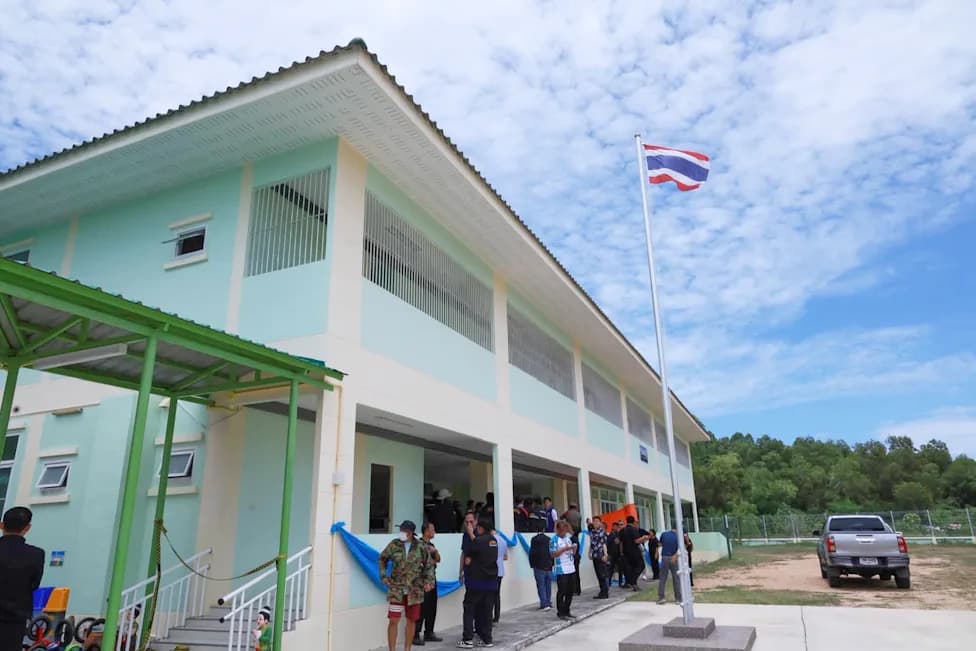
Just days after a 14-year-old opened fire at his school — killing eight people and then taking his own life — another incident in the same province highlighted Thailand’s escalating gun problem.
Seventy-one-year-old former politician Chalong Riewrang visited a local administration office to demand a payment he said was owed by the administration chief, Thongchai Yenprasert, whom he described as a friend. The meeting ended when Chalong produced a handgun and fired four rounds through the car window, striking Thongchai and his driver. Thongchai later died of his wounds.
After leaving the scene, Chalong phoned a journalist who was broadcasting on YouTube to report the shooting. When police intercepted him and brought him to the station, he was permitted to speak to reporters — smoking a cigarette and appearing outwardly calm.
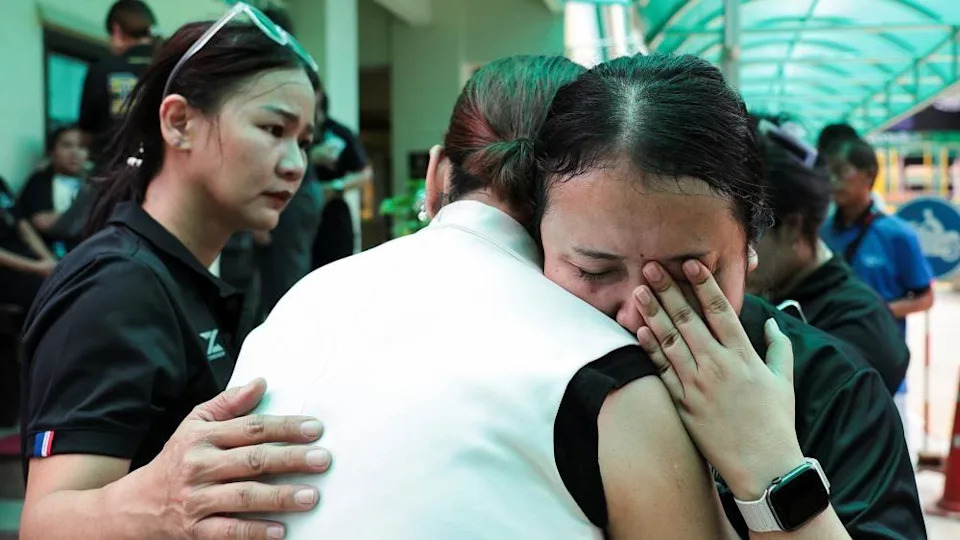
Three days before the politician opened fire, eight people died in a school shooting in the same province [Reuters]
Chalong told reporters he "had not intended to shoot his friend" but claimed he fired after the driver also produced a gun. Police later recovered two firearms from the vehicle but said they were not in a condition to be fired. Three days earlier, the province had suffered a school shooting that left eight dead.
That same day, in Prachinburi province, a police sergeant shot his wife during an argument while she was driving to collect their young son; the car crashed and the sergeant subsequently shot himself. His wife later died in hospital. There were likely additional gun deaths that went unreported.
Scale and Patterns
Thai authorities do not publish a consolidated official total, but independent estimates place annual gun deaths at roughly 2,000–3,000. By comparison, Britain — with a similar population — records fewer than 50 gun deaths a year. Analysts say most fatal shootings in Thailand stem from domestic disputes, financial disagreements or alcohol-fuelled bar fights, though guns are also used in robberies and can be hired for murder.
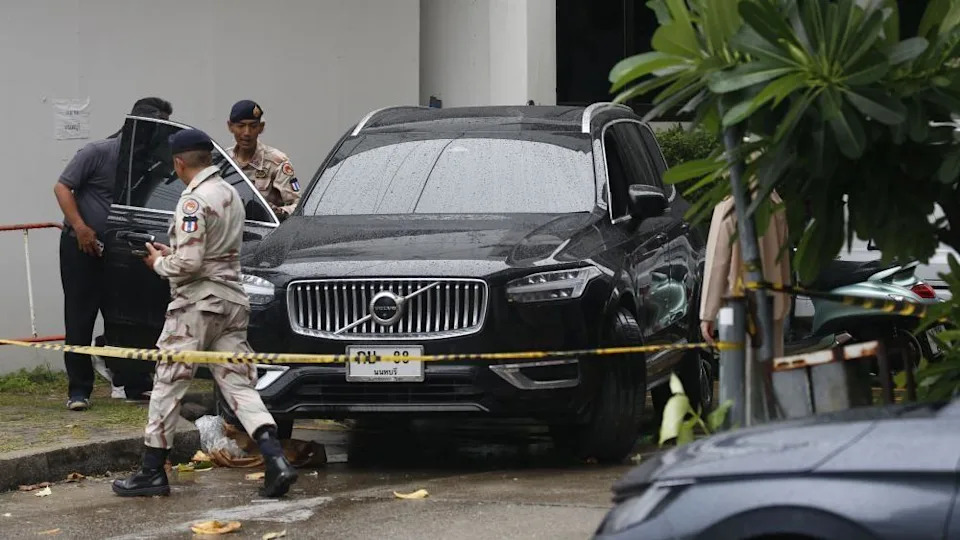
Police inspect the scene where Chalong fired into car last week [Reuters]
Experts estimate there are about 10 million civilian-owned firearms in Thailand, roughly 4 million of them unlicensed. The prevalence of weapons means otherwise minor disputes can rapidly turn lethal.
Legal Loopholes, Incentives and the Black Market
On paper, Thailand’s gun laws appear strict: buyers must obtain a purchase permit, then a possession permit after purchase, and a separate permit to carry a firearm in public. But significant loopholes weaken the system. Possession permits remain valid for the lifetime of the holder, there is no mandatory mental-health screening, and no legal requirement for safe storage.
A government discount scheme, introduced in 2009, has allowed police and other officials to buy imported firearms at steeply reduced prices. Around 200,000 guns have been imported annually under the programme, mostly from the United States. Discounted weapons may be resold after five years, creating a lucrative secondary market and a feed for illicit circulation. The scheme has been probed repeatedly over alleged corruption.

Visiting the school after the shooting, Thai Prime Minister Anutin Charnvirakul promised new gun laws [EPA]
Local unlicensed gunsmiths and the resale of discounted firearms are believed to bolster the black market. Investigators say the school shooter obtained his grandfather’s legally owned gun and a large quantity of ammunition, underscoring weak storage and access safeguards.
Cultural and Institutional Drivers
"Guns are seen as a status symbol, and there are so many ways that civilians can get them," says Boonwara Sumano of the Thailand Development Research Institute. "Showing strength and wielding power is seen as the right thing to do in Thai society. When you have a norm that promotes possession of weapons to show strength, and access to those weapons, this is the result."
Observers point to a long-standing military influence in Thai society, regular public displays of weapons at military bases, and the glamorization of armed strength as contributing cultural factors. Asset declarations by senior officials also reveal high levels of gun ownership: some ministers and MPs have reported owning multiple firearms, with isolated declarations showing double-digit counts.
Government Response and Past Promises
Prime Minister Anutin Charnvirakul has ordered immediate steps to tighten controls: suspending the discount purchase scheme and halting issuance of all purchase licences, proposing time limits on possession permits and considering an amnesty to encourage surrender of unlicensed weapons. He has asked parliament to draft a new law and has vowed tougher penalties for violations.
However, similar measures have been announced after previous mass shootings — including a 2022 nursery massacre and a 2023 mall shooting — only to be rolled back or weakly enforced. Critics say suspended policies have often been reinstated quickly, and enforcement remains inconsistent.
Regional Context and Closing Thoughts
Thailand stands out in Southeast Asia. Estimates place Indonesia’s civilian-owned firearms at roughly 82,000 and Malaysia’s at about 107,000, both with far fewer gun deaths. The Philippines shares some cultural and crime patterns that produce higher gun prevalence, but Thailand’s estimated 10 million civilian guns make it an outlier.
With deep cultural, institutional and enforcement challenges, policymakers face a complex task: reducing easy access to weapons, curbing illegal markets, and changing long-entrenched social attitudes toward guns — all while balancing the concerns of lawful owners. Recent events show how quickly a single weapon can end lives and reshape communities.
Help us improve.