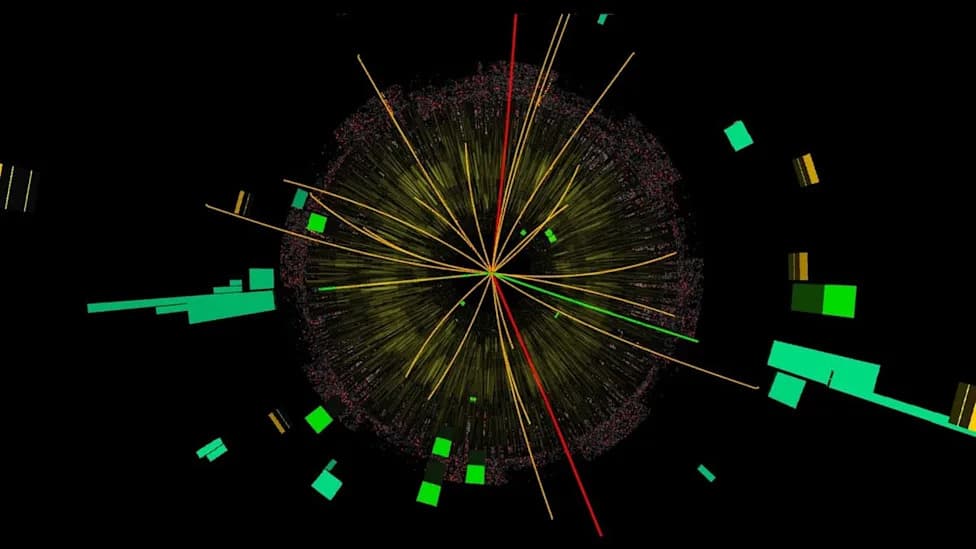
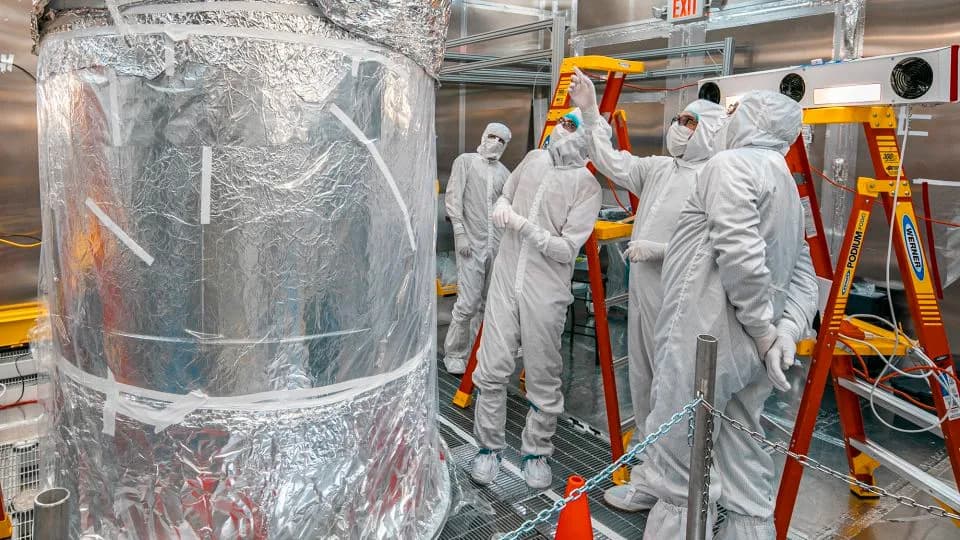
Researchers observed four rare kaon decay candidate events where a 2020 prediction expected fewer than 0.25, producing a striking excess that could hint at physics beyond the Standard Model. Possible explanations include detector noise, a new light long-lived particle, or heavy new physics enhancing an expected process. The team emphasises the need for more data, independent cross-checks, and analyses to rule out instrumental effects before claiming a discovery.
Four Anomalous Kaon Decays That Could Point to New Physics
Why Did This Particle Mysteriously Disintegrate?aire images - Getty Images
Researchers have reported an unexpected cluster of rare kaon decay events that could challenge the Standard Model of particle physics. The experiment recorded four candidate events where a 2020 prediction expected fewer than 0.25 — a discrepancy that has prompted careful scrutiny and interest across the particle-physics community.
Background: Kaons and Why They Matter
Kaons are mesons made of a quark and an antiquark and belong to the broader family of hadrons. Their decay channels are well studied, and rare or forbidden decay modes are powerful probes for new particles, unknown forces, or violations of fundamental symmetries such as CP symmetry.
What Was Observed
The original 2020 analysis predicted fewer than 0.25 events for this specific decay channel in the dataset analysed, yet the experiment found four candidate events. While this excess is intriguing and statistically striking relative to the expected background, it does not yet constitute a discovery.
Possible Explanations
- Statistical Fluctuation or Detector Artifact: The simplest explanation is that the excess arises from rare background processes, unmodelled detector effects, or other experimental noise.
- New Light Long-Lived Particle: The events could be explained by production of an as-yet-undiscovered light particle that is long lived and escapes immediate detection.
- Heavy New Physics Enhancing a Standard Process: Unknown heavy particles or interactions could boost an expected Standard Model decay rate, producing an apparent excess.
- Reinterpretation As Fixed-Target Production: The signal might be better interpreted as production of a new particle in the fixed-target environment rather than a conventional kaon decay mode.
Why Caution Is Essential
Subatomic experiments often infer particle properties from indirect signatures—secondary decay products, tracks in detectors, or energy deposits—rather than observing particles directly. Those reconstructed signals can be ambiguous, so ruling out instrumental effects and background explanations is a necessary first step before claiming new physics.
"In this case, expectation of noise is very low, so even one event or observation is very striking," researcher Kohsaku Tobioka said. "And in this case, there were four."
Next Steps for the Collaboration
The team plans additional data collection, independent cross-checks, and dedicated analyses designed to exclude detector artifacts and rare background sources. Only after these rigorous tests can the community assess whether the anomaly represents new physics or an experimental fluke.
Bottom line: The reported excess of rare kaon decays is noteworthy and merits follow-up, but further data and careful validation are required before it can be taken as evidence of physics beyond the Standard Model.
Help us improve.