Scientists have observed quantum entanglement between pairs of Z bosons produced at CERN's LHC, using ATLAS to reconstruct decay products and infer a shared quantum state. The finding, published in Physical Review Letters, extends entanglement tests into a high‑energy, short‑lived regime and follows a 2024 observation of entangled top quarks. Experts say the result strengthens confidence in quantum mechanics under extreme conditions, even though immediate technological uses are unlikely.
Quantum Entanglement Detected Among Short‑Lived Z Bosons at the LHC

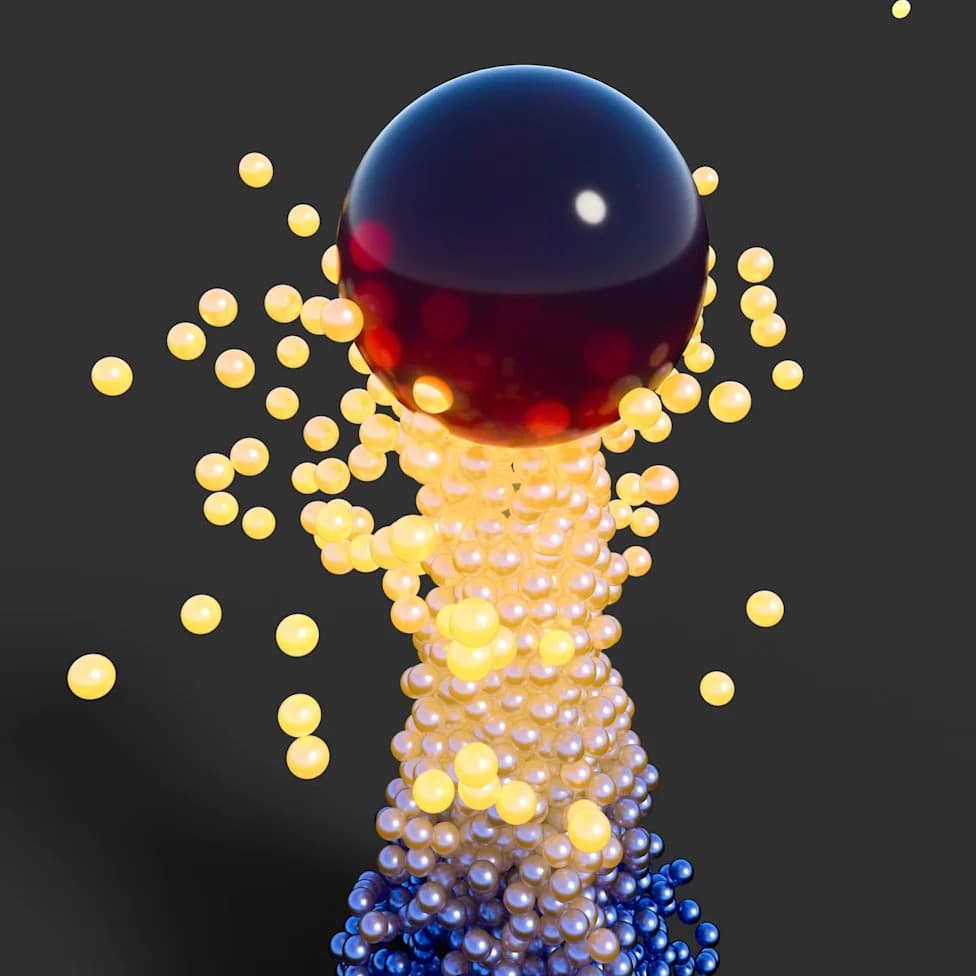
Scientists wanted to test whether quantum entanglement survives under more extreme conditions, including those involving short-lived particles produced during super high-energy collisions.getty
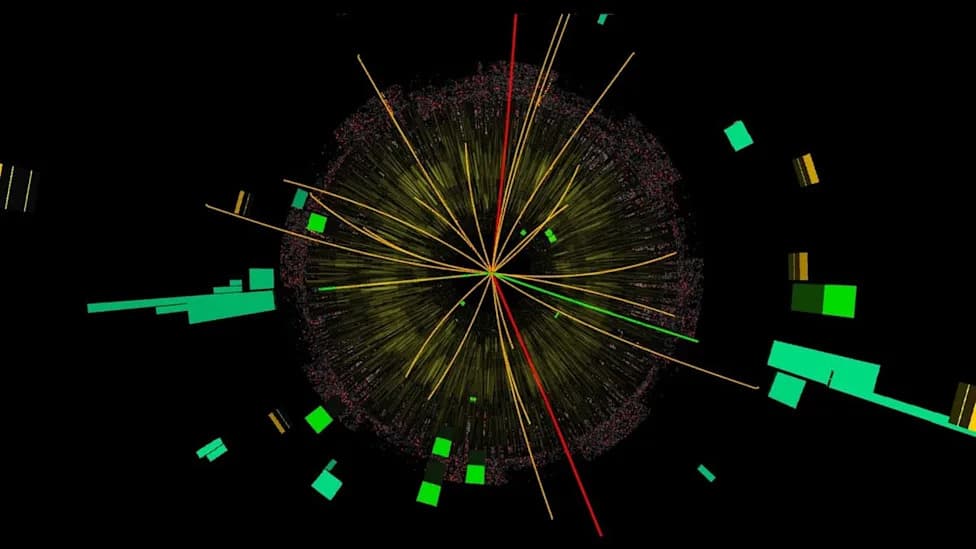
Researchers have confirmed quantum entanglement in an extreme new setting: pairs of Z bosons produced in high‑energy collisions at CERN's Large Hadron Collider (LHC). Although Z bosons are heavy and exist for only an instant, their decay products reveal correlations consistent with a shared quantum state.
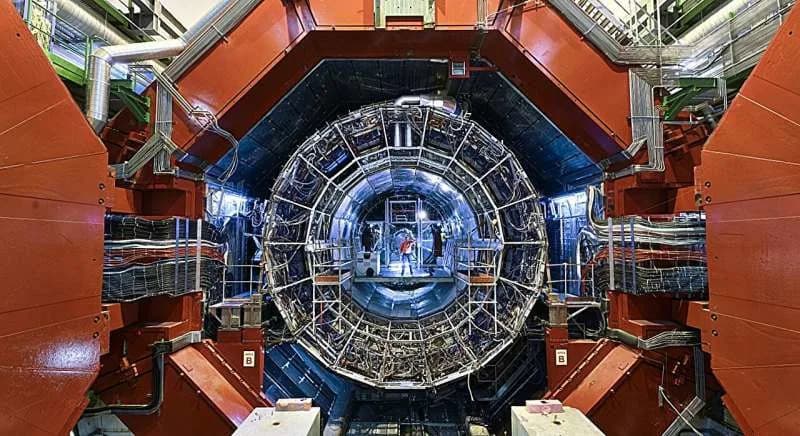
The international team used data recorded by the ATLAS detector to reconstruct the electrons and muons emitted when Z bosons decay. By analyzing these decay signatures, the researchers inferred the quantum relationship between the parent particles and found evidence of entanglement.
Why this matters
Entanglement, the phenomenon Albert Einstein dubbed "spooky action at a distance," occurs when particles originating from the same source share a single quantum state so that measuring one immediately provides information about the other. Physicists have long demonstrated entanglement in photons, ions and quarks; observing it among Z bosons extends those tests to a regime of much higher energy and far briefer lifetimes.
"Finding it alive and well among particles as heavy and short‑lived as Z bosons, created in some of the most violent collisions we can produce on Earth, shows just how fundamental and robust this quantum effect really is," said Alan Barr, a co‑author of the study and a physics professor at the University of Oxford.
The specific Z boson pairs studied arose from Higgs boson decays — the Higgs was discovered at the LHC in 2012 — and the results were published in Physical Review Letters. The collaboration included researchers from institutions across the globe, with teams from Australia, Canada, Colombia, France, Israel, South Africa, Turkey, the United States and more contributing to the analysis.
Experts not involved in the work described the result as significant for foundational physics. Regina Demina, a physics professor at the University of Rochester, noted that while short‑lived particles are unlikely to replace stable systems like electrons or photons for technology any time soon, discoveries driven by curiosity often lead to unforeseen applications.
This measurement follows a 2024 observation of spin entanglement in top quarks and contributes to ongoing efforts to test quantum mechanics under extreme conditions. Particle colliders like the LHC let scientists probe whether quantum theory continues to hold at the highest energies available on Earth — a question with implications for the foundations of physics.
What’s next?
Researchers will refine analyses, combine results from other detectors and search for additional systems exhibiting entanglement. Continued study of entanglement in heavy, short‑lived particles will help clarify the limits and universality of quantum mechanics without yet claiming practical applications.
Help us improve.