The Lowcountry Rapid Transit project depends on a $374 million FTA grant that would cover more than half of the estimated $625 million cost. Senate Democrats have accused federal agencies of delaying Capital Investment Grants after a New York Times report that no new agreements have been signed since President Trump returned to office. Local officials say the project remains on schedule for a 2027 construction start and a grant agreement slated for January, but the grant’s completion is uncertain amid broader concerns about administrative delays in federal awards. CARTA has already awarded nearly $14 million for a Rivers Avenue transit center to link riders to the planned line.
Lowcountry Rapid Transit’s $374M Federal Grant Faces Uncertainty as FTA Delays Continue
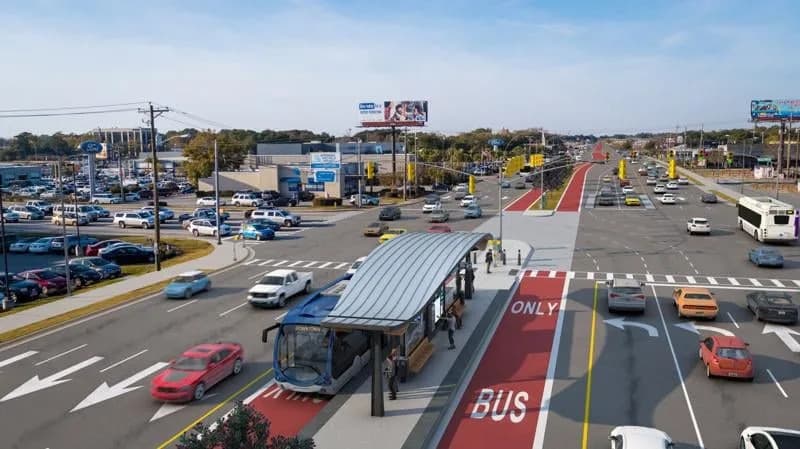
A depiction of the planned Lowcountry Rapid Transit bus line, shown on Rivers Avenue. A federal grant is expected to cover more than half the cost of creating the system, but questions have been raised as no such grants have been issued since the start of 2025. File/Provided
A $374 million grant from the Federal Transit Administration (FTA) is expected to cover more than half of the estimated $625 million cost of the Lowcountry Rapid Transit bus corridor, but recent signs of a slowdown in FTA grant agreements have raised uncertainty about the project’s timeline.
Background
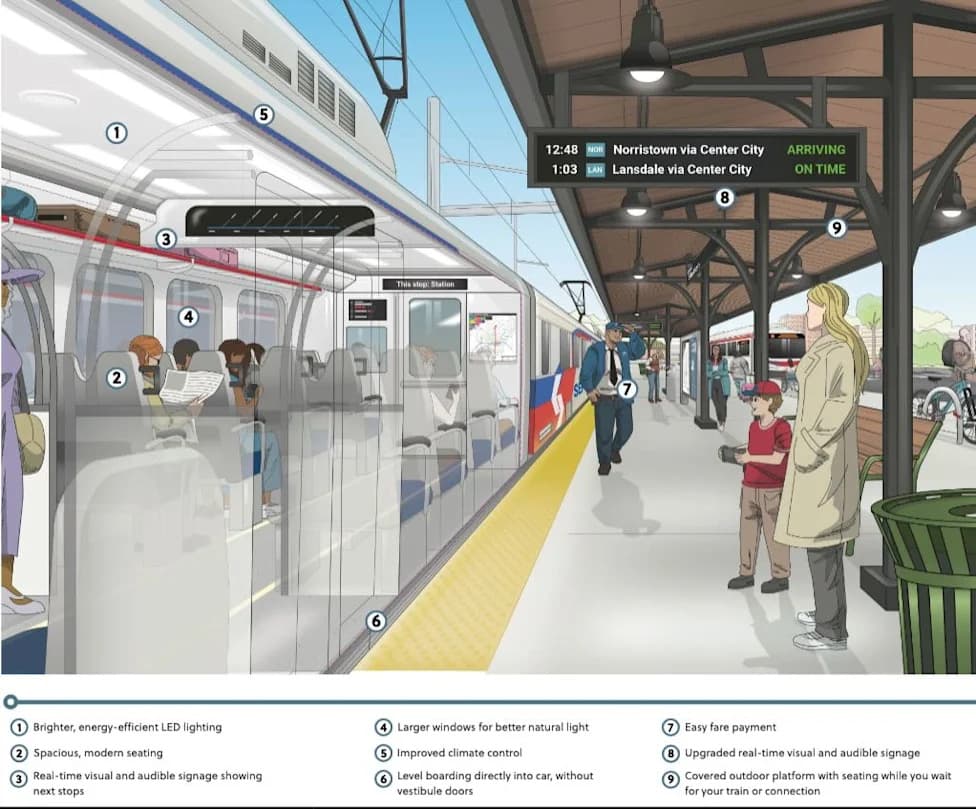
The proposed bus-rapid-transit (BRT) line would run from Ladson to Charleston, include dedicated bus lanes, a fleet of 21 new buses and formal stations rather than simple stops. Local planners estimate buses would arrive about every 10 minutes, improving mobility, easing some traffic congestion and encouraging development—particularly in North Charleston.
Questions About Federal Funding
In late July, The New York Times reported that "since President Trump returned to office, the Federal Transit Administration has not signed a single new agreement under the program, known as Capital Investment Grants." On Aug. 13, 42 U.S. Senate Democrats sent a letter to the directors of the Office of Management and Budget (OMB) and the FTA expressing "deep concern" that agencies are delaying projects in the Capital Investment Grants (CIG) pipeline despite Congress having appropriated funding.
"The growing backlog of projects in limbo due to FTA and OMB inaction is unacceptable," the senators wrote.
BCDCOG—the Berkeley-Charleston-Dorchester Council of Governments, which is leading the project—says it expects the grant agreement next January and remains on track to begin construction in 2027. "Our project is currently not delayed," said Project Manager Sharon Hollis. A BCDCOG spokesperson declined to add further comment.
Local And Federal Responses
Attempts to get comment from South Carolina's two Republican U.S. senators had mixed results: Sen. Tim Scott's office did not reply to repeated requests, and Sen. Lindsey Graham's office did not respond to inquiries about the grant or efforts to ensure the funding. Most of the BRT route lies in the congressional district of Rep. Jim Clyburn (D-Columbia), with a portion in Rep. Nancy Mace's (R-Charleston) district. Clyburn's office directed reporters to the state Department of Transportation and ultimately to the BCDCOG. Mace's office said it is monitoring the project and is prepared to intervene if federal funding problems arise.
"Our office spoke with the Berkeley-Charleston-Dorchester Council of Governments, and the Lowcountry Rapid Transit is on schedule and is not delayed," Mace's office said in an emailed statement. "If any federal funding issues arise, we are ready to step in and work with federal agencies to get answers and keep projects moving."
Recent Developments And Wider Context
No new CIG grant agreements have been finalized since the start of 2025, though the FTA did advance a Utah rail project to the engineering phase after the New York Times report. Separately, court filings reported by the Associated Press and other outlets in July showed the administration acknowledged cancelling billions in federal grants for clean-energy projects, allegedly "based solely on the political identity of the grant recipient's state." Given South Carolina's recent electoral record and its largely Republican congressional delegation, partisan denial of grants to this state appears less likely—but concerns about administrative delays in awarding CIG agreements remain.
On Aug. 13 the Charleston Area Regional Transportation Authority (CARTA) awarded a nearly $14 million construction contract to build a new transit center on Rivers Avenue, which is intended to make transfers between existing CARTA services and the planned rapid transit line easier and more efficient.
What To Watch
Key milestones to watch are the FTA's execution of the grant agreement (scheduled for January), any direct intervention from federal lawmakers or the Department of Transportation, and progress on local construction contracts such as the Rivers Avenue transit center. If the CIG agreement is delayed further, the project’s 2027 construction start could be at risk.
Help us improve.