The Panathenaic Stadium in Athens — an all‑marble, U‑shaped venue rebuilt for the 1896 Olympics and nicknamed Kallimarmaro — is receiving its first comprehensive cleaning in over a century. Conservators are using low‑pressure water, steam and vacuum systems to remove organic deposits, chewing gum and stains while protecting the marble. The privately funded restoration, overseen by the Hellenic Olympic Committee with Culture Ministry guidance, also includes a new track and lighting and will continue through 2026 ahead of a Sept. 10 torch ceremony for the Dakar Youth Olympics.
Athens Begins First Full Cleaning of All‑Marble Panathenaic Stadium in 100+ Years
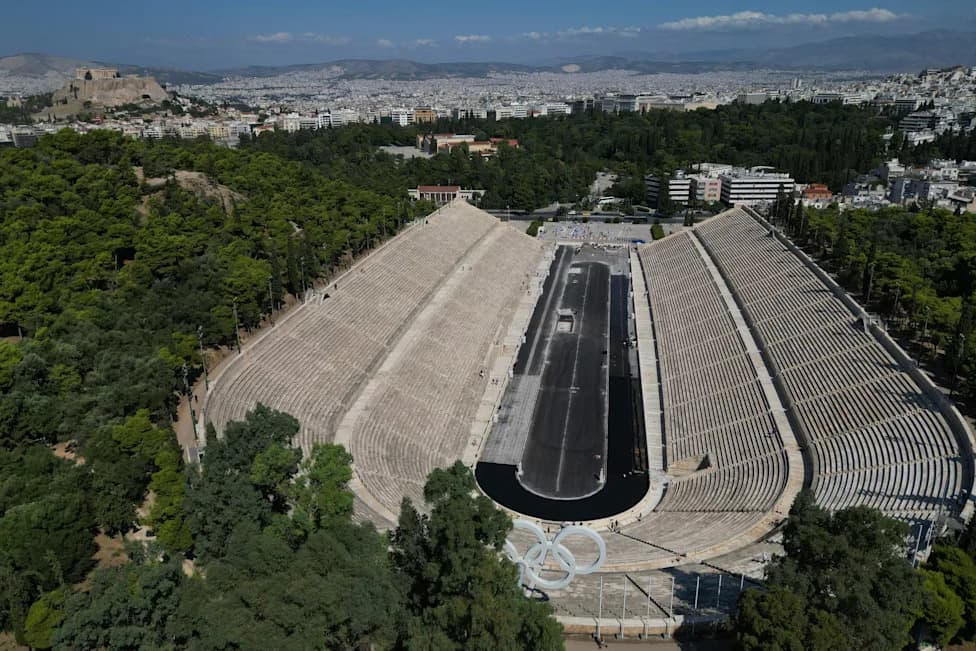
An aerial view of the Panathenaic Stadium, also known as "Kallimarmaro, or beautiful marble," which hosted the first modern Olympic Games in 1896, is seen during renovation work in Athens, Greece, Thursday, Aug. 13, 2026. (AP Photo/Thanassis Stavrakis)(AP Photo/Thanassis Stavrakis)
The Panathenaic Stadium in Athens — the U‑shaped, all‑marble venue rebuilt for the revival of the modern Olympic Games in 1896 and widely known as Kallimarmaro (“beautiful marble”) — is undergoing its first systematic cleaning in more than a century.
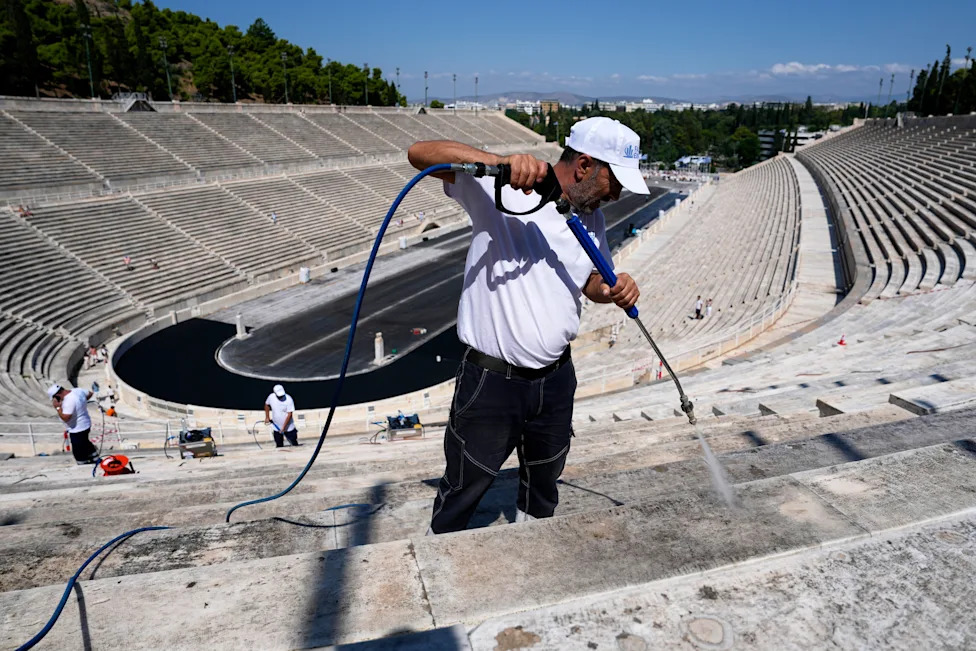
A worker cleans the marble surfaces of the Panathenaic Stadium, also known as "Kallimarmaro," or beautiful marble, which hosted the first modern Olympic Games in 1896, using a high-pressure water hose during renovation work in Athens, Greece, Thursday, Aug. 13, 2026. (AP Photo/Thanassis Stavrakis)(AP Photo/Thanassis Stavrakis)
Conservators are treating the stadium’s 47 steep spectator tiers with carefully controlled techniques to preserve the historic stone while removing accumulated dirt and visitor damage. The marble cladding is the same luminous stone used on the Acropolis, making the conservation work especially sensitive.
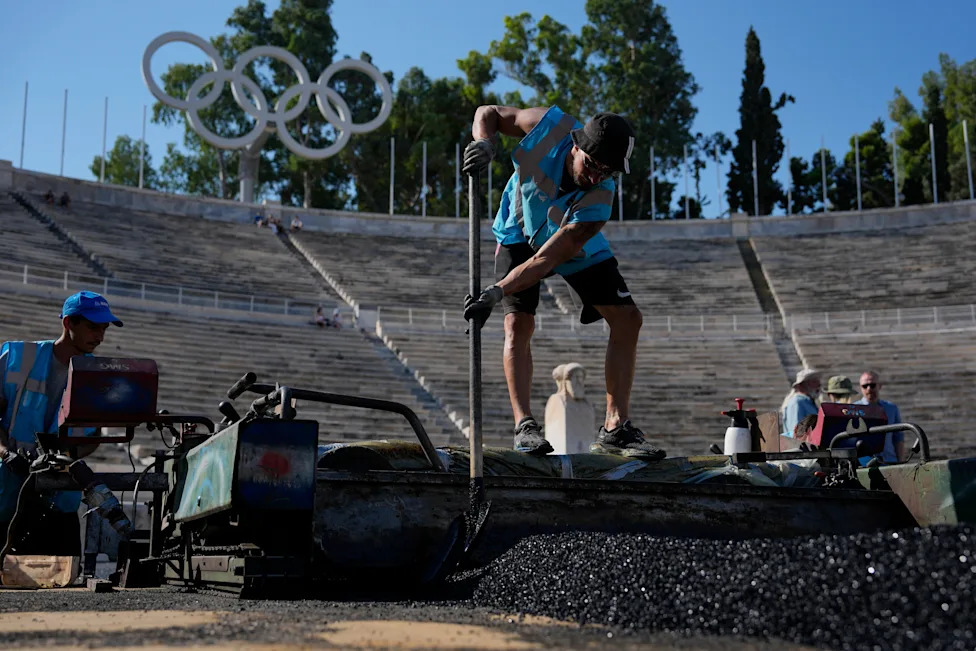
Workers lay asphalt at the Panathenaic Stadium, also known as "Kallimarmaro, or beautiful marble," which hosted the first modern Olympic Games in 1896, during renovation work in Athens, Greece, Thursday, Aug. 13, 2026. (AP Photo/Thanassis Stavrakis)(AP Photo/Thanassis Stavrakis)
How Conservators Are Working
Teams in white‑and‑blue coveralls move methodically across the tiers with thin spray lances delivering clean water at low pressure. Vacuum systems collect the runoff as they go, and steam is used to lift long‑darkened blotches of chewing gum. Officials say chewing gum, high heels and soft‑drink stains are among the most persistent causes of discoloration.
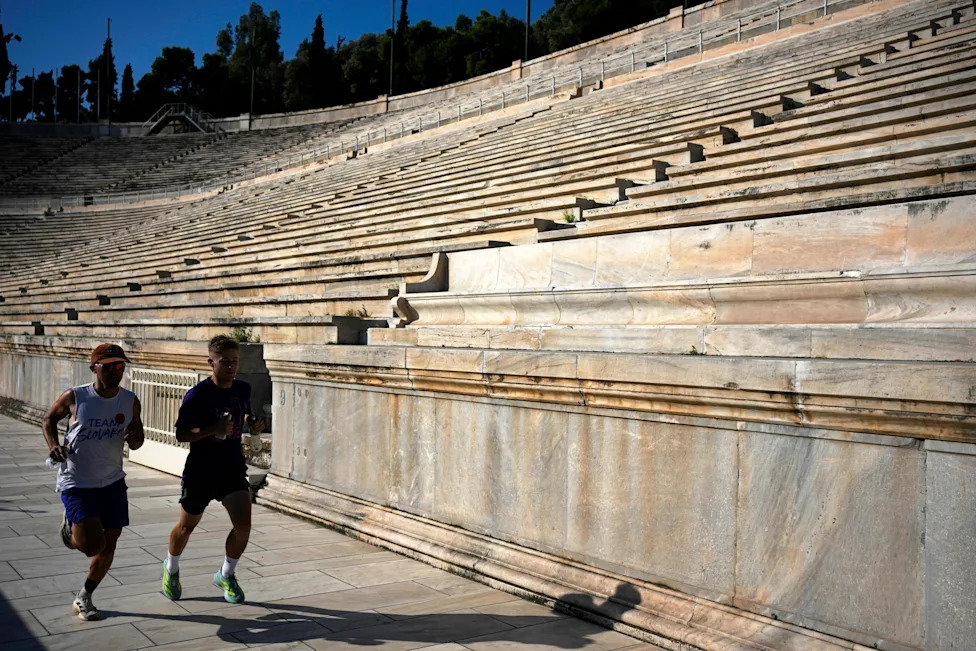
Two men run at the Panathenaic Stadium, also known as "Kallimarmaro," or beautiful marble, which hosted the first modern Olympic Games in 1896, during renovation work in Athens, Greece, Thursday, Aug. 13, 2026. (AP Photo/Thanassis Stavrakis)(AP Photo/Thanassis Stavrakis)
Dimitris Selemis, senior conservator: "The goal of cleaning is not to make everything white. It's to remove the dirt and the first layers of organic material that are deposited on the surface. This helps us better understand the monument."
Conservators have observed more weed growth and grime in areas that receive less direct sunlight. The goal is not cosmetic brightening alone but removing surface deposits to reveal the stadium's original finishes and to inform future preservation decisions.
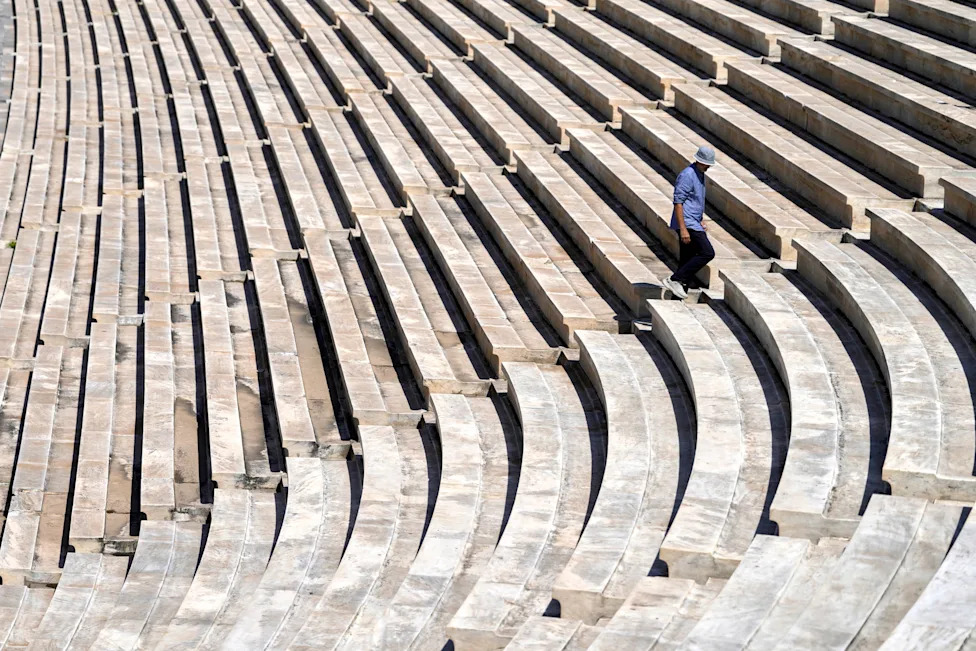
Dimitris Selimis, a senior conservator at the site, inspects the cleaned marble surfaces of the Panathenaic Stadium, also known as "Kallimarmaro," or beautiful marble, which hosted the first modern Olympic Games in 1896, during renovation work in Athens, Greece, Thursday, Aug. 13, 2026. (AP Photo/Thanassis Stavrakis)(AP Photo/Thanassis Stavrakis)
Restoration and Future Use
The cleaning is part of a broader refurbishment that includes a new running track, upgraded lighting and refreshed visitor support facilities. The project is privately funded by a shipping company and overseen by the Hellenic Olympic Committee with technical guidance from Culture Ministry experts.
Isidoros Kouvelos, president of the Hellenic Olympic Committee: "It needed to be cleaned of everything that has accumulated over all these years. This way the Panathenaic Stadium will show all its brilliance and will once again be the foremost monument of humanity for the Olympic Movement."
Work will continue through 2026 but is currently focused on the stadium's curved end — the "sling" — so the venue will be ready for a torch‑passing ceremony on Sept. 10. That ceremony will help launch the torch relay toward the Dakar Youth Olympics (Oct. 31–Nov. 13), the first Olympic competition ever hosted in Africa. IOC President Kirsty Coventry, an Olympic swimming gold medallist from Zimbabwe, is expected to attend the Sept. 10 event.
Built into a natural ravine, the Panathenaic Stadium has ancient roots, hosting Greek athletic contests and later Roman spectacles before centuries of disuse. Since its 1896 revival it has hosted a wide range of events — from fashion shows and rock concerts to boxing matches and national celebrations — and today remains one of Athens’ most visited historic sites.
Help us improve.