The USS Theodore Roosevelt has been declared the US Navy's first fully operational and deployable carrier for MQ-25 Stingray operations, enabled by an onboard Unmanned Air Warfare Center. The center houses systems such as the Unmanned Carrier Aviation Mission Control System and the MD-5E Ground Control Station to command MQ-25s from the deck. The USS Ronald Reagan is expected to be ready by late August 2026 as the MQ-25 program advances following Milestone C in May 2026 and recent flight testing.
USS Theodore Roosevelt Declared First Fully Operational MQ-25 Carrier — Ronald Reagan To Follow By August 2026
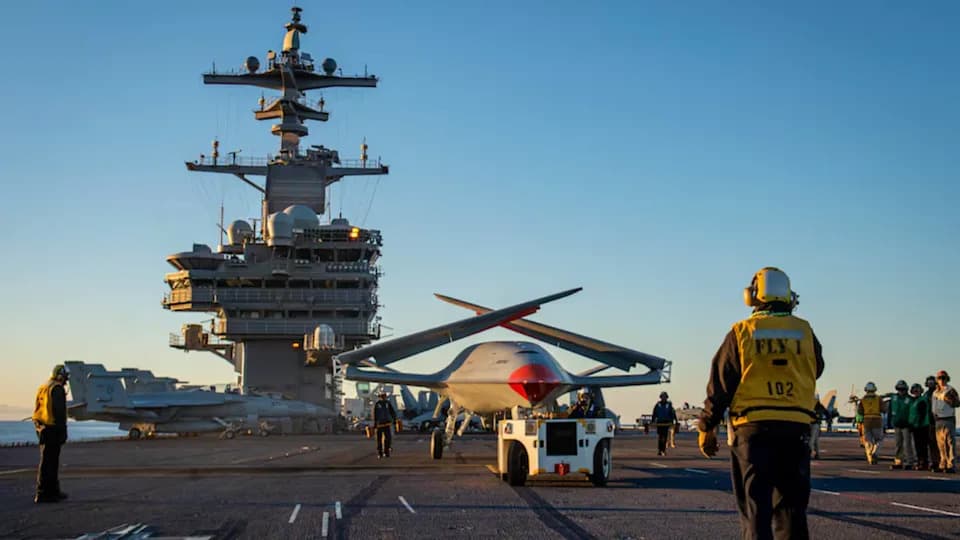
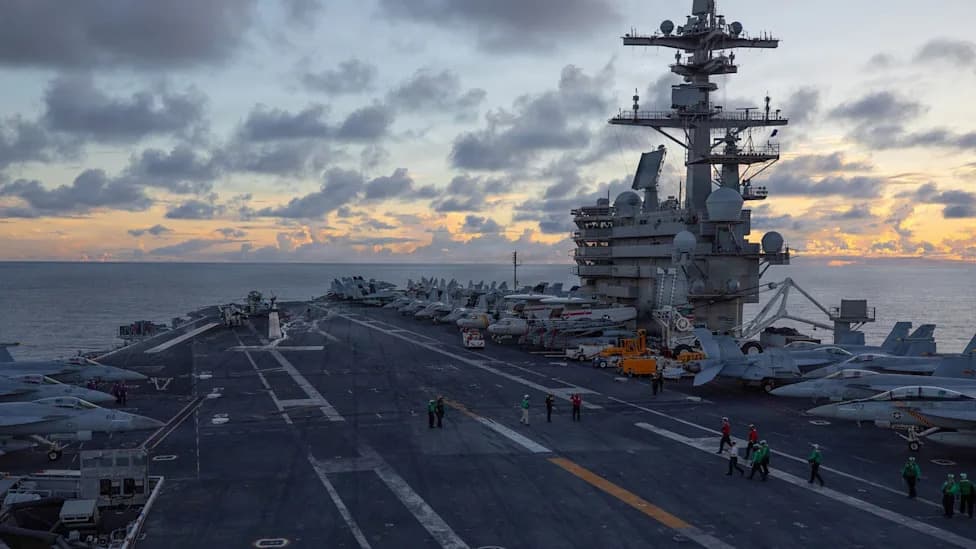
Credit: MC3 Brandon Roberson/U.S. Navy Via Defense News
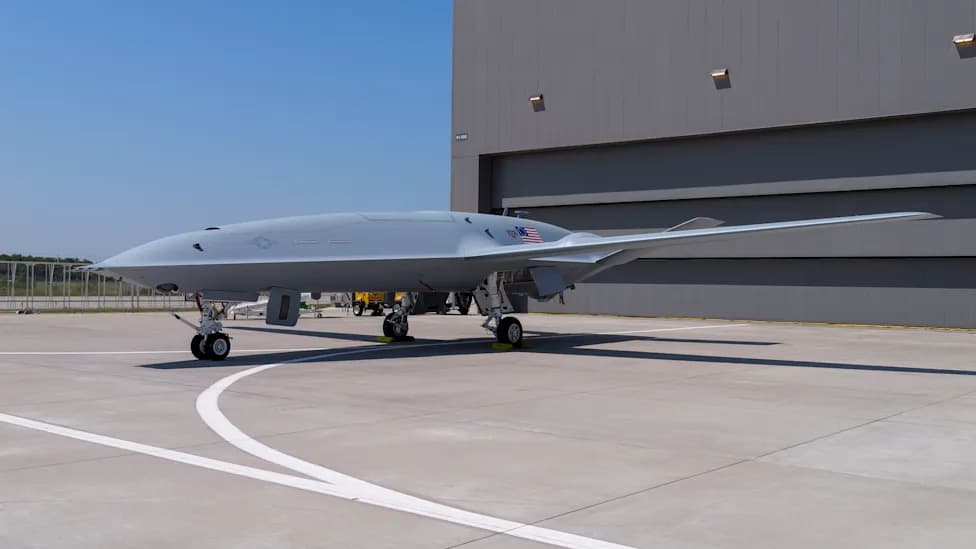
The US Navy has reached a milestone in carrier-based unmanned aviation: the USS Theodore Roosevelt is now the service's first aircraft carrier declared fully operational and deployable for MQ-25 Stingray operations, backed by a dedicated Unmanned Air Warfare Center.
Dedicated Facilities To Control Carrier-Based Drones
The newly installed Unmanned Air Warfare Center consolidates the specialized command-and-control equipment required to operate unmanned aircraft from a carrier. The Navy lists installed systems including the Unmanned Carrier Aviation Mission Control System and the MD-5E Ground Control Station, which together provide the functions needed to control Boeing’s MQ-25A Stingray aerial refueling drone.
From Testing To Operational Posture
Although the USS George H.W. Bush received and tested the Unmanned Air Warfare Center in August 2024, the Theodore Roosevelt is the first carrier where the capability has been declared fully operational and deployable. A Pentagon acquisition document dated April 21, 2026, states the ship "became the first fully operational/deployable MQ-25 capable aircraft carrier." This marks a transition from treating drones as temporary add-ons to giving strike groups built-in infrastructure for unmanned aviation.

Google logo on a black background next to text reading 'Click to follow TechRadar'
Ronald Reagan To Join The MQ-25 Fleet
The Navy expects the USS Ronald Reagan to have its own Unmanned Air Warfare Center ready and declared operational and deployable by the end of August 2026, expanding carrier-based MQ-25 capability beyond isolated trials.
Program Progress And Context
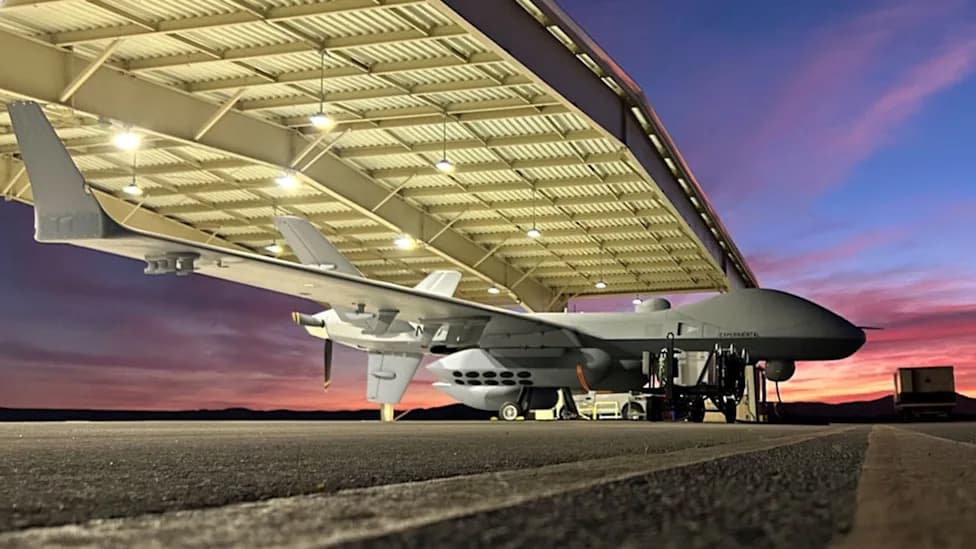
The MQ-25 program has advanced considerably in recent months. In May 2026, the Stingray reached Milestone C, clearing the way to move from development into production and fielding. That milestone caps almost eight years of work since the Navy awarded Boeing an $805 million contract in 2018 for four development aircraft. At the time, the Navy estimated a full fleet of 72 aircraft could cost roughly $13 billion.
Testing continues: on April 25, 2026, the Stingray completed an approximately two-hour flight near Mascoutah, Illinois, furthering its flight-test program. The MQ-25 is intended primarily as a carrier-based aerial refueler, reducing the tanker burden on F/A-18E/F Super Hornets and enabling more Super Hornets to focus on strike missions.
Why This Matters
Operational carrier infrastructure for unmanned systems is as important as the aircraft itself. The MQ-25 requires specialized ground and shipboard equipment that complements -- but is distinct from -- systems used for conventional carrier aircraft. With Theodore Roosevelt certified and Ronald Reagan close behind, the Navy is shifting from limited testing to a broader, more sustainable carrier-based unmanned aviation capability that could change how strike groups conduct long-range operations.
Reporting on these developments was provided by Defense News; Pentagon acquisition records dated April 21, 2026, and Navy program updates were also referenced.
Help us improve.