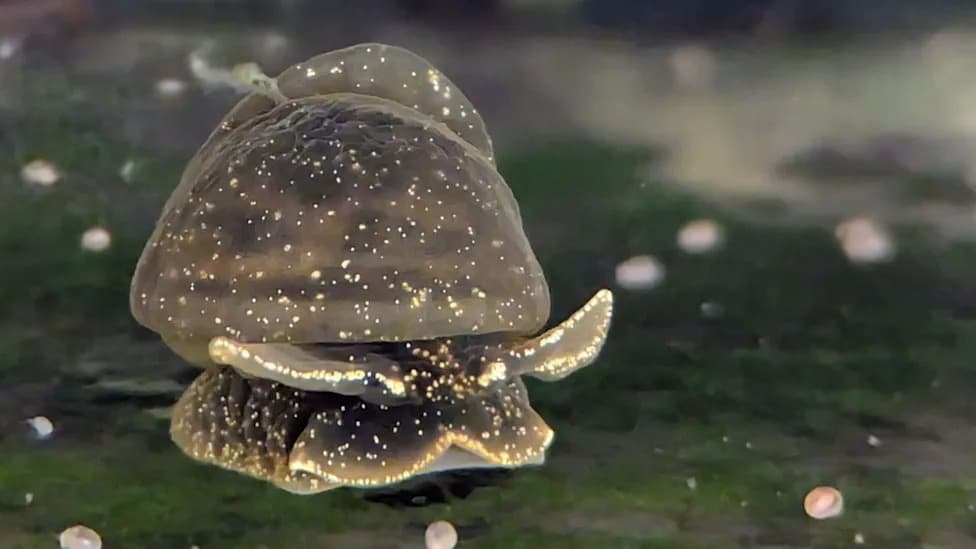
Erhaia dijiang is the first freshwater cave snail documented in China, described from a Yunnan karst cave and known from only three living adults and one empty shell. Eyeless and nearly transparent, the troglobiont showed light-averse behavior in lab tests. Found about 6,765 feet above sea level and observed no more than six and a half feet inside the cave entrance, the species is highly vulnerable. Scientists are calling for broader cave surveys and urgent conservation measures to protect the single known population.
Newly Discovered Eyeless Snail, Erhaia dijiang, Is China’s First Freshwater Cave Troglobiont — Only Three Adults Found
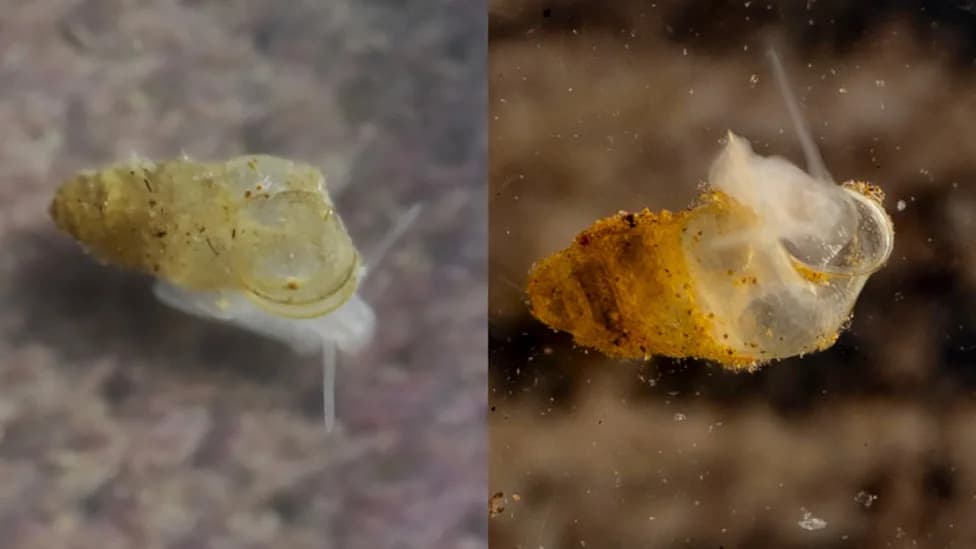
Photo Credit: He Y-M, et al.
Scientists exploring a mountain cave in Yunnan Province, southwestern China, have described the country's first known freshwater cave snail: a nearly transparent, eyeless species named Erhaia dijiang. Published in the journal Subterranean Biology and reported by SciTechDaily, the discovery highlights how much of China's subterranean biodiversity remains undocumented and how rapidly such specialized species can become threatened.
The snail displays classic cave-adapted traits: an almost translucent shell that reveals its delicate body and a complete lack of eyes. Researchers classify it as a troglobiont — an organism that has evolved over many generations to live exclusively in cave environments. In laboratory tests the animals consistently recoiled from light and slipped into narrow crevices beneath rocks when illuminated, behavior consistent with life in permanent darkness.
During an August 2025 survey, scientists recorded only three living adult individuals and one empty shell, with no juveniles found. To date, Erhaia dijiang has been documented from a single cave, and all observed snails were located no farther than roughly six and a half feet (about two meters) from the cave entrance. The cave sits at an altitude of approximately 6,765 feet above sea level within a karst groundwater system — demonstrating that freshwater cave fauna can persist in high-altitude subterranean networks.
Why This Matters
Karst cave systems are groundwater-linked and often isolated from surrounding ecosystems. That isolation can produce uniquely evolved organisms but also makes them extremely vulnerable: localized disturbances — such as changes in groundwater quality, cave visitation, land-use change, or infrastructure work — could threaten the entire known population. Because the species is known from a single site and only three adults were observed, researchers describe the survival outlook as "far from optimistic."
Recommendations From Researchers
The authors and reporting outlets urge broader, systematic surveys of karst caves across China to determine whether Erhaia dijiang occurs in other underground waters and to search for additional overlooked species. They call for rapid conservation planning that considers groundwater protection, limits on potentially harmful access, and monitoring of the known cave site to reduce immediate extinction risk.
Name Note: The species name honors Di Jiang, a faceless mountain god mentioned in the ancient Chinese classic Classic of Mountains and Seas.
Further fieldwork and targeted conservation action are essential if this tiny, light-averse snail is to survive beyond the few individuals observed so far.
Help us improve.