Simon Sebag Montefiore cautions that Western leaders who yield to radical activist purity tests risk rendering democratic governance ineffective. In The Cauldron, he traces the modern Middle East from 1900 to today to explain contemporary crises, including the impact of the October 7 Hamas attacks. He defends free speech while condemning incitement, urges robust institutional courage against boycotts and intimidation, and argues a viable two‑state solution requires a Palestinian polity free of Hamas.
Simon Sebag Montefiore: Appeasing Radical Activists Risks Making the West Ungovernable
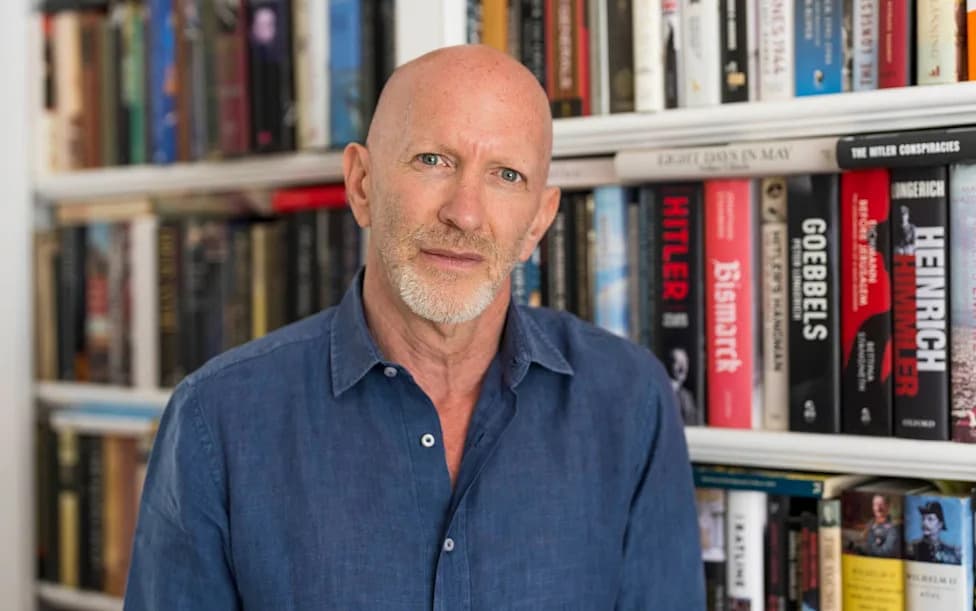
Montefiore pictured for The Telegraph in his Notting Hill home - Andrew Crowley
Simon Sebag Montefiore, the bestselling historian known for his biographies of Catherine the Great and the Romanovs, warns that Western leaders who placate radical activist factions risk undermining effective governance. In a wide-ranging interview ahead of the publication of his new book, The Cauldron: The Making of the Modern Middle East, Montefiore argues that long-term national interest—not the demands of small, aggressive activist cadres—should shape policy at home and abroad.

Montefiore and Santa Palmer-Tomkinson married in 1998 in a Jewish ceremony: he is Jewish and Santa converted for him - Ian Jones
I met Montefiore, who prefers to be called Sebag, at his five‑storey Notting Hill townhouse. He lives there with his wife, Santa Palmer‑Tomkinson, a prolific romance novelist. The couple married in 1998 in a Jewish ceremony; Santa converted for him. Montefiore’s circle includes leading political figures and cultural personalities, and he retains a long friendship with King Charles.
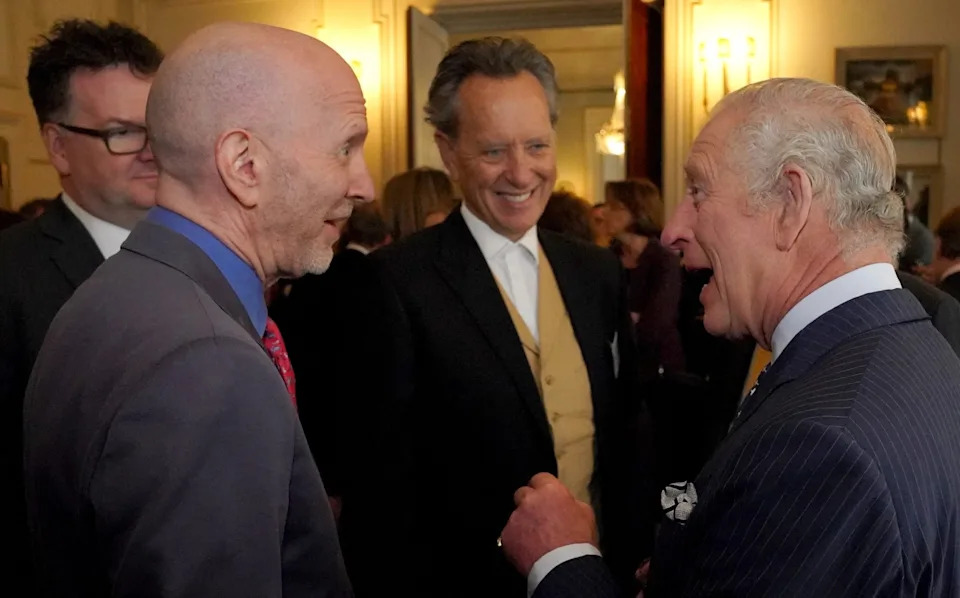
Montefiore and King Charles pictured talking with Richard E Grant (centre). The King and Montefiore have been friends for three decades - Jonathan Brady/WPA Pool/Getty
On Leadership and the Monarchy
Montefiore praised the continuity a constitutional monarchy provides in turbulent political times: "We’ve had seven prime ministers in 10 years; the sovereign’s continuity matters." He described the King’s record of public service and diplomacy as an asset to national life.
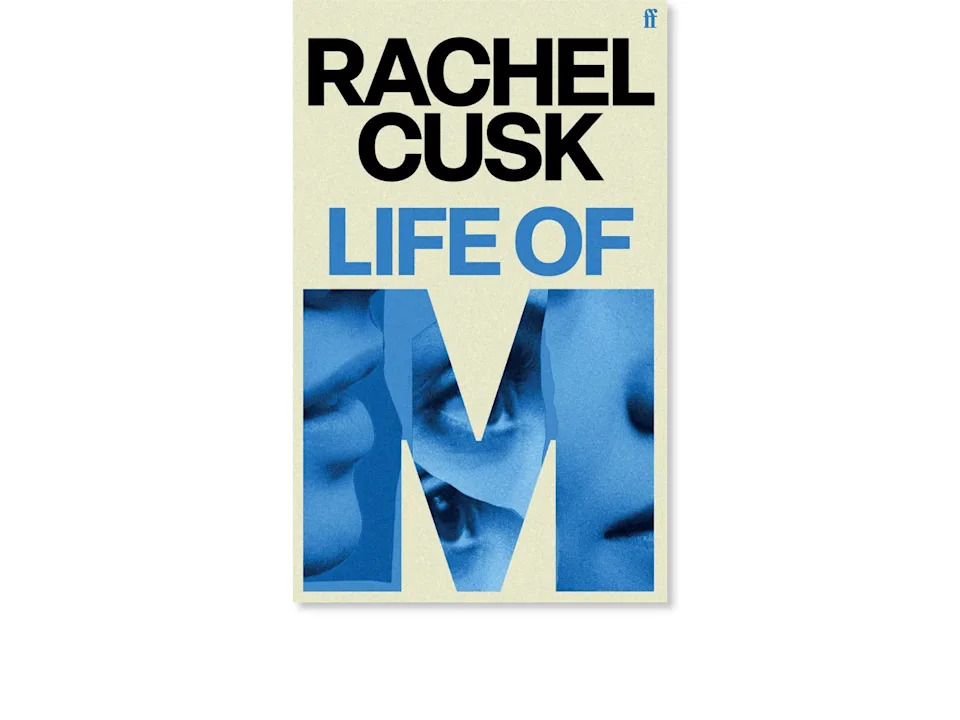
The Cauldron
The Cauldron: A Historical Lens on Today's Middle East
Montefiore’s new book covers the region from about 1900 to the present, mapping collapsing empires, the birth of new states, and the repeated cycles of violence and diplomacy that shape the modern Middle East. He says the October 7 Hamas attacks made it essential to offer a comprehensive historical narrative to help readers understand current tensions, trajectories of state-building, and claims rooted in Ottoman and imperial legacies.
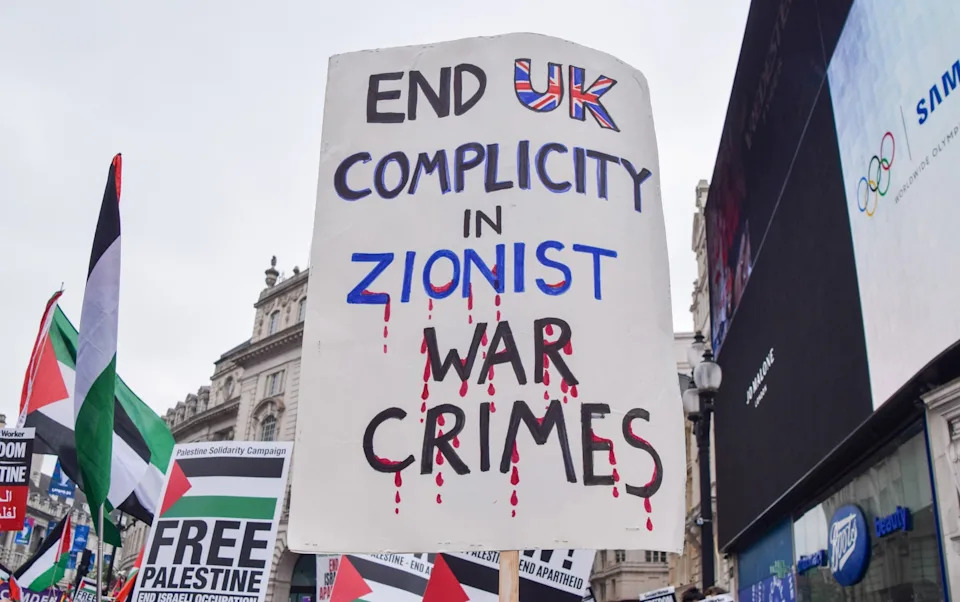
The speed and intensity of anti-Israel sentiment that has spread through Britain took Montefiore 'by surprise' - Vuk Valcic/SOPA Images
He emphasizes neutrality in his historical approach: "I'm not ideological. I'm not following a Marxist imperialist or de‑colonialist view of history." He challenges simple narratives—arguing, for example, that Israel’s emergence in 1948 grew out of an armed revolt against British authority as well as diplomatic developments—and shows how historical claims inform current politics, including rhetoric from leaders like Turkey’s Recep Tayyip Erdoğan.
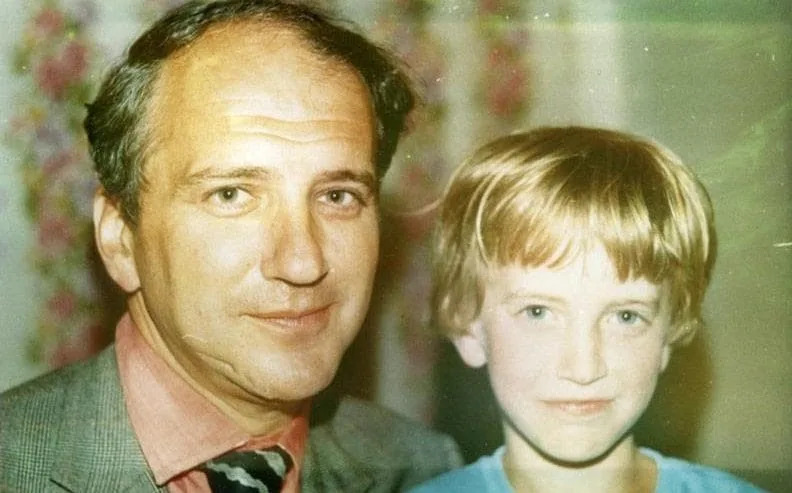
Young Montefiore with his father, Stephen Eric Sebag Montefiore – a scion of a wealthy banking family and GP to the stars - Courtesy of Simon Sebag Montefiore
Free Speech, Activism and Democratic Resilience
Montefiore defends free expression but draws a clear line at incitement to violence. He warns that a "bourgeois graduate activist caste" has come to dominate parts of the media, universities and NGOs, deploying purity tests and boycotts that intimidate institutional leaders and degrade public debate. "Institutions should have the courage not to bow to purity tests," he says.

Montefiore with a local warlord in Grozny, Chechnya, in 1993 - Courtesy of Simon Sebag Montefiore
"If politicians continue to appease sectarian or ideological factions on important matters of life and death, on terrorism, on migration and on gender, then Western democracy will become ungovernable."
On British Politics and the Israel‑Palestine Debate
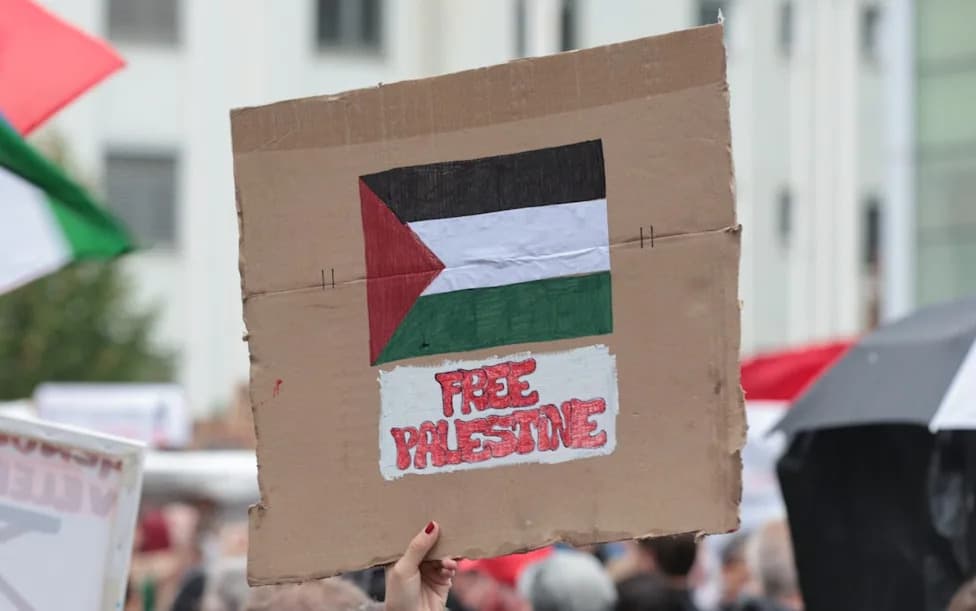
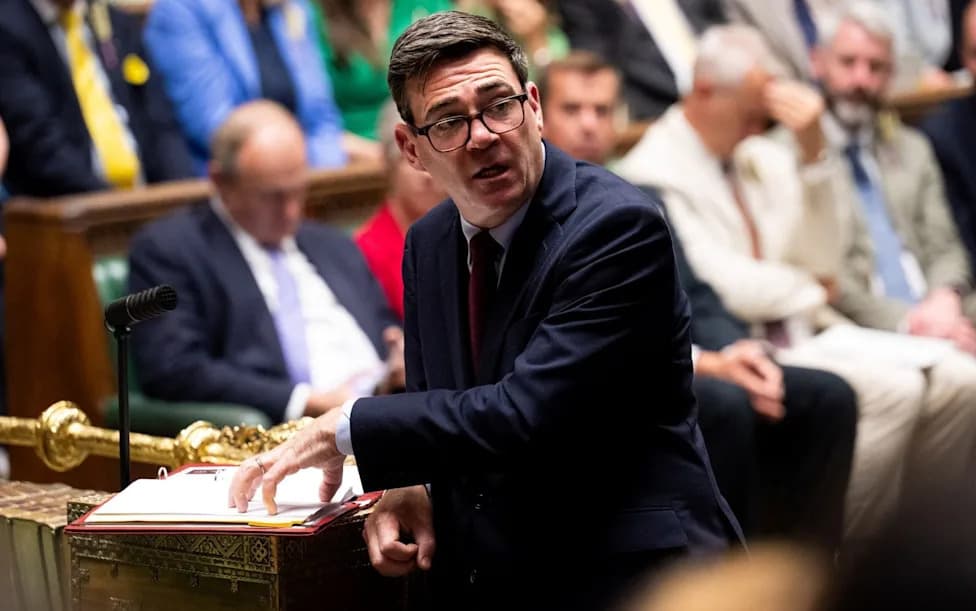
Montefiore criticized Labour leaders for what he sees as excessive caution toward pro‑Palestinian protesters after the October 7 attacks, arguing that fear of alienating parts of Britain’s Muslim community sometimes led to an unwillingness to confront antisemitic rhetoric. He expressed concern that the same pattern could recur under the new prime minister, Andy Burnham, urging politicians to balance short‑term electoral considerations with the long‑term national interest.

Kemi Badenoch 'is not afraid to throw out platitudes and say unpopular, sensible things', says Montefiore of the Conservative leader - Dan Kitwood/Getty
He remains a supporter of a two‑state outcome: a Palestinian state that is not dominated by Hamas. He argues Hamas must be dismantled and suggests international oversight mechanisms, such as a multinational Board of Peace, could help implement a durable settlement—though he recognises the task will be extremely difficult.
Personal History and War Reporting
Montefiore grew up in a lively household—his father was a GP whose practice operated from the family home and who entertained celebrities. He studied history at Cambridge, worked briefly in finance, then became a war correspondent reporting from the Caucasus and other conflict zones. Those experiences have informed his writing, which combines archival research with on‑the‑ground observation.
Threats, Public Life and the Future of History
Montefiore has received online abuse and death threats but remains committed to public debate. He worries about declining attention to serious non‑fiction, the rise of snackable history on social platforms, and the erosion of respect for facts. "We must stand up for facts, sources and context," he says, warning that if historians fail, history risks becoming the preserve of a tiny elite.
Conclusion
Montefiore’s message is a plea for sober, informed leadership and for institutions that resist the pressure of fashionable but intolerant movements. His new book aims to give readers the historical context needed to understand why the Middle East remains such a volatile and consequential region for global politics.
The Cauldron: The Making of the Modern Middle East (Weidenfeld & Nicolson, £25) will be published on Aug 25.
Help us improve.