This article traces how the modern trope equating Zionism with Nazism—seen recently in cultural debates over the film Naza—has roots in a deliberate Soviet campaign called "Zionology." It explains how Moscow's propaganda helped popularise the Zionism‑equals‑racism narrative, influenced international institutions (notably UN Resolution 3379), and recycled older antisemitic tropes. The piece also surveys contemporary amplifiers, from activists to cultural figures, and calls for critical distinction between legitimate policy criticism and dehumanising analogies.
How Soviet 'Zionology' Helped Shape Today's Anti‑Zionist Narrative
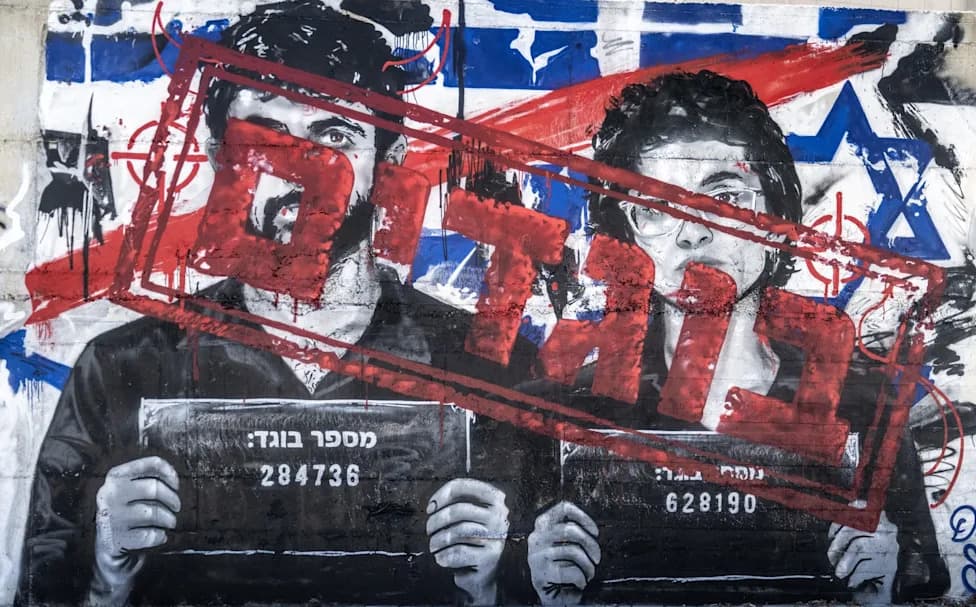
Documentary film Naza is a propagandistic attempt to prove Israeli policy in Gaza was calculatingly genocidal - Mostafa Alkharouf/Anadolu via Getty Images
The cascade of anti‑Zionist sentiment around the world is relentless and often contradictory: it can be violent, conspiratorial and occasionally absurd — visible even on the champagne‑soaked red carpets of major film festivals. The recent Venice Film Festival reignited the debate after the screening of Naza, a film whose Hebrew military‑acronym title is translated as "collateral damage," and which portrays Israeli policy in Gaza as intentionally genocidal.
Maggie Gyllenhaal, this year’s Venice jury chair, praised Naza and compared it to The Zone Of Interest, a film set around Auschwitz that examines how murderous systems function. By equating Israel’s military campaign against Hamas — a conflict that began after the Oct. 7 attacks and involves militants often operating from within civilian infrastructure — with the Nazi extermination of Jews, Gyllenhaal made a comparison that many find morally shocking and historically misleading.
Part of why such narratives spread is their amplification by high‑profile voices, including some Jewish intellectuals and cultural figures who reject Zionism. Their participation can give the arguments an appearance of legitimacy: critics contend that if a Jewish voice endorses the claim, it becomes harder to dismiss as antisemitism. Examples invoked in public debates include directors, commentators and scholars like Yuval Abraham, Rachel Szor, Omer Bartov, Ilan Pappe and Noam Chomsky, and activists such as Tony Greenstein.

Maggie Gyllenhaal has compared Naza, which accuses the IDF of intentionally causing mass casualties, to a film about the Holocaust - Buesra Tasdemir/EPA/Shutterstock
Roots In Soviet Propaganda
Many elements of the modern Zionism‑equals‑Nazism thesis can be traced to deliberate Soviet campaigns in the 1970s and 1980s, often described as "Zionology." These programs aimed to discredit Zionism internationally, to destabilise political opponents, and — according to internal Soviet material and later scholarship — to provide cover for repression of Jews seen as politically undesirable. Soviet propagandists framed their work as merely "anti‑Zionist," even as it borrowed from and repurposed older anti‑Jewish tropes.
One notable institutional consequence was UN Resolution 3379 (1975), which asserted that "Zionism is a form of racism and racial discrimination." That resolution was rescinded in 1991, but its passage demonstrated how deeply Soviet narratives had penetrated international fora. Soviet efforts also recycled material from discredited forgeries and conspiracy texts, most famously The Protocols Of The Elders Of Zion, to suggest that Jewish religious or cultural claims of chosenness masked racial supremacy.
"The Nazis couldn't frankly care less where the Jews went, so long as they left Germany, preferably with as few possessions as possible…The idea that Hitler ever wanted a fully‑functioning successful Jewish state in Palestine — the dream of Zionists — is ludicrous." — Andrew Roberts
Contemporary Echoes
These rhetorical strands have migrated into contemporary culture and politics. Public figures such as Gary Lineker have amplified activists like Tony Greenstein, who compares Zionism to Nazism. Earlier examples include Ken Livingstone's engagement with the writings of Lenni Brenner, whose book Zionism In The Age Of The Dictators argues controversial links between some Zionist figures and Nazi officials — a thesis many historians reject.

Gary Lineker faced criticism in August after he reposted a social media video of activist Tony Greenstein comparing Zionism to Nazism - Jane Barlow/PA Wire
Mahmoud Abbas’s 1982 doctoral thesis, written in a Soviet academic environment, also propagated the idea of Nazi‑Zionist connections; it reflects how Soviet intellectual currents influenced regional scholarship and political argument. Whatever their provenance, these narratives are now voiced across a wide ideological spectrum — from fringe activists to elite cultural institutions — making them harder to contain.
Why This Matters
The persistent equation of Zionism with Nazism functions as a rhetorical shortcut that can silence debate: if an ideology is framed as equivalent to the most extreme form of racism, defending it is portrayed as morally unacceptable. This tactic blurs the line between legitimate criticism of Israeli policy and language that demonises a political movement with deep religious and historical ties to a people. Recognising the historical origins and contemporary mechanisms of these claims matters for anyone seeking honest, evidence‑based discussion about Middle East politics and antisemitism.
Readers should scrutinise broad historical analogies, check primary sources, and distinguish between concrete policy critiques and sweeping moral equivalences that erase important historical differences.
Help us improve.