The 21st Century ROAD to Housing Act (July 2026) rewards states that reform zoning, parking and permitting rules by offering competitive grants and technical assistance rather than large new spending. Colorado has a head start — eliminating parking mandates near transit, legalizing ADUs statewide, legalizing single‑stair apartments, and launching coordinated tools like Housing Hub Colorado. The federal law also loosens financing rules (raising the LIHTC bank cap from 15% to 20%), but it focuses on building new housing and cannot replace subsidies for the lowest‑income renters. Implementation, local pushback, and state budget cuts to Prop 123 show reforms on paper do not automatically become affordable homes.
New Federal Housing Law Rewards Reform — Why Colorado Has a Head Start (But Faces Big Limits)
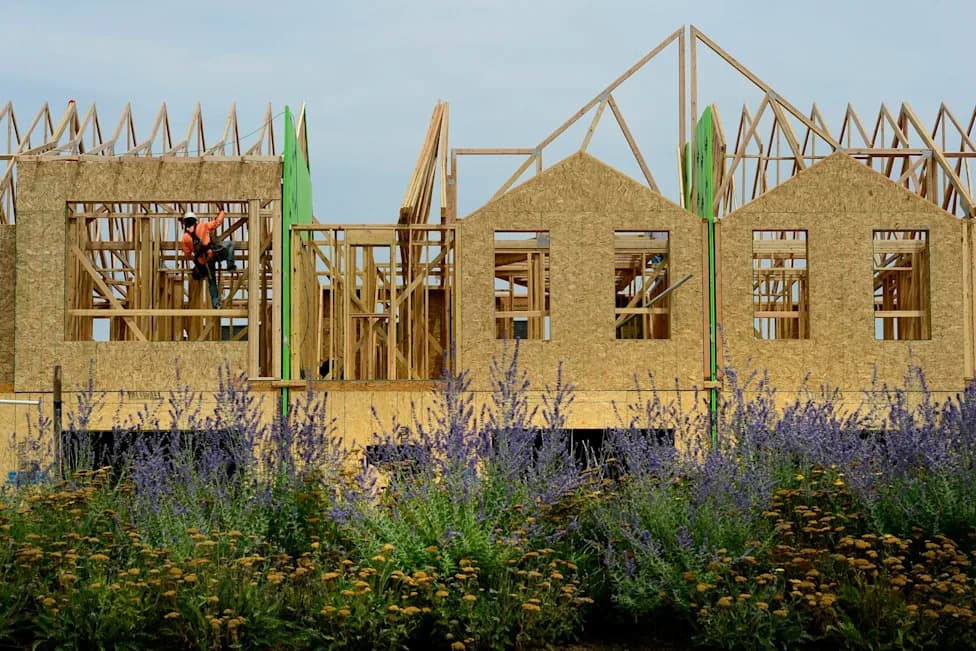
Existing laws in Colorado reduce the administrative and regulatory costs of building new housing.Helen H. Richardson/The Denver Post via Getty Images
In Colorado, a full-time worker must earn roughly $36.44 per hour to afford a modest two-bedroom apartment without spending more than 30% of income on rent, according to the National Low Income Housing Coalition. By contrast, the state minimum wage is $15.16; someone earning that would need to work about 96 hours per week — more than two full-time jobs — to cover that rent. The report ranks Colorado as the 12th-least-affordable state for renters.
What the 21st Century ROAD to Housing Act Does
In July 2026 Congress enacted the 21st Century ROAD to Housing Act, the most significant federal housing legislation in decades. Rather than creating major new spending programs, the law offers competitive grants and technical assistance to states and localities that reform local rules that slow and raise the cost of housing construction. It also loosens some federal restrictions on how existing housing dollars can be combined and spent.
Why Colorado Is Well Positioned
Colorado has already enacted several of the reforms the ROAD Act rewards. Notable examples include:
- Parking Requirements: A 2024 state law eliminated parking mandates near transit, and Denver has since dropped parking requirements entirely.
- Accessory Dwelling Units (ADUs): Colorado legalized ADUs statewide in 2024, letting homeowners build backyard or garage apartments without special local hearings.
- Single-Stair Apartments: Colorado is one of four states that legalized single-stair apartment buildings, enabling smaller, more space-efficient buildings on narrow lots.
The federal law complements these changes: for example, it allows Federal Housing Administration home-improvement loans to finance ADUs and directs federal guidance and grant testing for single-stair buildings.
Financing And Institutional Reforms
Financial rules are shifting in ways that favor development as well. The act increases the allowable share of a bank's capital that can be invested in Low-Income Housing Tax Credit (LIHTC) deals from 15% to 20%, enabling banks to buy more credits and inject more equity into projects — a timely change as some state subsidies shrink. The Colorado Housing and Finance Authority (CHFA) — which is not a state agency — lobbied Congress for the LIHTC change.
Colorado has also invested in the institutional machinery that helps reforms work in practice. In 2025 the state, CHFA, and the City and County of Denver launched Housing Hub Colorado, a portal to align application timelines and requirements; it grew from the Colorado Housing Consortium, a 2025 coalition of more than 120 stakeholders that prioritized a shared application, a revolving loan fund, and pooled demand for modular construction.
Where Reform Falls Short
The ROAD Act focuses on making new housing cheaper and faster to build — not on directly subsidizing people who cannot afford market housing. That limitation matters: nationally, three in four eligible low-income renter households receive no federal rental assistance because programs are underfunded.
Colorado is already testing this boundary. To close a $1.5 billion budget gap, lawmakers shifted $130 million out of Proposition 123 (passed in 2022 to fund affordable housing), with most cuts hitting programs that build rental housing for very low-income households. Regulatory reform can lower costs, but it cannot replace subsidies for the lowest-income renters.
Other constraints remain: six of Colorado’s 105 home-rule cities sued the state in 2025 over the 2024 reforms, and bills to allow lot splitting or cap lot sizes stalled in 2026 after local pushback. Condominium liability rules — owners can sue up to eight years after completion — continue to push builders toward rentals rather than condos. A 2025 law offers builders protections tied to inspections and warranties, but insurers and builders expect a 6–8 year lag before premiums decline.
What Comes Next
Federal agencies must still write regulations, run studies, and launch the grant programs the law authorizes — work that could take years at HUD amid reduced staff levels. Analysts at the Pew Charitable Trusts advise jurisdictions that update zoning, building codes, and permitting now will be best positioned to win competitive funding.
Colorado’s record shows both the promise and the limits of regulatory reform: the state is better prepared than many to capture federal incentives, but reforms on paper must be implemented, coordinated across agencies, and paired with subsidies to produce homes that low-income families can actually afford.
Author: Solomon Greene, Center for Housing Research and Innovative Solutions, University of Denver. The Colorado Housing and Finance Authority is not a state agency.
Updated to clarify that the Colorado Housing and Finance Authority is not a state agency. This article originally appeared at The Conversation.
Help us improve.