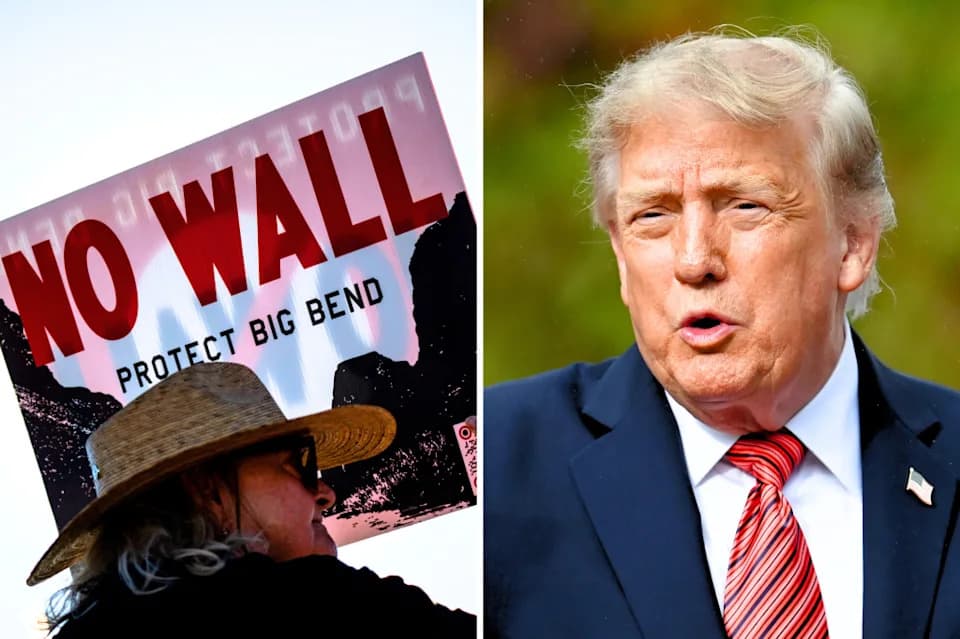
A federal judge denied the Tohono O'odham Nation's request for a temporary injunction to block construction of a border wall across roughly 62 miles of the Tribe's reservation. Chairman Verlon M. Jose said the Nation will pursue all legal options, warning the project would permanently damage sacred sites, burial grounds and unique natural resources. The case centers on tribal sovereignty and whether the federal government can build large-scale border infrastructure on a federally recognized reservation despite tribal objections.
Federal Judge Denies Tohono O'odham Nation's Bid To Block 62‑Mile Border Wall; Tribe Vows Further Legal Action
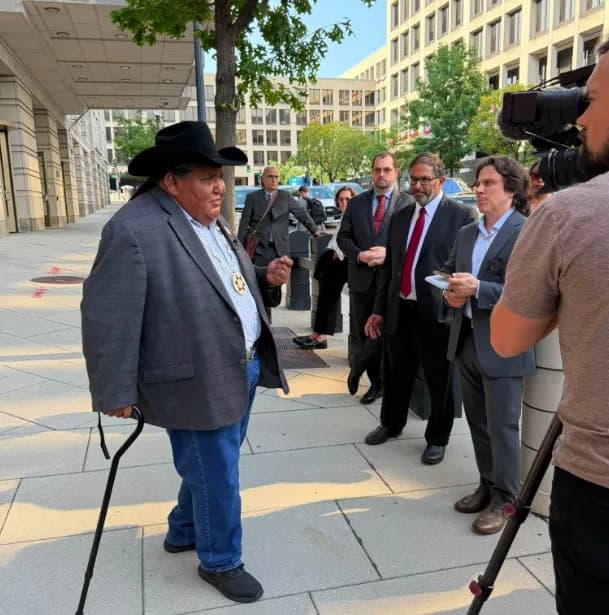
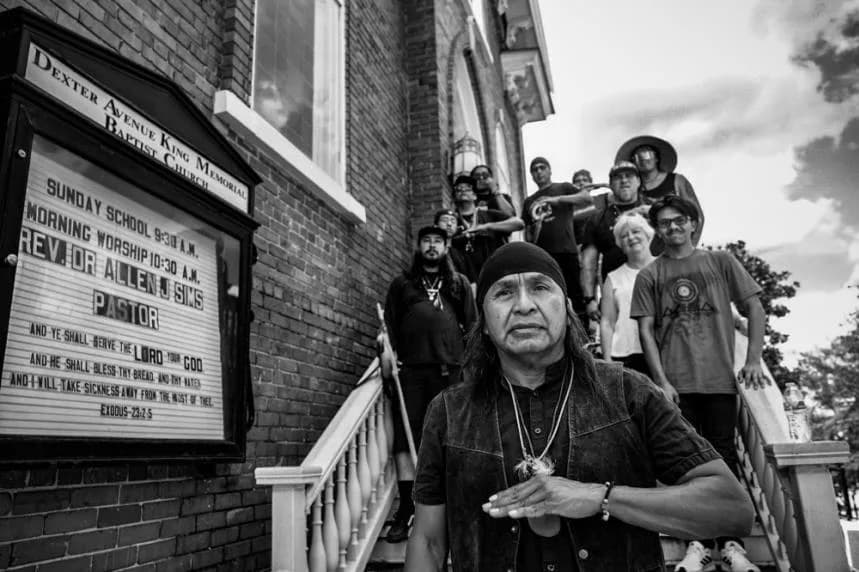
Tohono O’odham Nation Chairman Verlon M. Jose outside of the United States District Court in Washington, D.C. in July 2026. (Photo/Tohono O'odham Nation)
A federal judge has denied the Tohono O'odham Nation's request for a temporary injunction to stop construction of a border wall on the Nation's reservation, a decision that leaves tribal leaders weighing next legal steps in a dispute over tribal sovereignty, sacred sites and federal authority to build major infrastructure on Indian Country.
Chairman Verlon M. Jose said the Nation strongly disagrees with the ruling and will consider "all possible options" going forward.
"Too many critical issues were not adequately addressed, such as inevitable impacts construction will have on the Nation's land and the permanent destruction of sacred sites," Jose said in a statement. "The Nation will consider all possible options for moving forward, as this issue is simply too important to the O'odham."
The Nation filed suit in federal court in Washington, D.C., seeking a preliminary injunction to stop the Trump administration from building a border barrier across roughly 62 miles of the Tribe's international boundary with Mexico. The reservation covers about 2.8 million acres in southern Arizona and overlaps the O'odham people's traditional homeland, which predates the modern international boundary.
Threats to Cultural and Natural Resources
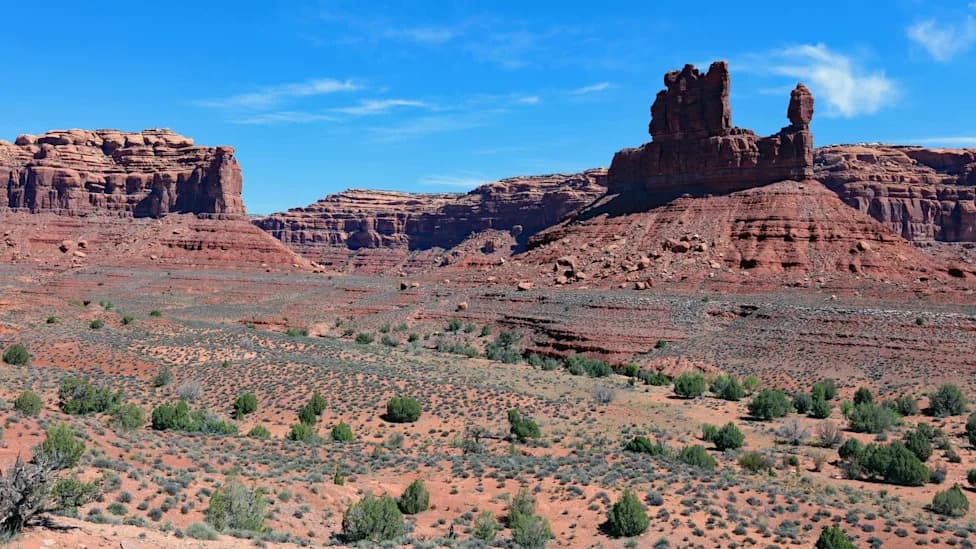
The Tohono O'odham contend the proposed double wall would threaten landscapes of deep cultural, religious and historical importance, including ancestral burial grounds, sacred sites and places central to contemporary O'odham life. Chairman Jose pointed to recent harm in the borderlands, such as grading at the approximately 1,000-year-old Las Playas intaglio, the dynamiting of ancient burial sites at Monument Hill, and ongoing damage to Quitobaquito Springs.
The Nation argues the project's impacts would extend well beyond the wall's physical footprint and that construction would permanently alter ecosystems and culturally significant terrain.
Security, Sovereignty and Alternatives
The Nation stresses it is not opposed to border security. For decades it has cooperated with federal authorities and says its multilayered enforcement approach has reduced apprehensions of unauthorized border crossers by more than 95 percent. Tribal leaders contend that evidence from that cooperation shows a static 30-foot concrete wall is an outdated measure that would cause substantial damage without proportional security benefits.
At the heart of the litigation is a core question of tribal sovereignty: may the federal government build major border infrastructure across a federally recognized reservation despite the objections of the Tribal Nation that governs that land?
What Comes Next
Friday's ruling does not end the dispute. The Nation said its leadership and legal team are evaluating all available options to continue challenging the project, including appeals and further litigation. The case is closely watched for its potential implications on how federal border-security authority intersects with tribal sovereignty and cultural-protection laws.
The Tohono O'odham Nation has posted a webpage with additional information about the lawsuit and its history of border-protection efforts.
Why it matters: The dispute raises broader questions about balancing national border-security objectives with the rights of Indigenous nations to protect ancestral lands and sacred sites that predate the U.S.-Mexico border.
Help us improve.