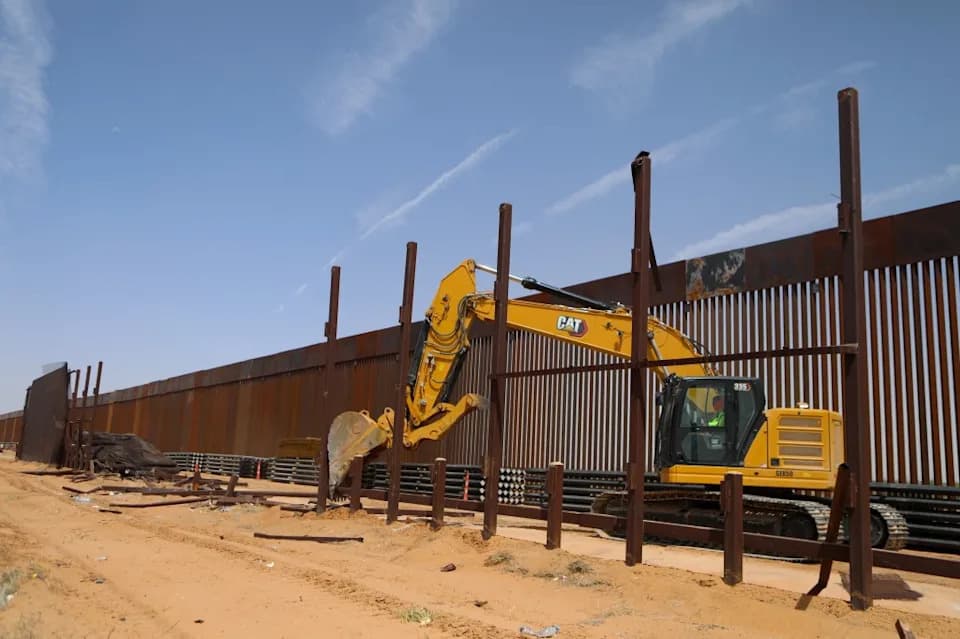
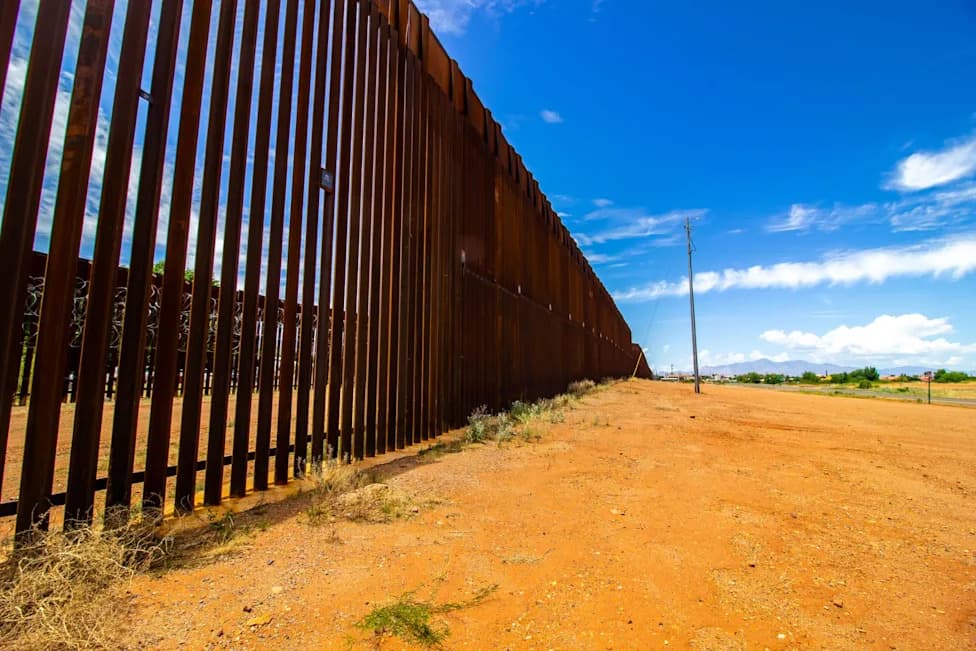
Crews have started installing 30-foot steel panels for Big Bend 1 in Hudspeth County, Texas, but widespread landowner refusals and a Sept. 14 lawsuit threaten to leave gaps ahead of the midterm elections. Activists say more than 400 private landowners are affected and that access denials have already delayed work. Federal pauses remain in place for ground-disturbing work on Big Bend 2 and 4 through Sept. 30, and CBP maintains it will use cameras and sensors rather than 30-foot walls within some protected areas. Environmental, cultural and eminent-domain questions will shape whether the planned barrier becomes continuous.
Landowner Resistance and Lawsuit Threaten Continuity of Trump’s Big Bend Border Wall Ahead of Midterms
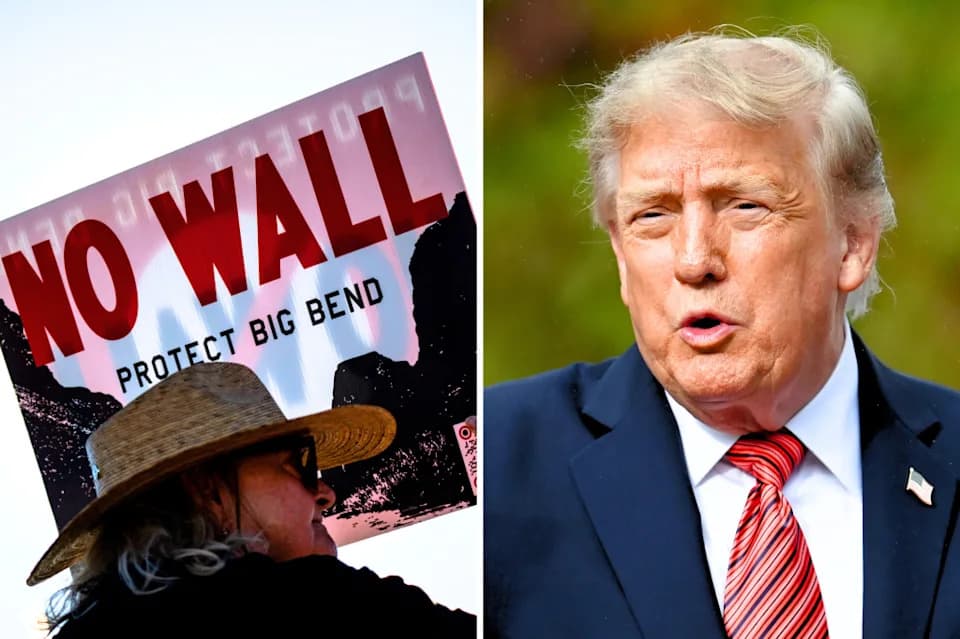
Left: People protest in Study Butte, Texas, August 15, 2026. Right: Donald Trump speaks, September 12, 2026, in Dublin.
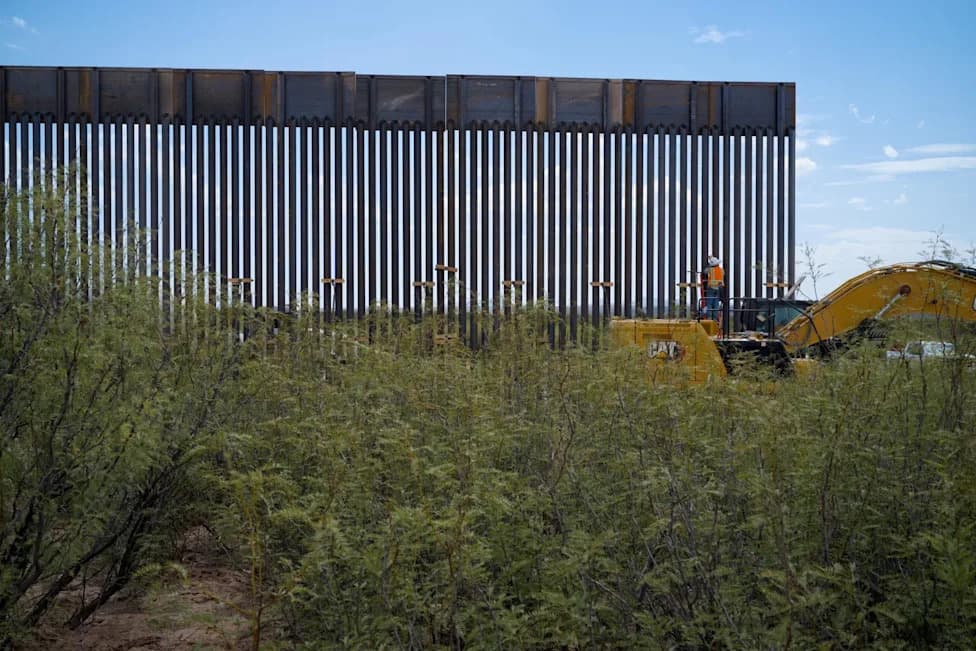
Construction crews have begun installing 30-foot steel panels for the Big Bend 1 segment of the border wall in Hudspeth County, Texas, but private landowner refusals and a recent lawsuit could leave gaps in the barrier as work advances toward the November midterms.
What's Happening
Crews are installing 30-foot bollard-style panels along Big Bend 1, a 47.3-mile stretch outlined in U.S. Customs and Border Protection's (CBP) plans. That activity is separate from ground-disturbing work on Big Bend 2 and Big Bend 4, which federal authorities agreed to pause through September 30 to allow for further public engagement.
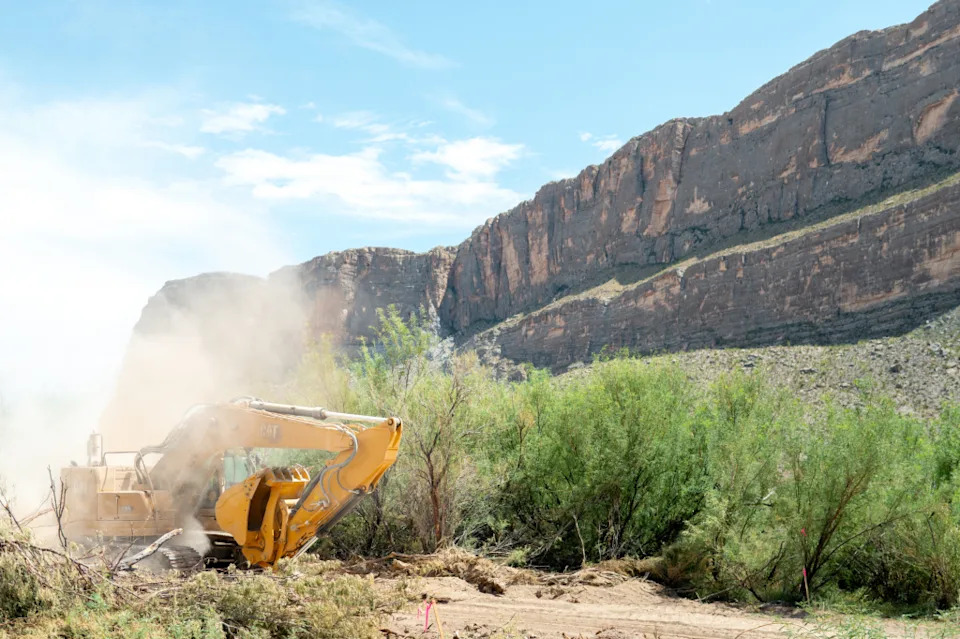
An excavator plows to build a section of border wall near Santa Elena Canyon, August 14, 2026, Big Bend National Park, Texas.
Landowner Pushback and Legal Challenge
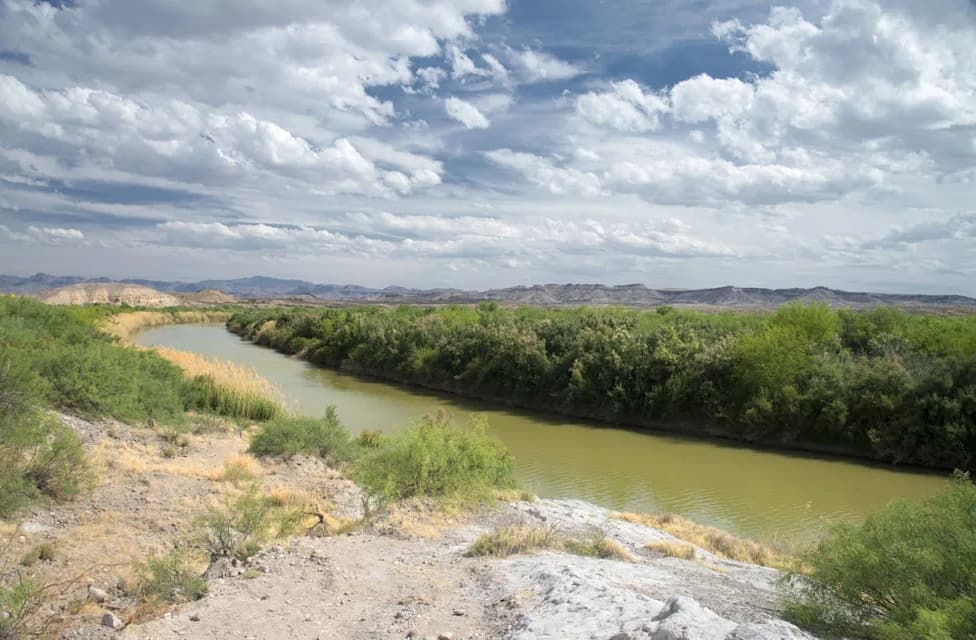
The No Big Bend Wall Coalition and conservation group Conserve Big Bend say hundreds of private landowners along the Rio Grande have been asked to grant construction access. Coalition communications director Clara Bensen told Newsweek that more than 400 owners are affected and roughly 230 have joined organized resistance efforts. Many property owners have declined access, creating what campaigners call a "patchwork effect" that could prevent a continuous wall from being built.
On September 14 Conserve Big Bend and six landowners filed a lawsuit challenging the federal determination that the 517-mile Big Bend Sector is an area of "high illegal entry"—a designation used to accelerate construction and waive certain procedural requirements. The complaint names the Department of Homeland Security, CBP, Homeland Security Secretary Markwayne Mullin and Commissioner Rodney Scott as defendants and seeks declaratory and injunctive relief.
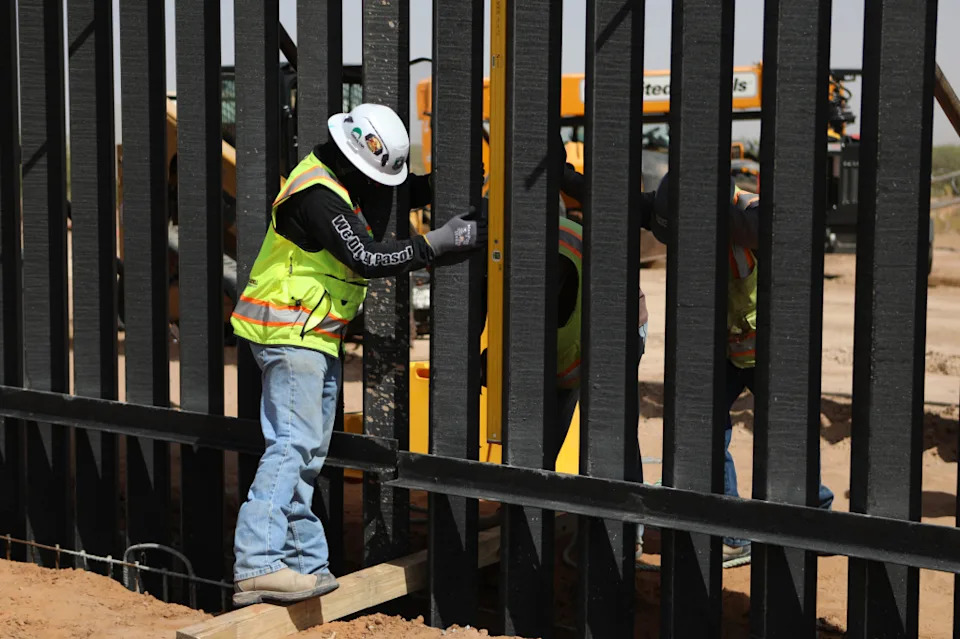
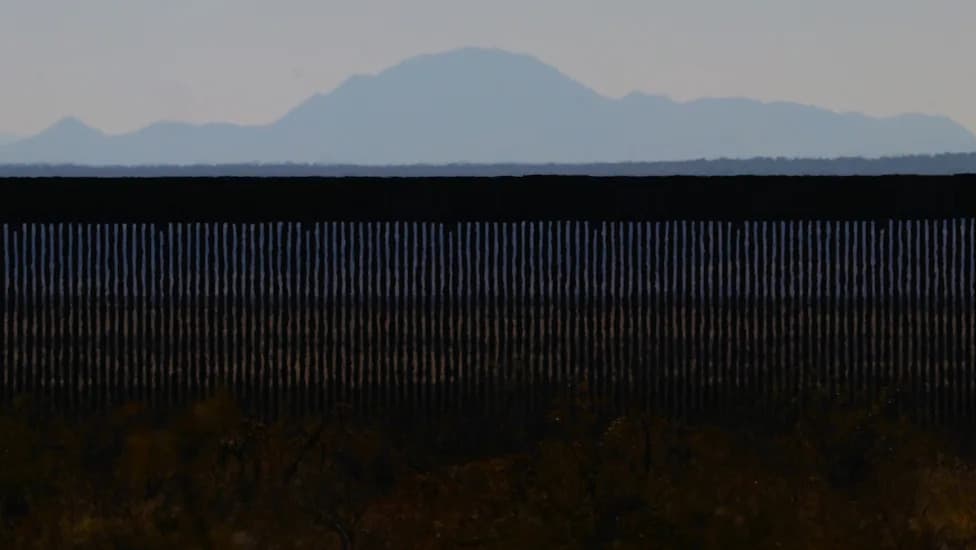
A U.S. worker is seen from Ciudad Juárez, Mexico, at the border between Santa Teresa, United States, and Ciudad Juárez, August 5, 2026.
Environmental, Cultural and Local Concerns
Opponents cite multiple risks: flooding from trapped vegetation and debris during monsoon storms, harm to Indigenous cultural sites, artificial-lighting impacts, and damage to the region's tourism economy. Bensen said flooding is the most immediate physical concern, warning that wall structures can obstruct drainage toward the Rio Grande unless carefully designed and managed.
Newsweek has asked CBP what hydrological assessments, drainage designs and debris-management plans have been completed for the project; the agency's responses are pending.
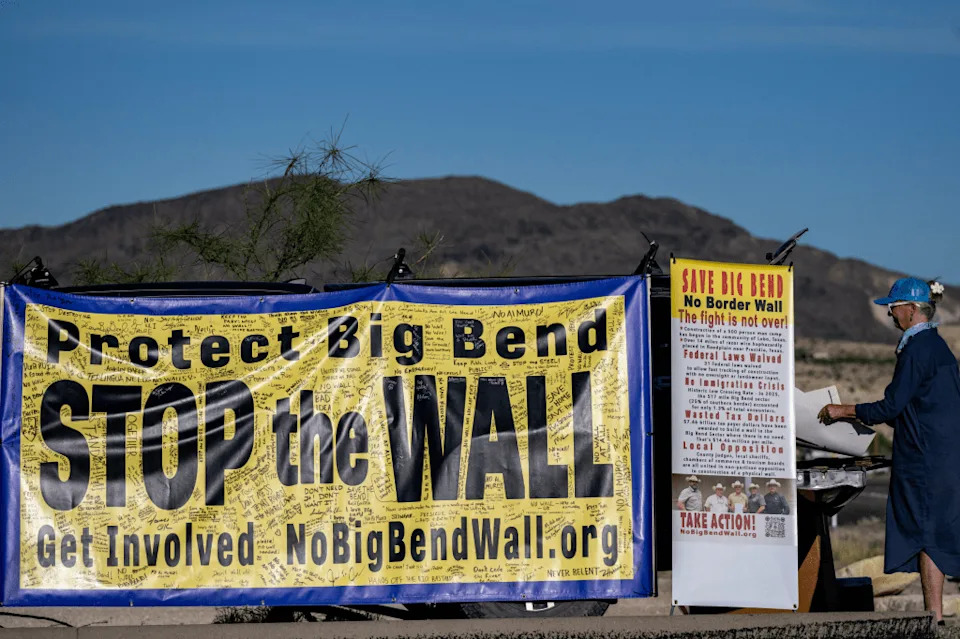
People protest the plans to build a section of the border wall at the Big Bend National Park in Study Butte, Texas, on August 15, 2026.
Access, Eminent Domain and the Timeline
Land access is a practical hurdle for an administration that controls federal funding and has contracted construction crews but does not yet have permission to work on every privately owned parcel along the proposed route. In some counties, including Hudspeth, a higher share of owners have granted access; in others, refusals could leave crews able to build on one parcel but unable to continue through the next.
Campaigners and local residents have reported signs of preparation, such as steel bollards moved closer to the border before panels appeared. Advocates contend contractors are financially motivated to show visible progress before midterm voting. Whether sections ultimately connect may depend on hundreds of individual landowner decisions and on whether the federal government pursues additional land through eminent domain.
CBP Plans and Data
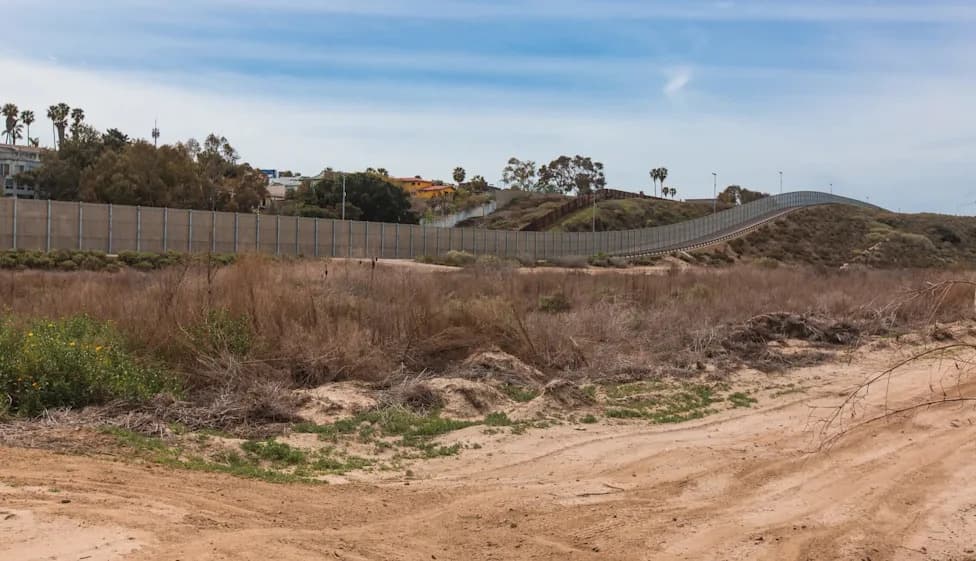
CBP's map lists three Big Bend primary-wall projects totaling 165.8 miles. The agency has said it does not plan to install 30-foot bollard walls inside Big Bend National Park, Big Bend Ranch State Park or the Black Gap Wildlife Management Area; for those protected areas, CBP says it intends to rely on cameras, sensors and limited low-profile vehicle barriers. On August 17 CBP Commissioner Rodney Scott announced a pause on construction inside Big Bend National Park for "on-the-ground evaluation" and community consultation.
The broader Smart Wall program combines physical barriers with roads, cameras, lighting and detection equipment, supported by $46.5 billion in federal funding. CBP reports that apprehensions in the Big Bend Sector fell from 11,823 in fiscal 2023 to 3,096 in fiscal 2025—a 74 percent decline—which the agency attributes to enforcement policies, personnel changes and detection capabilities including autonomous surveillance towers.
What Comes Next
The September 30 pause is limited to specified ground-disturbing work on Big Bend 2 and Big Bend 4. Unless extended by a court or agency decision, that date will renew scrutiny on what construction activity may resume near the national park. The lawsuit and individual landowner choices will be central to whether installed sections link together into a continuous barrier.
Contact: Newsweek editors Sam Stevenson and James Debens. This story used the assistance of Newsweek's AI tool; reporting and editorial decisions were made by Newsweek staff.
Help us improve.