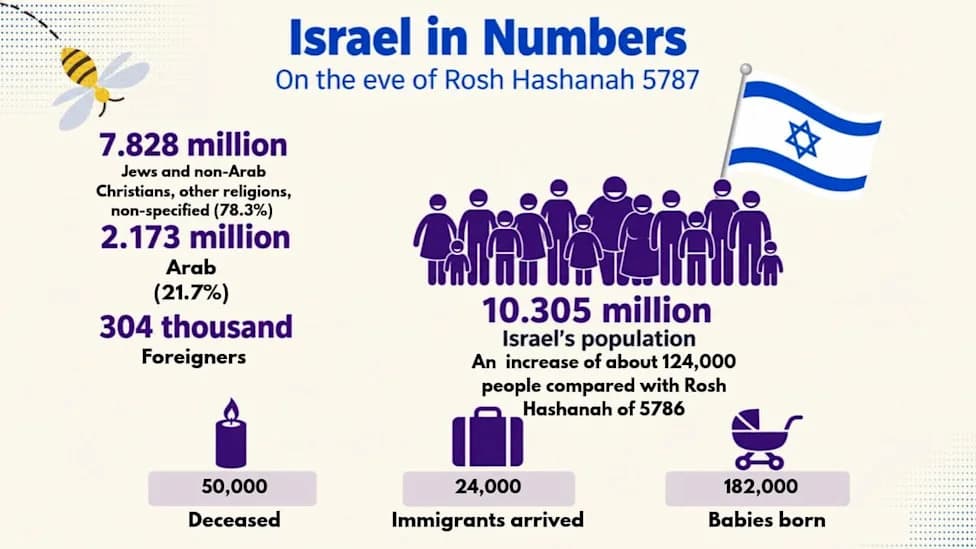
Many Israelis have left the country in recent years amid political polarization and repeated conflicts: a Tel Aviv University study estimates 40,000–50,000 citizens emigrated for at least a year in each of the past three years. Researchers and tax data warn of a growing brain drain because departing citizens tend to be highly educated and higher-paid. At the same time, aliyah continued in 2025 with over 22,500 new immigrants, highlighting a complex flow of arrivals and departures driven by ideology, security fears, cost of living and family considerations.
Many Israelis Emigrate Seeking Quiet Amid Wars and Political Turmoil — Study Warns of Brain Drain

An undated drone photo of Arona, Italy. (photo credit: Hagai Agmon Snir)
A Tel Aviv University study and real-life accounts paint a picture of growing Israeli emigration driven by political polarization, repeated wars and a search for personal stability. Between 40,000 and 50,000 citizens reportedly left Israel for at least a year in each of the past three years — a surge that began with the political upheaval of 2023 and continued after the Oct. 7 Hamas attack.
Study Findings and Economic Concerns
The Tel Aviv University researchers say current emigration levels are unprecedented in recent decades. While the authors do not yet view the trend as an immediate economic or security crisis, they warn that a continued rise could have serious consequences — especially because the outflow increasingly involves highly educated, high-earning professionals.
Analysis from the Israel Tax Authority supports that warning: emigrants' incomes before leaving were roughly 50% higher than the national average, with doctors, engineers and other skilled professionals disproportionately represented. Researchers describe this as a "dangerous" increase in brain drain, which could affect Israel's long-term human capital and innovation capacity if it continues.

Undated photo of Iris Meiri-Snir and Hagai Agmon-Snir. (credit: Courtesy Iris Meiri-Snir)
Migration Is Not One-Way
At the same time, immigration to Israel continued in 2025. Some 22,500 new immigrants arrived that year, including about 8,500 from Western countries such as the United States, France, Britain and Canada. Overall aliyah declined by roughly one-third — mainly due to a steep drop in arrivals from Russia — but arrivals from several Western countries rose: French aliyah more than tripled between 2023 and 2025, and North American immigration also increased.
Why People Leave — And Why Some Come
Personal stories collected by reporters reflect a mix of motivations. For some, like Iris Meiri-Snir and her husband Hagai Agmon-Snir, the decision to relocate to northern Italy was explicitly ideological: they felt increasingly alienated as Israeli politics shifted to the right. "Leaving is our way of expressing our opposition," Agmon-Snir said, arguing that a "fascist current" has entered the mainstream.
"If I ignore all the political and social crap happening around me, what do I have to complain about here? We've got it pretty good. But it's no longer possible to be part of what's happening here." — Hagai Agmon-Snir
Others cited security fears, repeated wars, the high cost of living and dissatisfaction with public services such as education as motivations to relocate. Conversely, many newcomers said the wars strengthened their desire to move to Israel in solidarity, and organizations that facilitate aliyah reported higher interest from North American Jews this summer.

Anna Lukatsky poses with her partner in an undated photo. (credit: Courtesy Anna Lukatsky)
Life After Moving
Experiences abroad vary. Some emigrants report warm receptions and active expatriate social circles, while others struggle with language barriers, distance from family and differences in welfare systems — especially Europeans accustomed to more generous public benefits. Many who move temporarily plan to retain ties with Israel: some continue work or education remotely, while others see emigration as a chance to pursue long-postponed personal goals.
Implications and Outlook
Researchers caution that the demographic and economic effects of sustained emigration merit careful monitoring. If the trend persists or accelerates, the loss of highly skilled professionals could damage Israel's labor market and innovation ecosystems. Policymakers and civic leaders face competing pressures: addressing the grievances that push citizens away while supporting newcomers and those who choose to remain.
The stories of those who leave and those who arrive underscore a complex reality: migration choices are shaped by a mix of ideology, safety concerns, economic calculations and personal aspirations. For now, the numbers point to a nation undergoing unusual mobility at a politically fraught moment.
Help us improve.