For nearly 18 years Mayor Ruvik Danilovich has steered Beersheba from a dismissed desert town into a concentrated hub of higher education, high‑tech firms and military technology. The city now hosts roughly 223,600 residents, about 30,000 students, an IDF tech campus expected to house 8,000 personnel and an Intelligence Campus planned for over 10,000 staff. Danilovich proposes a national aliyah target of one million immigrants over five to seven years to help populate the Negev, even as the city rebuilds after wartime damage to key institutions like Soroka Hospital.
From 'City of Camels' to the New Israeli Dream: How Beersheba Is Reinventing Itself Under Mayor Danilovich
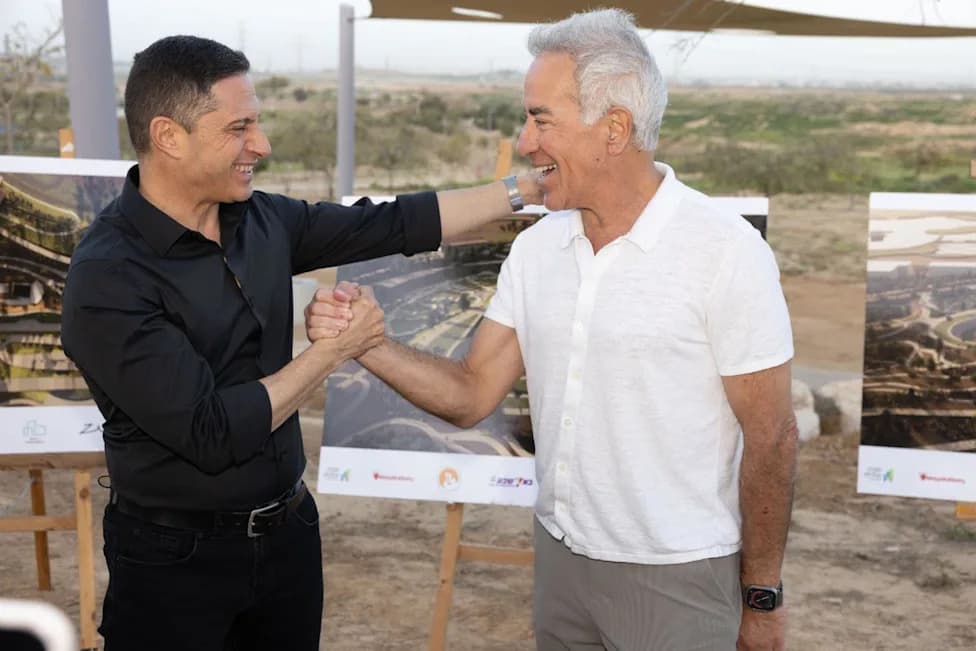
Beersheba Mayor Ruvik Danilovich with philanthropist Sylvan Adams, who pledged $100m. To help rebuild Soroka Media Center after it was hit by an Iranian missile in the 12-Day War. (photo credit: Beersheba Municipality)
Ruvik Danilovich measures Beersheba's transformation in distance and opportunity. "When I was a child in Beersheba, between Beersheba and Tel Aviv it felt like light‑years," the mayor says, recalling an era when the city was dismissed as "the city of camels" — a remote desert town at the country's edge.
A City Transformed
Born in Beersheba in 1971 and mayor since 2008, Danilovich has spent nearly two decades reshaping the city's image and economy. Today Beersheba is home to roughly 223,600 residents and about 30,000 students across local higher‑education institutions. Ben‑Gurion University of the Negev enrolls around 20,000 students and estimates that roughly one in three Israeli engineers graduates from BGU.
Concentration of Knowledge and Industry
Several major national projects have converged on Beersheba. The IDF began moving units into a new technological campus adjacent to the Gav‑Yam Negev high‑tech park and close to BGU, ultimately expected to house some 8,000 soldiers and career officers. Northeast of the city, an Intelligence Campus near Shoket Junction is planned to accommodate well over 10,000 Intelligence Directorate personnel.
Across from the university, Gav‑Yam reports about 2,500 engineers working for roughly 70 companies in its technology park. International firms are expanding their footprint: Nvidia has tripled its office space in Beersheba and plans to recruit hundreds of employees, while Microsoft, Dell, IBM and Deutsche Telekom also have a presence in the area.
"These companies come on their own," Danilovich says. "They are not philanthropic — they are businesses. They come where it is worthwhile for them."
The New Israeli Dream
Danilovich frames Beersheba's rebirth as part of a broader vision for the Negev. The region comprises roughly 60% of Israel's land and is home to about 1.5 million people. He argues that past policies concentrated population and economic activity in the center while overlooking the South's scale and potential. "The Negev is not the problem of the State of Israel," he says. "The Negev can be the solution."
Ambitious Aliyah Plan
A central plank of his strategy is an ambitious aliyah initiative: Danilovich proposes a national target of one million new immigrants over five to seven years, supported by housing incentives, employment programs and community infrastructure intended to steer significant settlement toward the Negev and the Galilee.
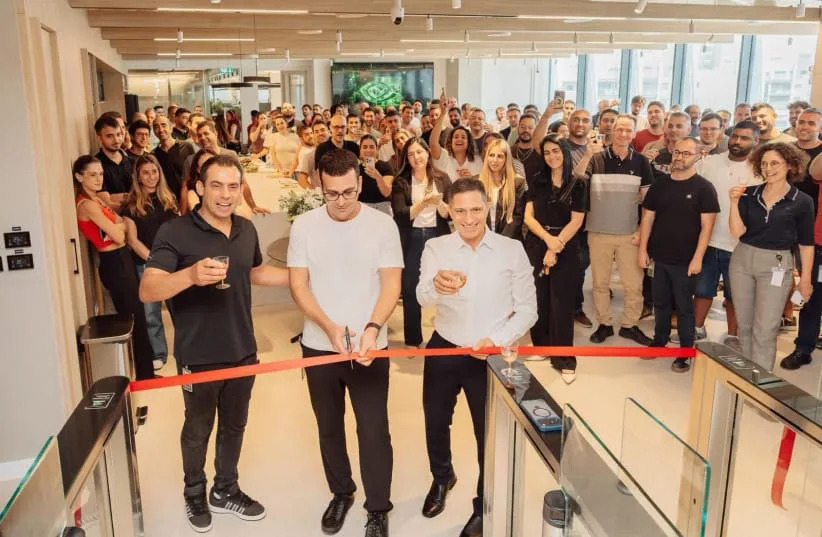
Beersheba Mayor Ruvik Danilovich joins Nvidia representatives and employees at the inauguration of the company's Beersheba offices. (credit: Beersheba Municipality)
Beersheba has precedent for transformation through immigration. During the large aliyah wave from the former Soviet Union in the 1990s, more than 60,000 immigrants settled in the city, bringing doctors, engineers and academics who helped reshape local institutions such as Soroka University Medical Center.
Major Civic and Cultural Projects
JNF‑USA is developing a $350 million World Zionist Village in Beersheba; its master plan was approved in 2025 and the organization expects to open the project in 2029. The village will include educational programs, accommodation and a center designed to bring young Jews and community leaders from around the world to spend meaningful time in Israel — and potentially choose to stay.
Resilience Amid Conflict
Beersheba's growth has unfolded alongside recurring security challenges. On June 19, 2025, Soroka — the main hospital serving southern Israel — was struck by an Iranian ballistic missile. The government approved NIS 360 million for reconstruction, and philanthropist Sylvan Adams pledged an additional $100 million toward rebuilding.
Danilovich has guided the city through multiple rounds of fighting and reconstruction. "After every round ended, I would see the cranes in Beersheba," he recalls. The city has seen new neighborhoods, a rehabilitated River Park where sewage and waste once were common, a modern stadium, cultural institutions and an expanding high‑tech park.
Leadership and Outlook
Despite repeated offers to enter national politics, Danilovich says he has declined, insisting his mission is in the Negev. "If we do not make it flourish, if we do not strengthen it, if we do not build it and make it attractive, if it does not become the new Israeli dream, the State of Israel will be in danger," he warns.
Under Danilovich, Beersheba has moved from Israel's periphery toward becoming a compact, resilient hub of education, high tech and national infrastructure — a model he hopes can be scaled across the Negev.
Help us improve.