New reporting links the CIA to a series of covert strikes on Ecuadorian fishing boats earlier this year. Survivors say English-speaking attackers used drones and a surveillance plane tracked vessels before strikes. Flight data and recordings have fuelled questions about whether private contractors were involved and why these particular boats were targeted. The incidents are reported to be separate from the Pentagon's public campaign against alleged 'narco boats.'
Report Links CIA To Secret Strikes On Ecuadorian Fishing Boats; Eight Fishermen Missing
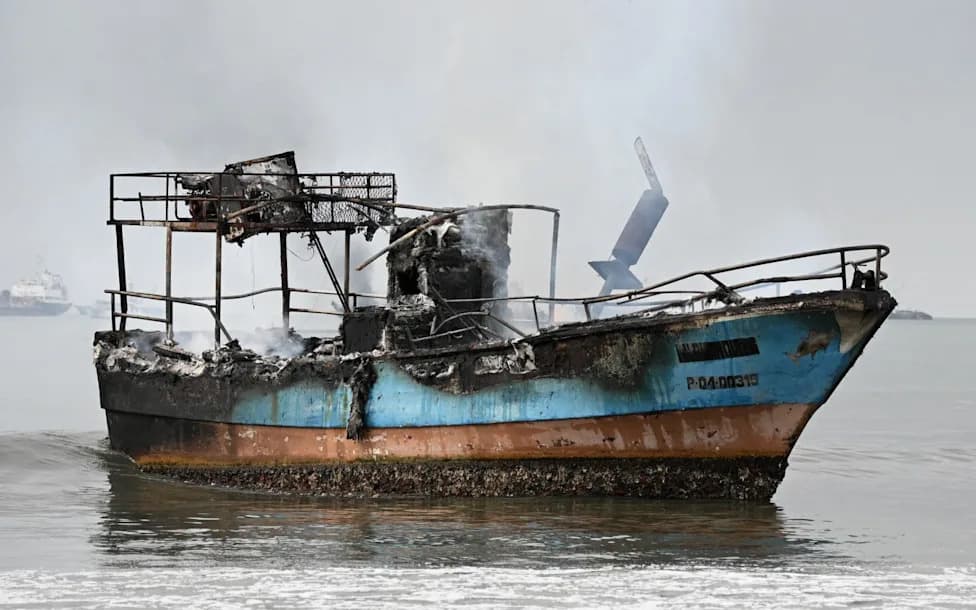
A fishing boat that was hit in an attack near the port of Manta, Ecuador on June 6, 2026 - ARIEL OCHOA/AFP via Getty Images
New reporting ties the Central Intelligence Agency to a series of unexplained strikes on Ecuadorian fishing vessels earlier this year, prompting questions about targets, methods and accountability.
According to reporting by the Washington Post, three separate incidents that damaged or destroyed multiple Ecuadorian fishing boats were part of a presidentially approved covert action program run by the CIA. For months no government claimed responsibility, and investigations by news organisations found survivors, flight data and other details that raise difficult questions about how and why the strikes were carried out.
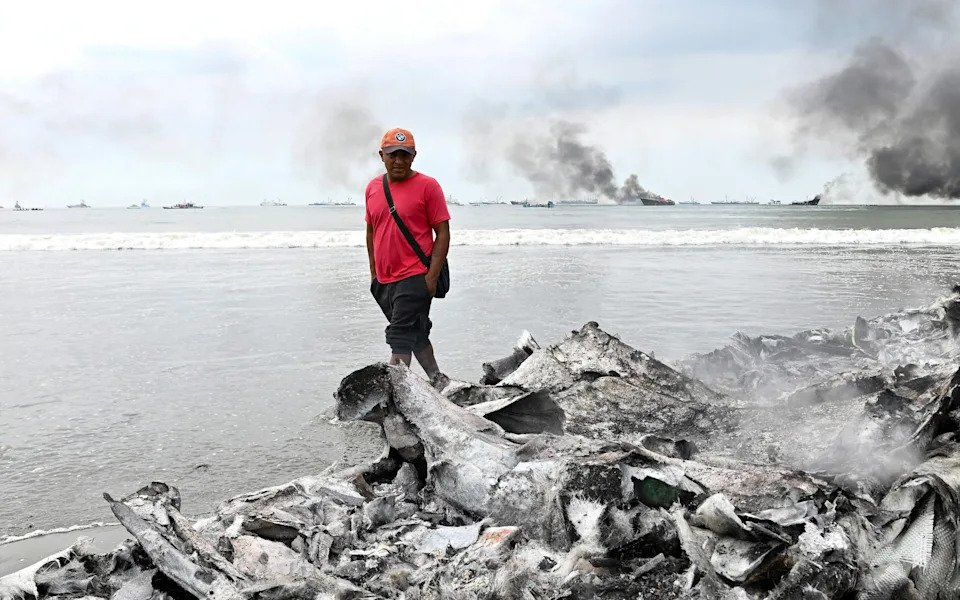
At least 35 fishing boats were destroyed and two people were injured in the attack on June 6 - ARIEL OCHOA/AFP via Getty Images
Details Of The Incidents
Survivors described assailants who spoke English, wore patches resembling the American flag and used drones to strike vessels. In the most serious case, the 52-foot fishing boat Fiorella was struck in January; eight Ecuadorians aboard are missing and presumed dead. Two other boats hit in March — the Negra Francisca Duarte II and the Don Maca — had occupants who survived.
Flight-tracking records reviewed by reporters show a maritime patrol aircraft based in El Salvador flew toward all three boats shortly before each attack. The same high-end surveillance plane is reported to have moved from Tennessee to El Salvador in November and is not registered to the U.S. government, according to the Washington Post. Air-traffic recordings captured pilots speaking English with American accents.
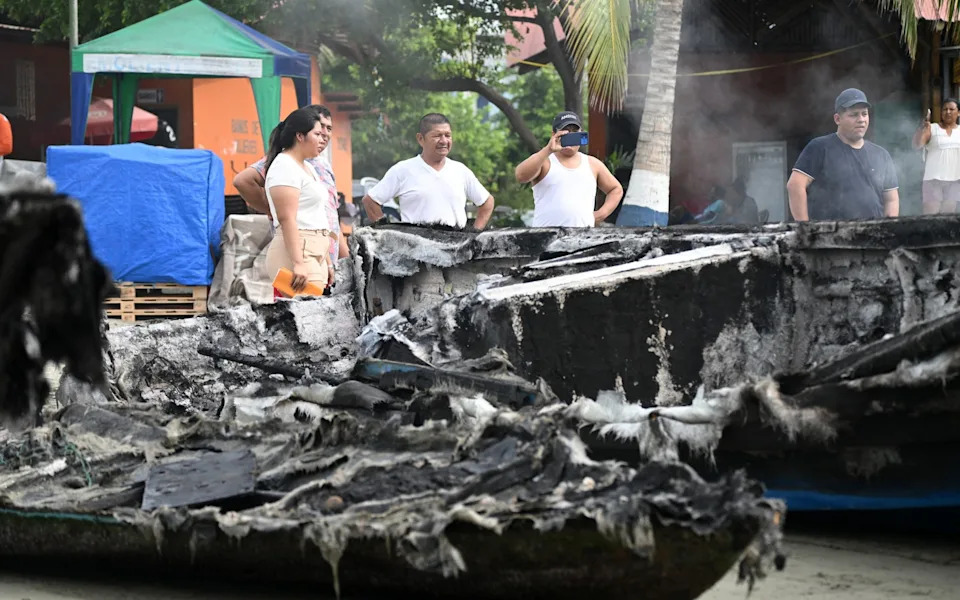
It is not clear why the vessels were targeted or the purpose of the larger covert operation - ARIEL OCHOA/AFP via Getty Images
Scope, Context And Questions
News organisations report that at least 35 fishing boats have been destroyed in related incidents and that two people were injured in an attack on June 6. It remains unclear why specific vessels were targeted or what the wider objective of the covert operation was. The Washington Post and New York Times accounts have prompted speculation about whether private military contractors took part in the missions.
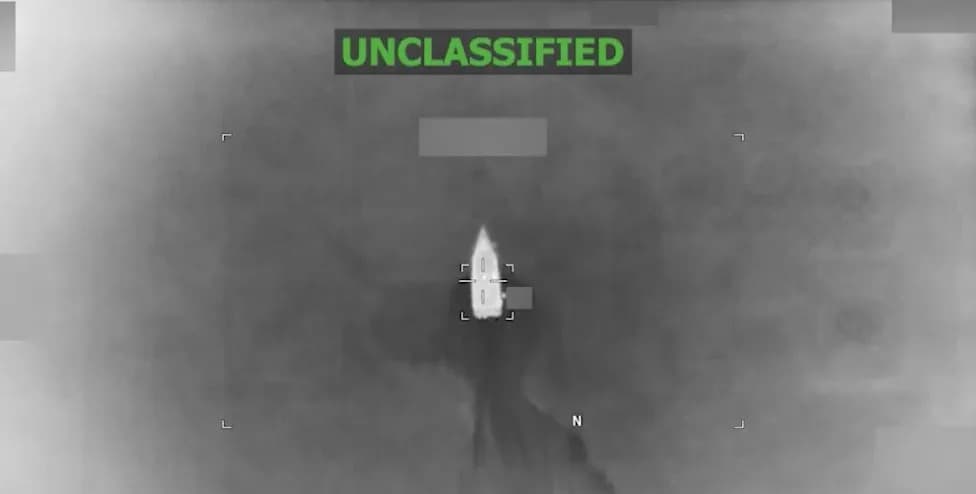
These covert incidents appear distinct from a separate, publicly acknowledged Pentagon campaign targeting so-called 'narco boats' in the Caribbean and eastern Pacific. U.S. military officials have said roughly 67 fast-moving vessels were struck since last September, with about 221 fatalities; those operations have been openly claimed by the Pentagon and sometimes accompanied by released footage. Human-rights groups and legal experts have criticised the Pentagon campaign and questioned the legality of lethal force at sea.
'It begs the question about why you would need to do this,' a former regional official told the Washington Post. 'What would be the purpose of the secrecy?'
Responses And Next Steps
The Telegraph has sought comment from the CIA and the White House; the Washington Post and New York Times reporting cite anonymous and identified sources who reviewed flight records, survivor accounts and other evidence. U.S. and international legal experts have noted that the covert designation — which by design keeps U.S. involvement undisclosed publicly — raises accountability and oversight concerns.
As inquiries continue, the key unanswered questions remain: who authorised each strike, how targets were identified, whether civilians were at risk, and whether any contractors or third parties were employed. The new reporting underscores the need for transparency and review of operations that carry significant risks to noncombatants and to bilateral relations in the region.
Help us improve.