The U.S. military says a strike on a suspected "go-fast" narcotics boat in the Caribbean killed four people, the 71st publicly acknowledged attack in a 13-month campaign. SOUTHCOM released limited details and aerial footage of the strike. Independent U.N. rapporteur Ben Saul warned the operations may amount to serial extrajudicial killings, and the ACLU has sued over alleged wrongful deaths. Brown University estimates the campaign has cost roughly $4.7 billion through March 31.
U.S. Strike in Caribbean Kills Four; U.N. Rapporteur, Rights Groups Raise Legal Concerns
U.S. kills four more in latest strike on alleged drug boat
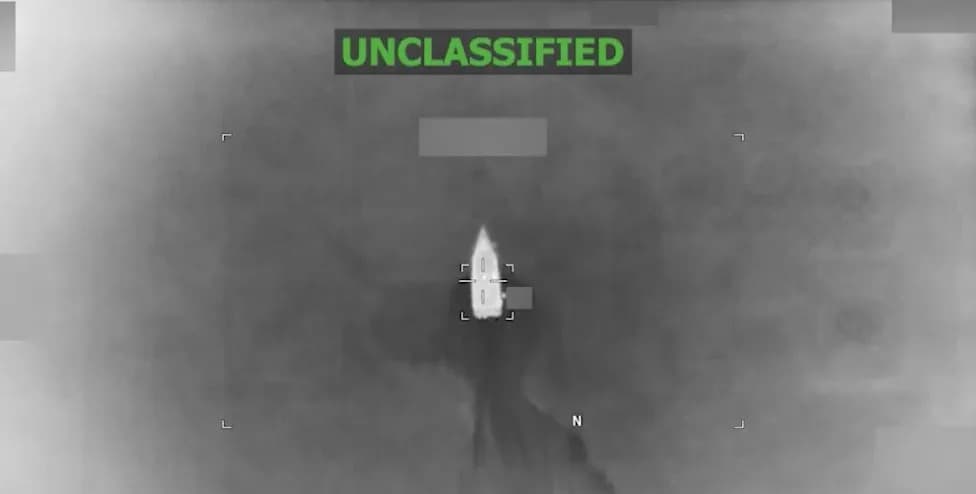
Oct. 4 (UPI) — The U.S. military said late Sunday that a strike on a suspected drug-trafficking "go-fast" boat in the Caribbean killed four people. U.S. Southern Command (SOUTHCOM) released limited information about the operation and shared black-and-white aerial footage showing a small vessel struck by a projectile and erupting in smoke and flames.
Campaign Context
U.S. officials described the incident as the 71st publicly acknowledged strike in a 13-month campaign conducted under the Trump administration across the Caribbean and the Pacific Ocean. U.S. authorities say the operations target narcotics networks, but critics assert that at least 238 people have been killed and that the campaign has drawn growing international condemnation as unlawful.
What Officials Say
SOUTHCOM identified the vessel in a statement as "a go-fast vessel operating along narco-trafficking routes in the Caribbean" and said unspecified intelligence "revealed the vessel's active involvement in narco-trafficking." The military released aerial footage of the strike but provided few other operational details.
Legal and Human Rights Concerns
This strike was Joint Task Force Western Hemisphere’s first this month and comes after independent U.N. special rapporteur Ben Saul published a briefing note on Sept. 20. Saul said there are "reasonable grounds to believe" the cumulative strikes may amount to the crime against humanity of murder under customary international law and concluded the actions could represent "serial extrajudicial killings in violation of the right to life."
Ben Saul: "There are reasonable grounds to believe the attacks constitute the crime against humanity of murder."
The Trump administration has defended the campaign by framing it as part of an "armed conflict" with Latin American drug cartels and gangs, and it has designated 21 such groups as both foreign terrorist organizations and global terrorists. Legal analysts note those designations carry immigration and financial penalties but do not, by themselves, create a clear legal basis for cross-border lethal operations.
Claims, Lawsuits and Effectiveness
Families of some victims have disputed U.S. claims that those killed were traffickers, saying relatives were fishermen or farmers. The American Civil Liberties Union has filed a lawsuit accusing the U.S. government of killing two men who were returning to Trinidad and Tobago after working on farms in Venezuela.
Saul and other critics argue the strikes have not demonstrably reduced drug trafficking into the United States. They note the campaign has focused largely on cocaine shipments rather than fentanyl and other synthetic opioids, which account for most U.S. overdose deaths. Saul also warned that killing low-level suspects can impede evidence gathering and prosecutions of higher-level cartel leaders.
Costs
Brown University’s Watson Institute for International and Public Affairs estimates that U.S. military operations tied to the campaign cost about $4.7 billion through March 31.
What To Watch
- Whether U.S. authorities publish more details about the incident and the intelligence supporting it.
- Legal developments, including the ACLU suit and any international responses to the U.N. rapporteur's findings.
- Assessments of the campaign's effect on narcotics flows, especially fentanyl and synthetic opioids.
Help us improve.