The STAR Collaboration's reanalysis of RHIC collision data provides strong experimental evidence favoring a gluonic Y-shaped baryon junction as the carrier of baryon number rather than the three valence quarks. Isobar (ruthenium vs. zirconium) and photonuclear (gold) collisions both show baryons propagating differently from electric charge, consistent with a junction that is less slowed than charged quarks. While not yet a direct microscopic measurement, the results disfavor simple valence-quark models and motivate further tests at the upcoming Electron–Ion Collider.
50 Years On, STAR Collaboration Finds Strong Evidence That Gluons Carry Baryon Number
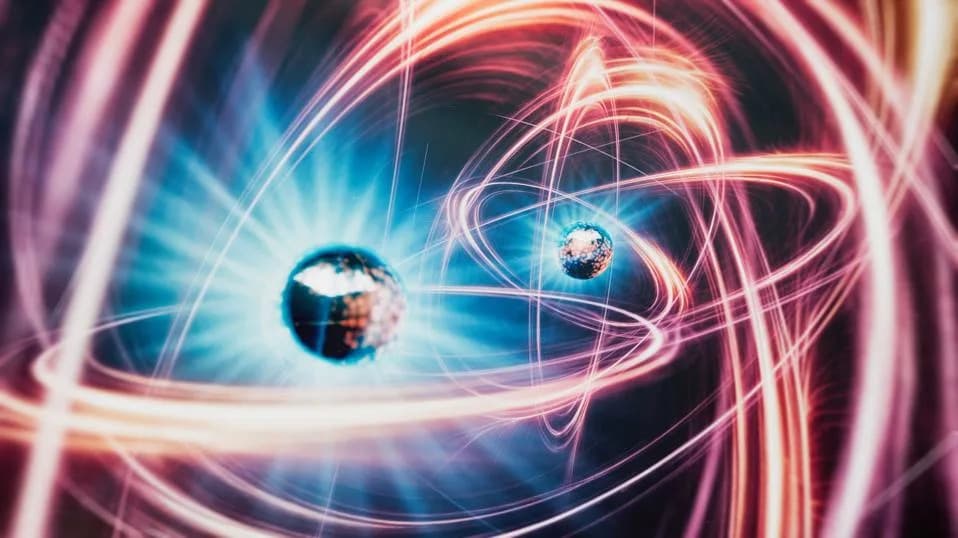
(Amith Nag Photography/Moment/Getty Images)
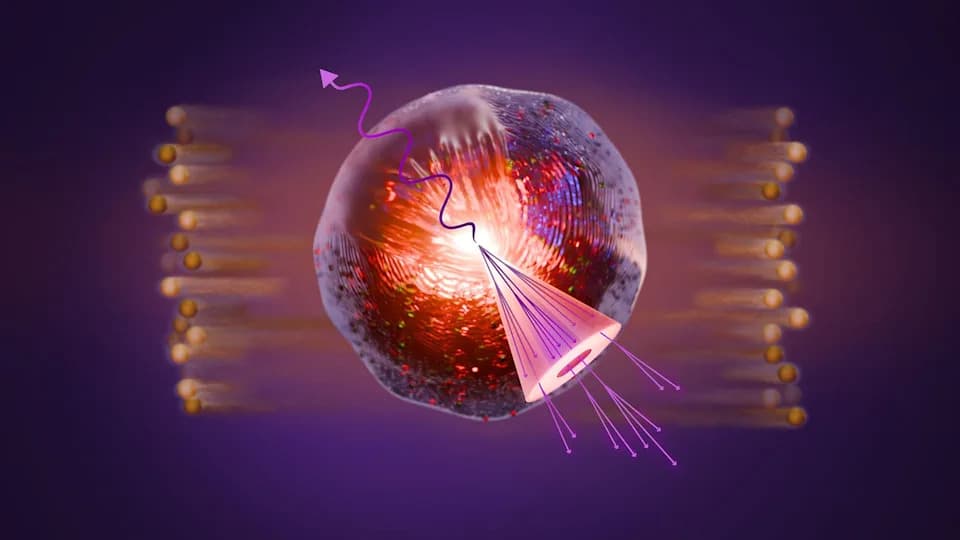
New analyses of collision data from the Relativistic Heavy Ion Collider (RHIC) strengthen a decades-old idea: baryon number may be carried not by the three valence quarks inside a proton, but by a Y-shaped gluonic configuration known as a baryon junction. Published in Science, the STAR Collaboration's work combines isobar and photonuclear collision results to challenge the simple valence-quark picture and illuminate how the strong force organizes matter.
YouTube Thumbnail
What the Study Did
The STAR Collaboration reanalyzed RHIC data from two complementary experimental setups. In isobar collisions (ruthenium vs. zirconium nuclei with the same mass number but different charges) the team compared how net baryon number and net electric charge are transported through the hot, dense collision zone. Because valence quarks carry electric charge while the baryon junction carries no net charge, different transport patterns are expected depending on which object carries baryon number.
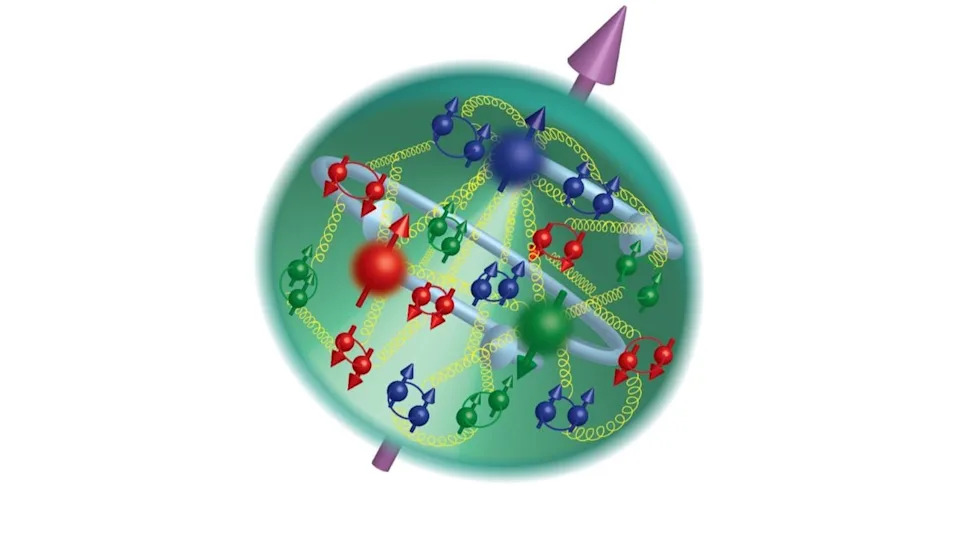
An illustration of a proton, with the three valence quarks and the gluons that bind them.(Argonne National Laboratory)
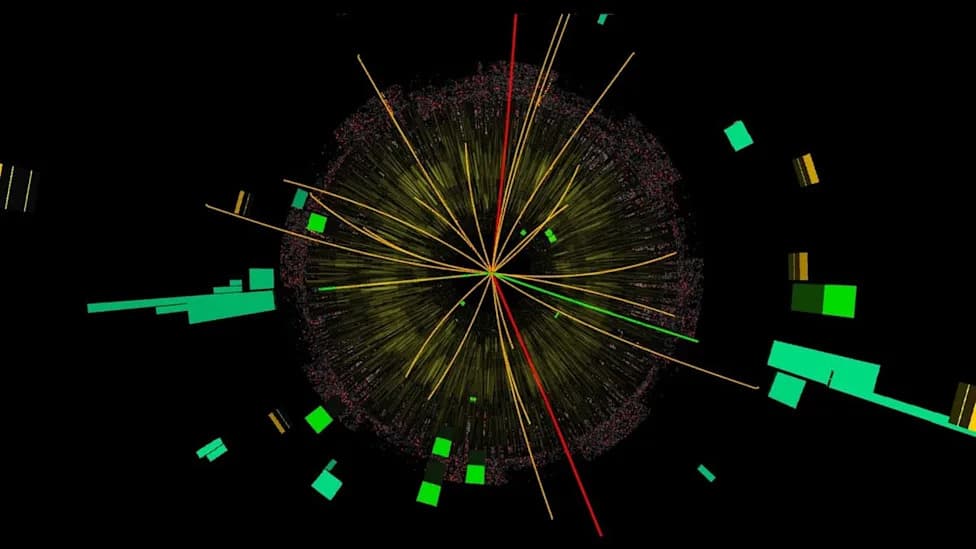
In photonuclear collisions, fast-moving gold nuclei generate strong electromagnetic fields that act like clouds of quasi-real photons. A photon carries zero baryon number, so any net baryon number observed after such an interaction must come from the target nucleus — offering a relatively clean probe of baryon-number transport.
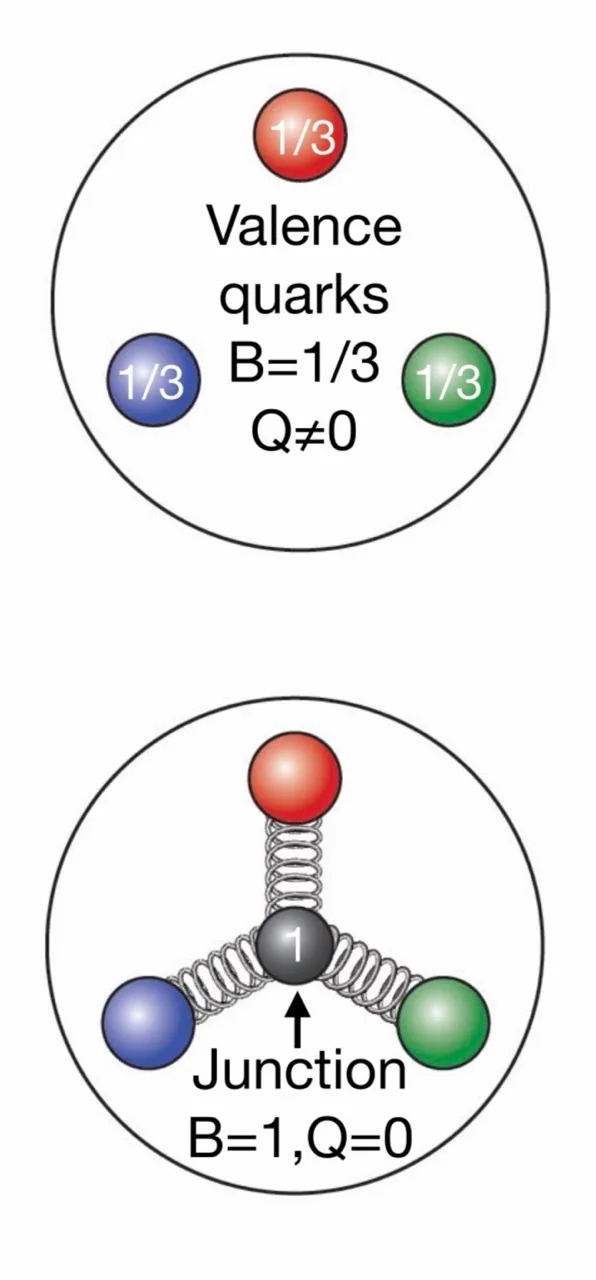
A representation of two competing ideas about where a particle's baryon number is carried.(STAR Collaboration, Science, 2026)
Key Findings
The analyses show that baryons propagate farther through the collision medium than the electric charge does. This pattern is consistent with a baryon junction that is less impeded than electrically charged valence quarks. The STAR results align better with models that incorporate a gluonic junction (and with expectations from Regge-theory inspired approaches) than with models that place baryon number solely on valence quarks.

Subscribe to ScienceAlert's free fact-checked newsletter
“These results ... disfavor the valence quark picture,” the STAR authors write, while noting that the junction and quarks are connected in many processes and can be hard to distinguish.
Context and Caveats
An accompanying Science Perspective by Wenliang Li highlights that, although the new measurements strongly suggest a gluonic contribution to baryon-number transport, they are not yet a direct, microscopic measurement of the mechanism. Further targeted experiments and refined theory will be needed to pin down the detailed dynamics.
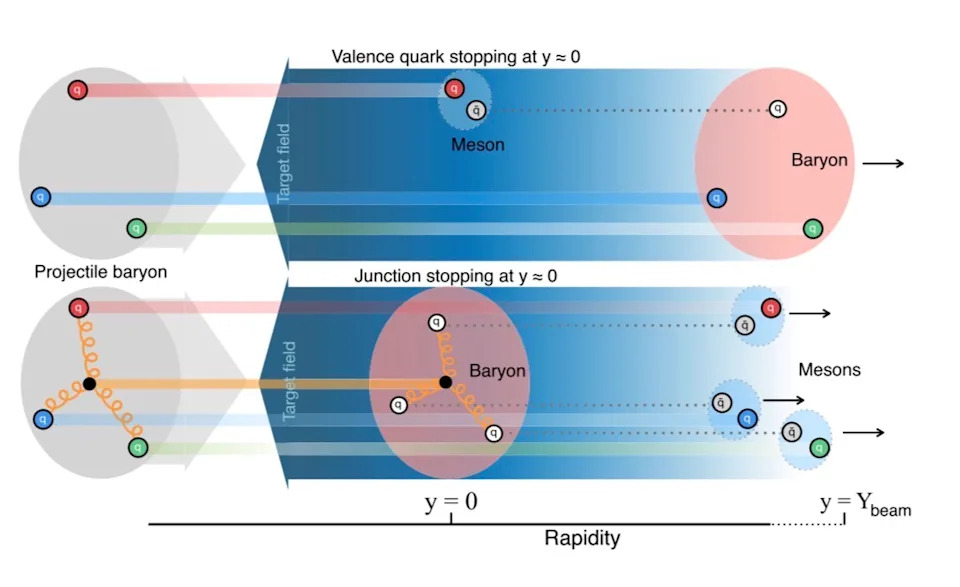
Potential experimental results of different interactions, depending on whether a baryon carries its baryon number in its valence quarks or in its baryon junction.(STAR Collaboration,Science, 2026)
Why This Matters
If confirmed, the baryon-junction picture would change how physicists think about the organization of stable matter under the strong interaction and could inform efforts to explain the Universe's matter–antimatter asymmetry. Future experimental tests — including those planned at Brookhaven's upcoming Electron–Ion Collider — should provide sharper probes of these ideas.
Publication: STAR Collaboration, Science, 2026.
Help us improve.