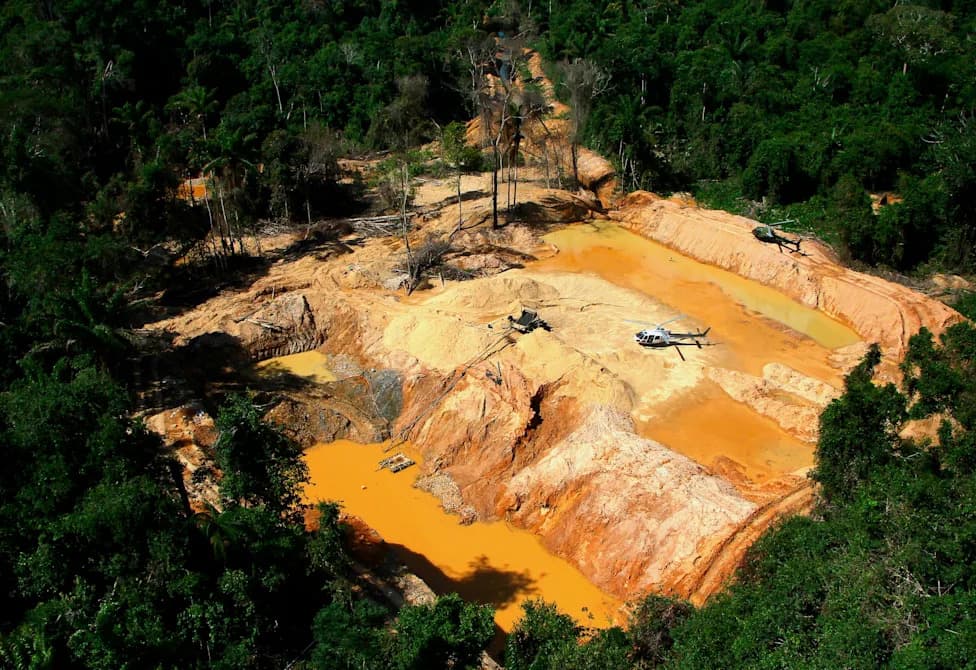
Brazil's Supreme Court confirmed the soy moratorium is constitutional but ruled that state laws may strip tax incentives from farmers and companies that complied with the pact. That decision followed the January withdrawal of major traders after states revoked tax benefits and is likely to weaken the moratorium in practice. The voluntary pact—launched in 2006—reduced high-risk deforestation by roughly 35% in its first decade, but experts warn its effective end could allow as much as 1.4 million hectares of additional clearing over the next decade.
Brazil Supreme Court Ruling Weakens Amazon Soy Moratorium Despite Upholding Its Constitutionality
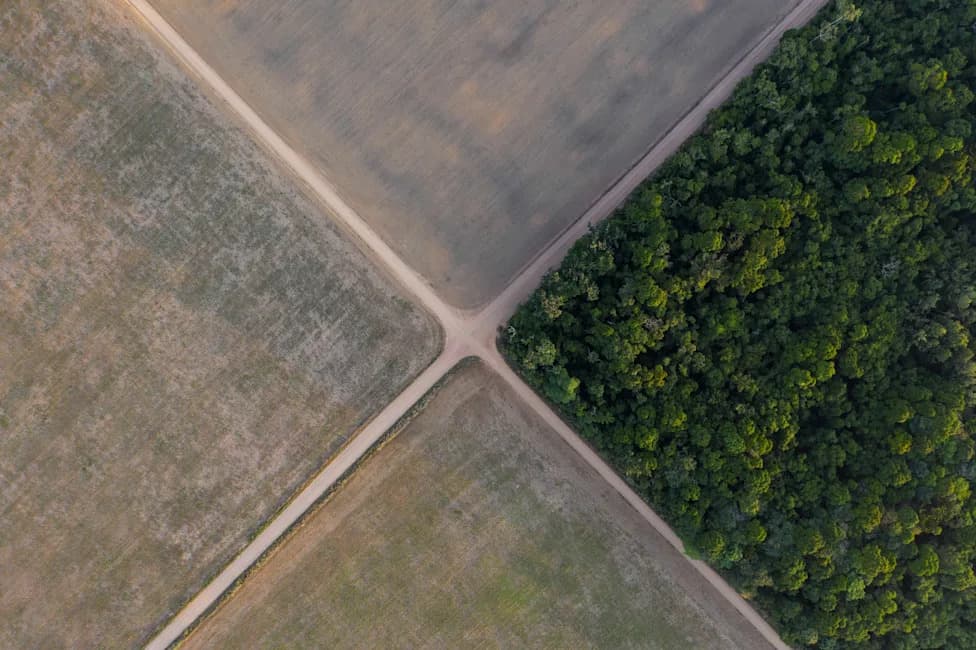
FILE - A section of the Amazon rainforest stands next to soy fields in Belterra, Para state, Brazil, on Nov. 30, 2019. (AP Photo/Leo Correa, File)
RIO DE JANEIRO — Brazil's Supreme Court on Wednesday delivered a ruling with mixed consequences for the long-running soy moratorium: it confirmed that the voluntary pact is constitutional but upheld state laws that revoke tax incentives for farmers and companies that honored the moratorium — a decision that critics say effectively undermines the pact's future.
What the Ruling Means
The soy moratorium, launched in 2006 as a voluntary industry commitment, asked traders not to buy soy planted on Amazon land cleared after July 2008. In January, several major grain traders withdrew from the moratorium after leading soy-producing states passed laws rescinding tax benefits for participants. By upholding those state measures, the Supreme Court has removed a key incentive that encouraged private-sector enforcement of the pact.
Scope and Stakes
Brazil is the world's largest soybean producer, accounting for roughly 40% of global output. The country produced an estimated 171.5 million metric tons of soybeans in the 2024–25 season, with China the main export destination. Large swaths of soy cultivation occur in central and northern states that overlap the Amazon biome, including Mato Grosso, Pará and Rondônia.
The Amazon rainforest plays a vital role in regulating global climate. Scientists warn that accelerating forest loss risks worsening global warming and disrupting agriculture far beyond South America, including parts of North America and Europe.
Evidence and Risks
A study published in Science in July found that the moratorium reduced deforestation in high-risk areas by about 35% in its first decade without harming productivity. The researchers cautioned that losing the pact could permit up to 1.4 million hectares (3.5 million acres) of additional deforestation over the next decade — an area roughly the size of Portugal — by opening new opportunities for legally sanctioned clearing.
Reactions
"There is an apparent contradiction between recognizing the environmental importance of the soy moratorium while simultaneously validating state laws that can weaken its effectiveness," said Angela Barbarulo, legal coordinator for Greenpeace Brazil. She called the court's confirmation of the moratorium's constitutionality "enormously important," but warned the decision could undercut protections.
The Brazilian Association of Vegetable Oil Industries (ABIOVE) said the ruling ends years of legal uncertainty and validates voluntary sustainability commitments in principle, but its statement also suggested the decision is unlikely to restore the moratorium in practice. The Mato Grosso Soy Producers Association — which opposed the moratorium — said the ruling reinforces states' authority to reject private-sector measures that go beyond national law and pledged to oppose future agreements that would reimpose moratorium-style restrictions.
Background
Deforestation in Brazil peaked in the 1990s and 2000s, fell for a time, then increased again during former President Jair Bolsonaro's 2019–2022 administration amid rollbacks of environmental protections. Under President Luiz Inácio Lula da Silva's government, deforestation has declined again, reaching lows not seen in several years.
The Supreme Court decision leaves a complicated legacy: while formally endorsing the moratorium's legality, it empowers state measures that penalize companies for adopting environmental standards stricter than federal requirements, creating new political and economic incentives that could discourage voluntary conservation efforts.
The Associated Press' climate and environmental coverage receives financial support from private foundations. AP is solely responsible for all content. For AP's standards on working with philanthropies and a list of supporters, see AP.org.
Help us improve.