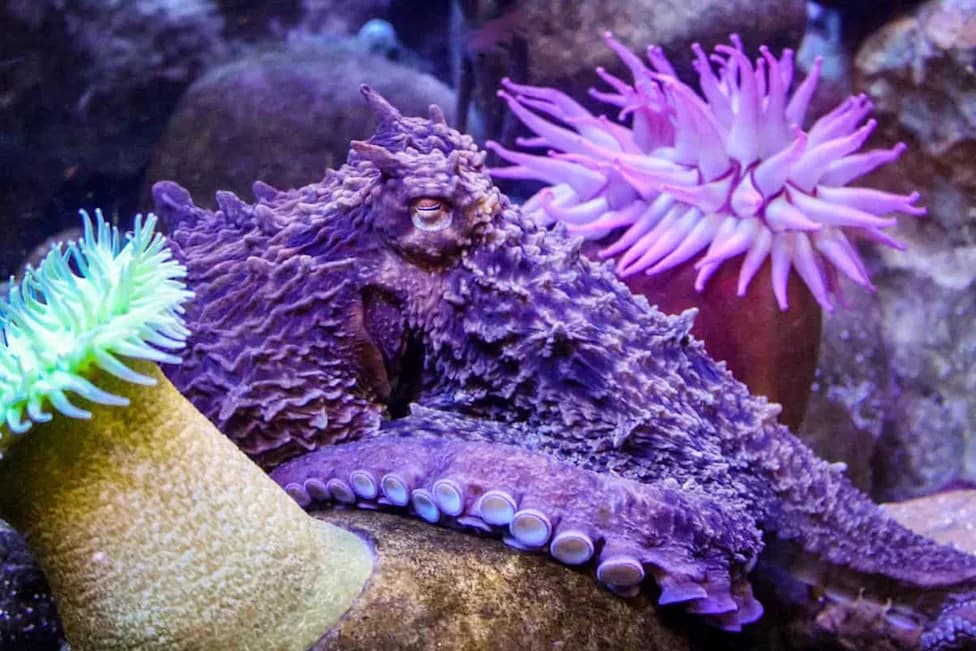
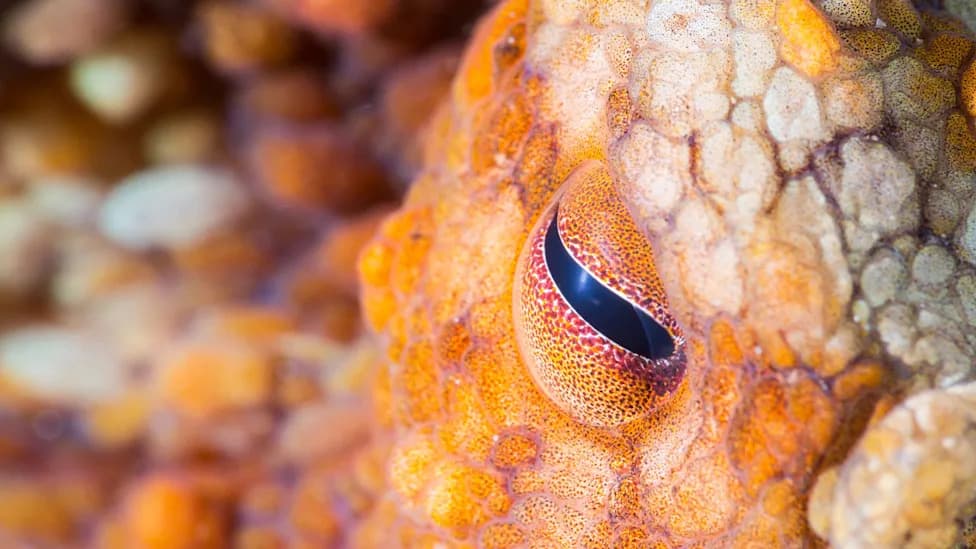
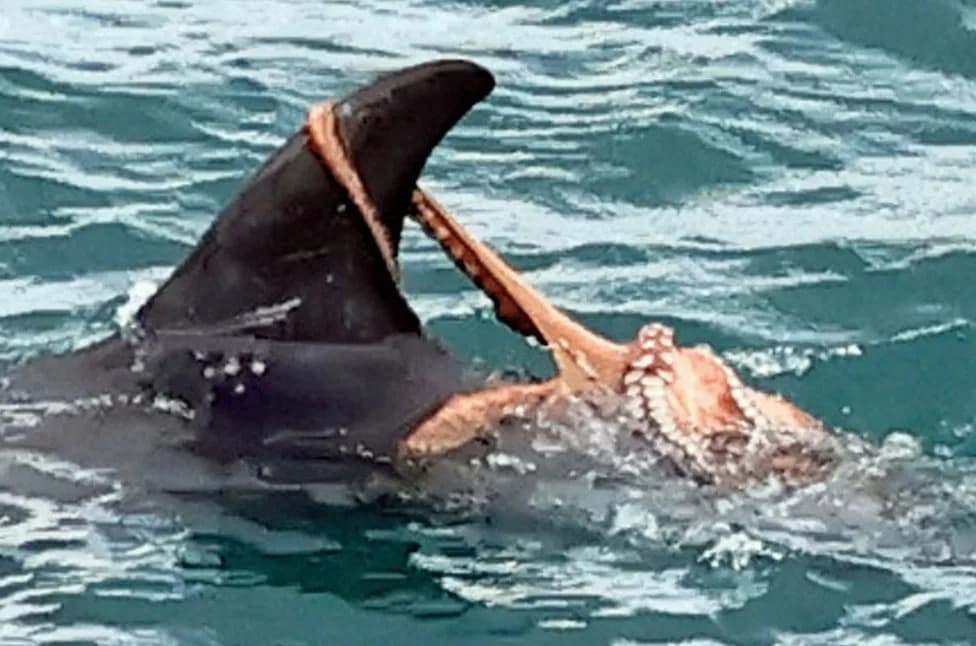
Field researchers filmed juvenile Octopus insularis off northeastern Brazil and found that young octopuses respond differently to territorial and nonterritorial reef fish. Encounters with territorial species were brief and often involved fish "jabs" and octopus arm "slaps," while nonterritorial followers produced longer, less aggressive interactions. The team identified a recurring "half-blotch" skin pattern that may serve as a warning signal and observed consistent individual differences in temperament. The study highlights context-dependent octopus behavior and improves understanding of reef interactions.
Young Octopuses Stage 'Fight Clubs' — Slapping Territorial Fish and Flashing Warning Patterns
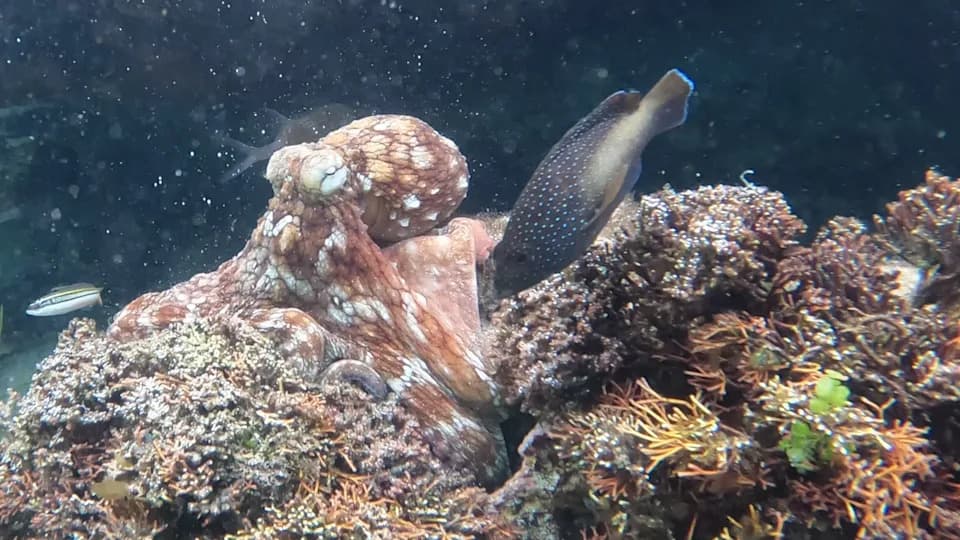
A youngOctopus insulariseyes a nearby fish. | Credit: Michaella Andrade
A new field study finds that juvenile Brazilian reef octopuses (Octopus insularis) respond selectively to different reef fish, sometimes using a rapid arm "slap" and a distinctive skin display against fish that behave territorially. Researchers filmed interactions in shallow clear water off Brazil's northeastern coast and nearby oceanic islands to better understand how young octopuses manage encounters with a variety of reef species.
Study Details and Methods
The research team snorkeled and recorded animals without disturbing them, capturing 101 encounters between juvenile O. insularis and 10 reef fish species. They directly filmed 38 individual juvenile octopuses at sites with visibility up to about 20 meters (roughly 66 feet). Footage was analyzed to identify behavioral sequences and differences based on the fish's territoriality.
Territorial Versus Nonterritorial Encounters
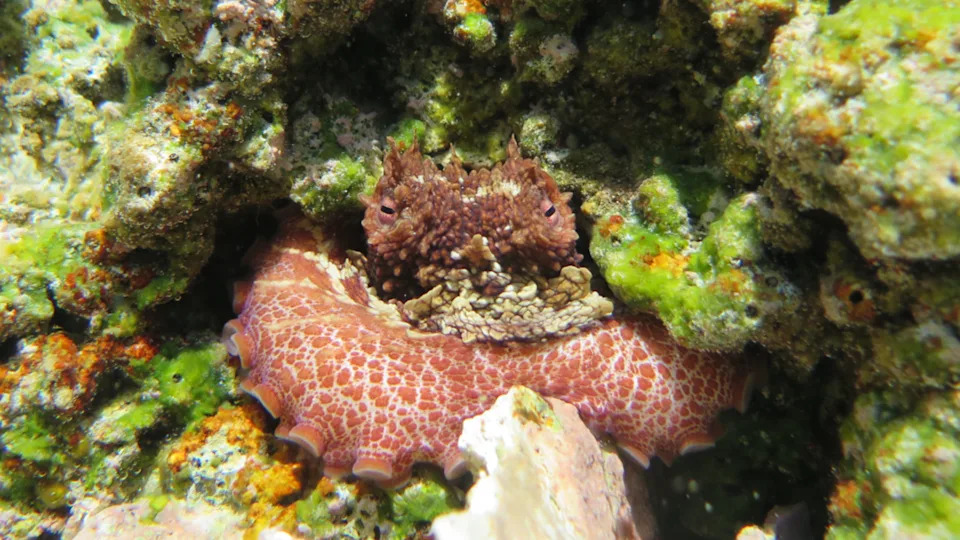
A youngOctopus insularishides among the corals. | Credit: Michaella Andrade
The scientists divided fish into territorial species (for example, damselfish, family Pomacentridae) and nonterritorial species (for example, blue tang, Acanthurus coeruleus). Encounters with territorial fish were short—averaging about 14 seconds—and characterized by rapid actions: territorial fish performed "jabs" and "swipes" while octopuses often reacted with quick "flinches" and arm "slaps." Interactions with nonterritorial fish lasted longer—about 46 seconds on average—and typically involved the fish following or circling while the octopus continued to forage without escalating aggression.
Behavioral Sequencing and Potential Communication
The team used lag-sequence analysis to test whether particular behaviors tended to follow one another. This statistical approach confirmed distinct behavior patterns: actively defensive fish provoked fast defensive responses from octopuses, while follower fish did not. The study also documented a repeated skin pattern the researchers called "half-blotch," in which the side of the octopus facing the approaching territorial fish showed circular white spots. Observers noticed fish often retreated after the half-blotch display, suggesting it could function as a warning signal, although the authors caution that the exact visual cues perceived by fish and whether the pattern is an intentional signal remain unproven.
Individual Differences and Curious Subjects
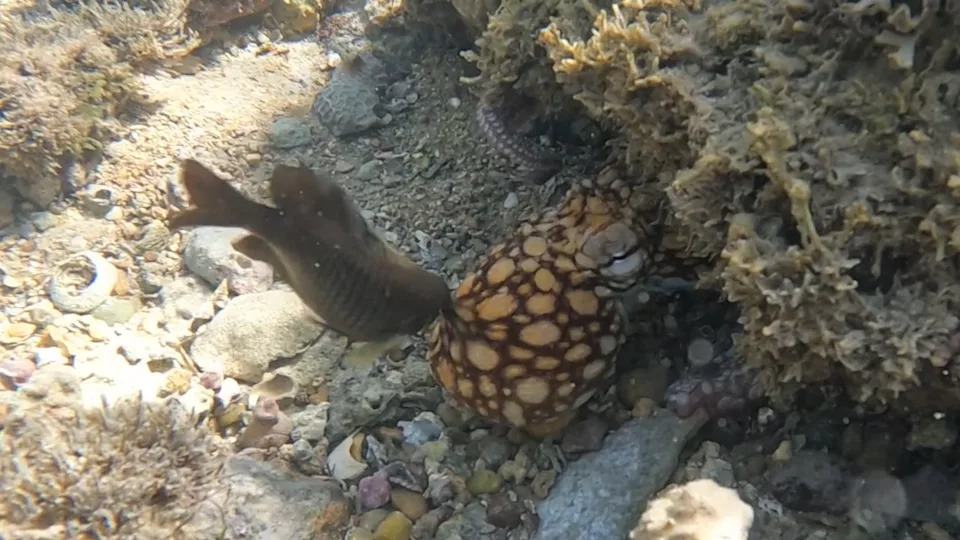
An octopus displays the "half-blotch" pattern at a nearby fish. | Credit: Michaella Andrade
Individual octopuses displayed different temperaments: some were shy, others more reactive. The researchers do not yet know whether these differences correlate with sex, age, or persistent personality traits. The animals also interacted with the research team and equipment—frequently touching cameras and, in one noted case, carrying off a diving weight into a den—demonstrating both curiosity and intelligence in the field setting.
Implications
Although arm-slapping has been noted in earlier observations, this study provides a systematic look at when and why juvenile O. insularis use such behavior. The findings emphasize that octopus aggression is context-dependent rather than indiscriminate and may help snorkelers and scientists better interpret octopus–fish encounters in the wild.
Study published July 31 in the journal Behavioural Processes. Field researchers include Jennifer Mather, Michaella Pereira Andrade, and Charles Morphy Santos.
Help us improve.