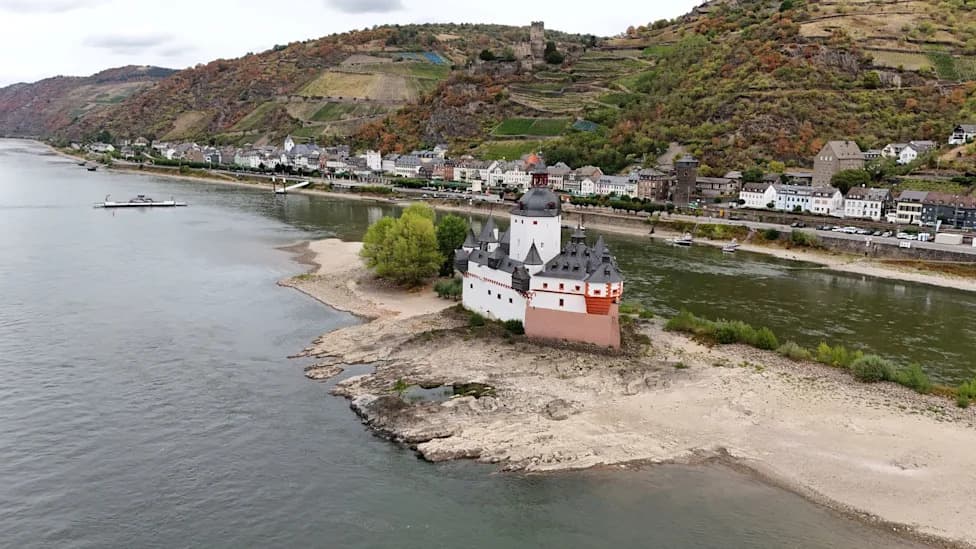
A prolonged hot, dry summer and a snow-poor winter have driven Austria's river and reservoir levels to their lowest since records began, forcing cuts to hydropower output, Verbund says. At Greifenstein on the Danube current flows are about 700 m3/s versus a typical 2,000 m3/s in summer, and visible marks show how much water has receded. Verbund reported H1 2026 hydropower generation was 32 percentage points below the long-term average. Officials warn that consecutive dry years require stricter water management and faster deployment of wind and solar.
Danube Drought Exposes Austria's Water Limits — Hydropower Slumps as Flows Hit Record Lows
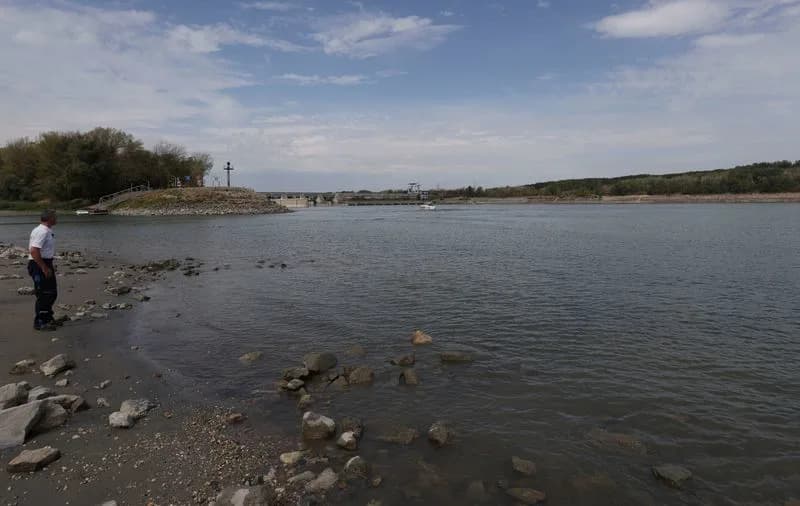
A man looks at Verbund's hydroelectric power plant Greifenstein during record-low water levels in the Danube River near St. Andrae-Woerdern, Austria, August 10, 2026. REUTERS/Leonhard Foeger
GREIFENSTEIN, Austria — Austria's rivers and reservoirs have fallen to their lowest levels since modern records began about a century ago, the majority state-owned utility Verbund said. An exceptionally hot, dry summer and a winter with almost no snow have left stretches of the Danube dramatically reduced and sharply curtailed hydropower output.
At the Greifenstein hydroelectric plant upstream of Vienna, a pale streak more than a metre above today's waterline shows how much higher the Danube once ran, and a former floating restaurant now rests abandoned on exposed mud. Under typical summer conditions roughly 2,000 cubic metres per second flow past this point; currently the rate is closer to 700 m3/s, Verbund spokesman Florian Seidl said.
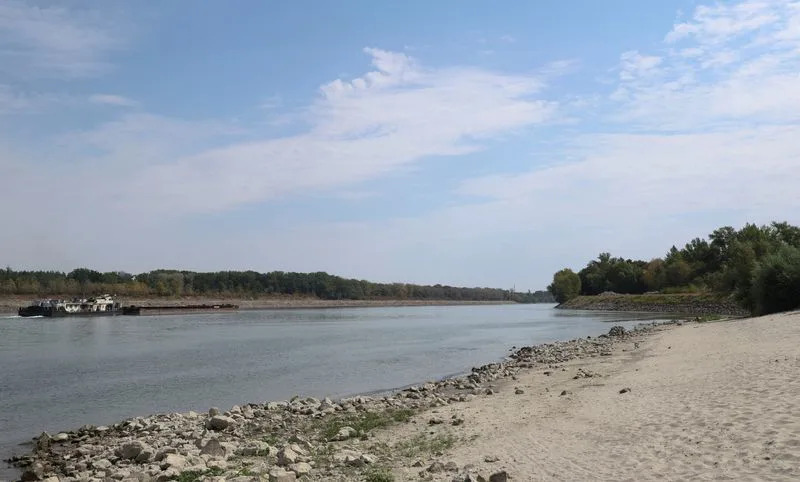
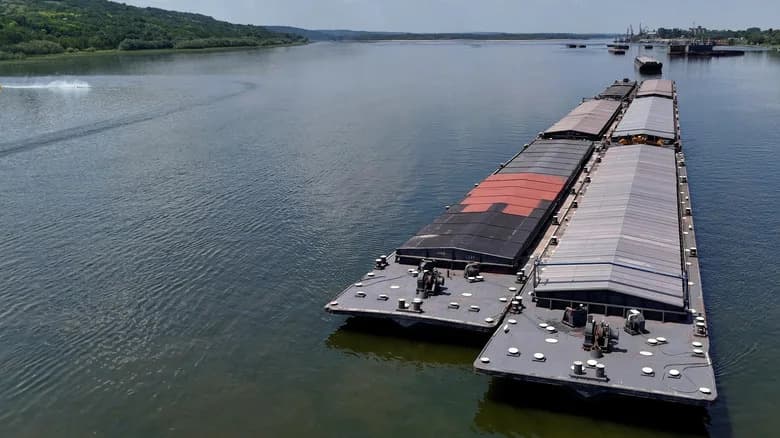
A cargo boat floats after passing Verbund's hydroelectric power plant Greifenstein during record-low water levels in the Danube river near St. Andrae Woerdern, Austria, August 10, 2026. REUTERS/Leonhard Foeger
"This is an unprecedented situation," Seidl said during a tour of the plant.
Verbund, a listed utility that generates the bulk of its electricity from hydropower, reported that hydropower production in the first half of 2026 was 32 percentage points below the long-term average. The winter of 2025–2026 brought almost no snow, and much of the year's precipitation fell as rain, reducing the spring meltwater that normally replenishes reservoirs.
We Are Reaching Our Limits
"We are a water-rich Alpine country but years such as 2026, which follows an already dry 2025, show we too are reaching our limits," said Verbund official Ingun Metelko. She warned that sharp swings from year to year are becoming more common and called for more careful management of water resources.
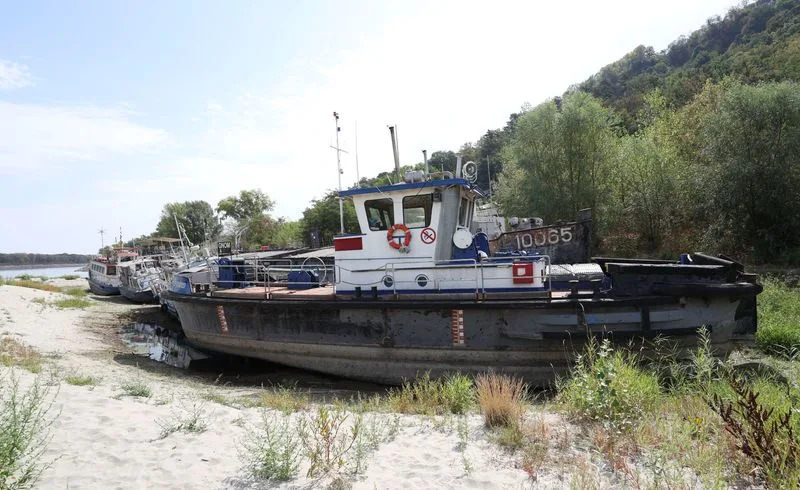
Boats in the boat museum are stranded near Verbund's hydroelectric power plant Greifenstein during record-low water levels in the Danube river, near St. Andrae Woerdern, Austria, August 10, 2026. REUTERS/Leonhard Foeger
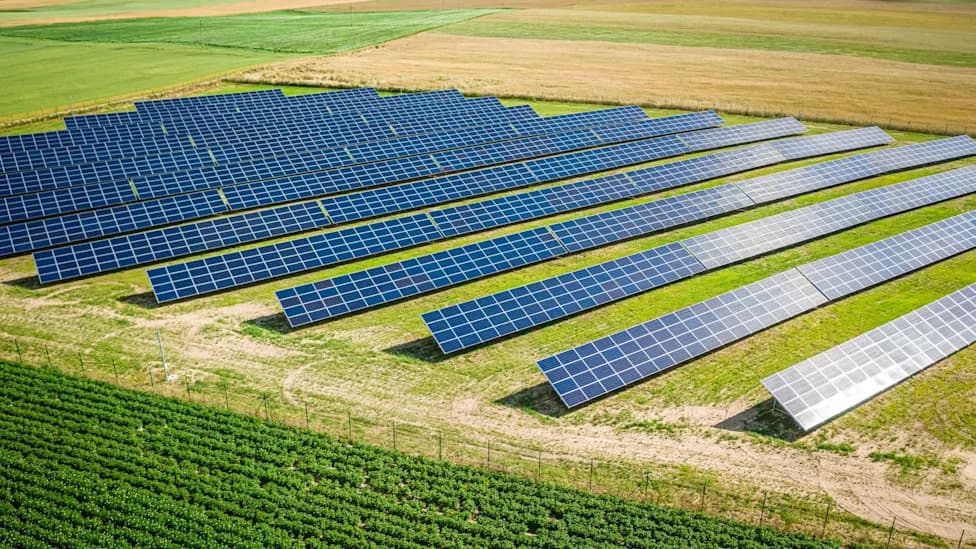
While Austria's situation is not as severe as downstream stretches of the Danube in Hungary and Romania, the shortages have broad implications: reduced electricity generation from hydropower, constraints on river navigation, and stress on river ecosystems. Verbund and officials say accelerating wind and solar deployment, improving grid flexibility and interconnections, and adapting water-management practices will be key to coping with repeated dry years.
(Writing by Francois Murphy; Editing by William Maclean)
Help us improve.