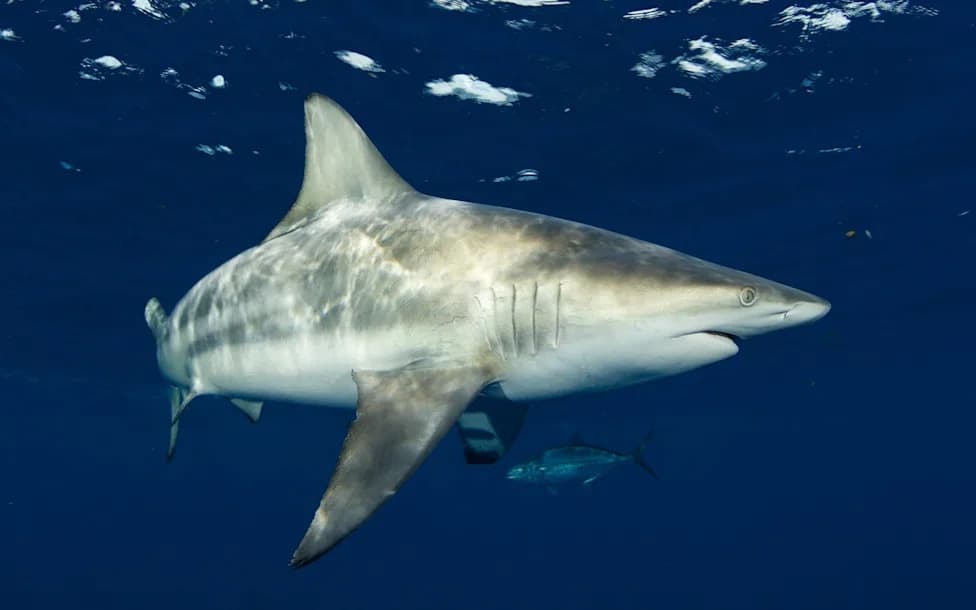
Scientists are fitting sharks with sensor tags that log subsurface ocean heat and other measurements as the animals swim through remote areas. These data help fill observational gaps where traditional tools have limited coverage and are valuable because subsurface heat strongly influences hurricane intensification. Shark-collected observations are intended to supplement existing monitoring systems, improve model inputs, and ultimately sharpen forecasts that guide evacuations and emergency planning.
Sensor-Equipped Sharks Help Track Ocean Heat to Improve Hurricane Forecasts
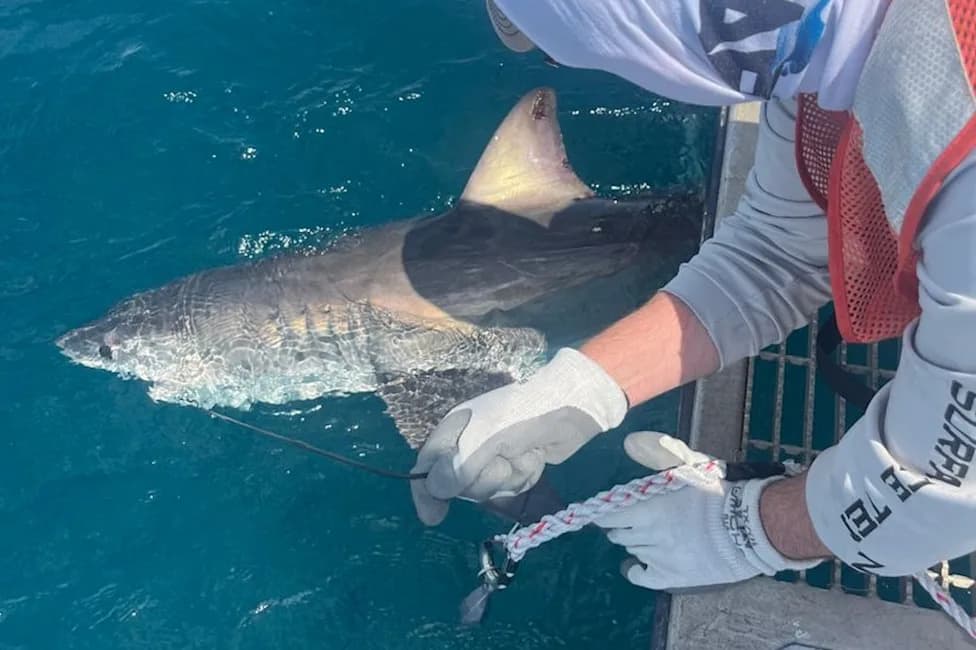
Photo Credit: University of Delaware
Scientists are turning to an unexpected partner — sharks — outfitting them with compact sensor tags so the predators can record subsurface ocean conditions as they roam. The data these animals collect can fill observational gaps in areas where buoys, ships, and satellites provide limited coverage, and in turn help meteorologists sharpen forecasts of hurricane track and intensity.
Researchers attach small instruments to sharks that log temperature and other ocean measurements below the surface as the animals swim through remote or hard-to-sample waters. According to reporting by Yahoo News, these mobile tags can deliver information about heat stored in deeper layers of the ocean — a key factor that influences how quickly a tropical cyclone may intensify.
Hurricanes draw energy from warm seawater, and subsurface heat can determine whether a storm strengthens rapidly. By improving the amount and quality of initial ocean observations, shark-collected data can improve the inputs to computer forecast models, helping them better predict both a storm's path and its potential for rapid intensification.
Sharks are particularly useful for this role because many species travel long distances and routinely traverse stretches of ocean that are costly, unsafe, or logistically difficult to sample frequently with conventional instruments. In effect, tagged sharks act as roaming data platforms that extend scientists' ability to monitor the oceans in real time or near real time.
For coastal communities, even modest forecast improvements can have outsized benefits. More accurate predictions of track and intensity influence the timing of evacuations, school and business closures, and the pre-positioning of emergency resources — all of which can reduce risk to people and cut unnecessary economic disruption.
Researchers emphasize that shark-mounted sensors are intended to supplement, not replace, existing observation systems. In areas where traditional measurements remain sparse, shark tags offer an additional, cost-effective source of information to help refine forecasts and model initialization.
Beyond immediate forecasting gains, the observations gathered by tagged sharks can contribute to broader ocean science — improving understanding of heat distribution, circulation patterns, and marine environments that affect weather and climate over longer timescales.
If the technique continues to perform well, forecasters could incorporate a larger, more continuous stream of ocean measurements into operational models, increasing the accuracy of forecasts and the lead time for communities at risk.
Note: This approach complements existing tools such as buoys, satellites, and research vessels by adding mobility and access to under-sampled regions.
Help us improve.