How a Met officer legally drove a £3.7m Ferrari: Section 144 of the Road Traffic Act 1988 exempts vehicles "being driven for police purposes by or under the direction of a constable," so a warranted officer could lawfully move the seized Ferrari into custody. Practical concerns about damaging the car during recovery — and liability as a bailee — made driving it a short distance the safest option. Impound fees are flat (removal £192; storage £26/day) but Regulation 5 requires proof of insurance and a licence to reclaim a vehicle.
How Police Could Legally Drive an Uninsured £3.7m Ferrari Through Mayfair
How Police Legally Drove An Uninsured £3.7m Ferrari Through London
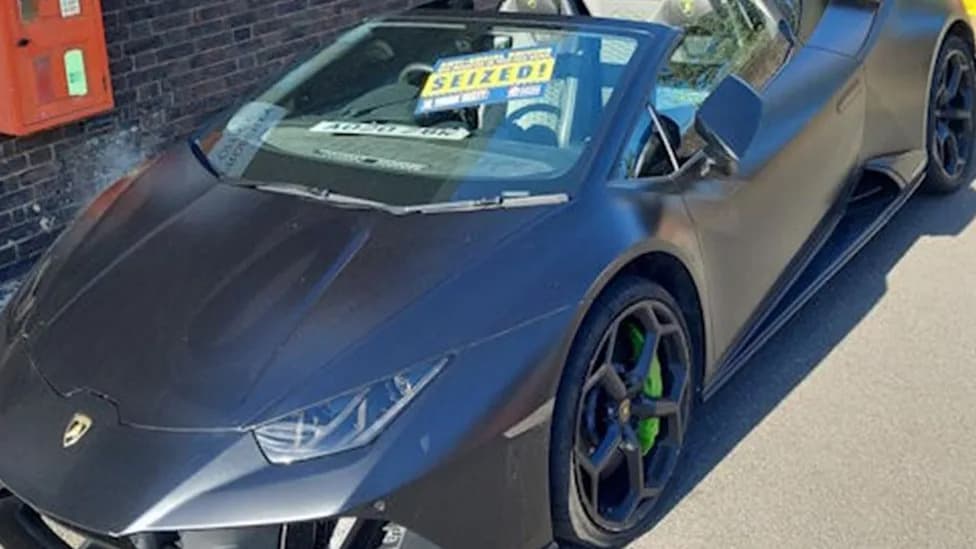
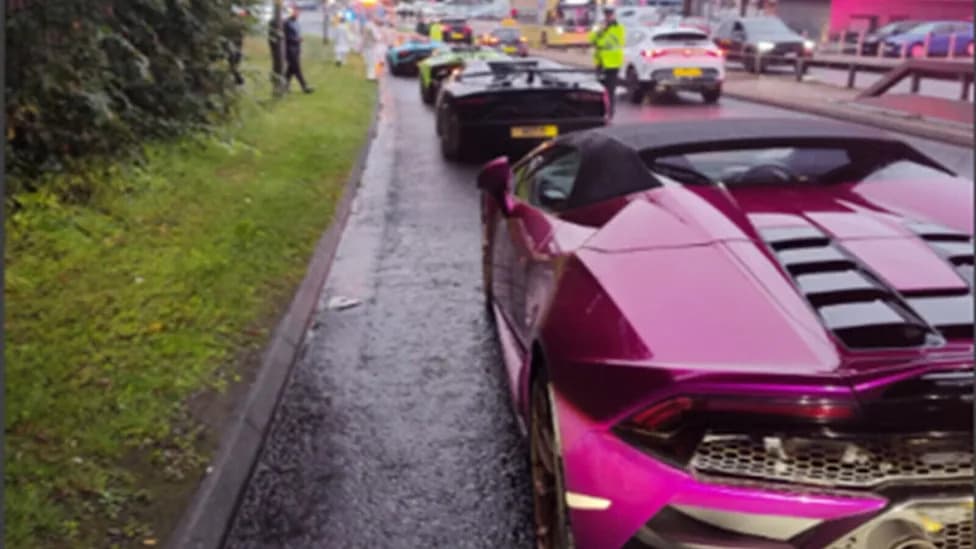
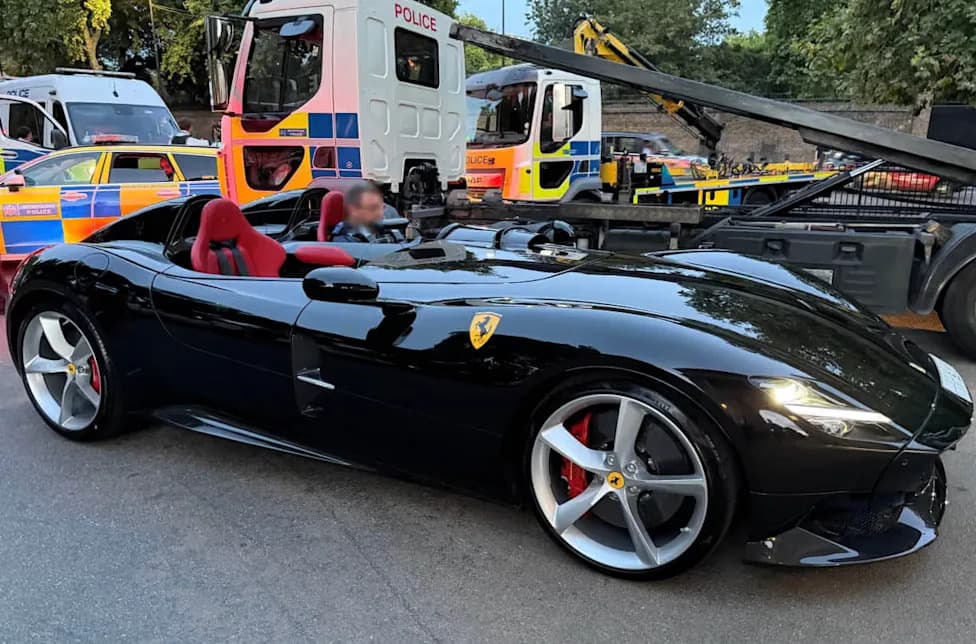
Of the 90 vehicles the Metropolitan Police removed from central London during a three-day operation, one image dominated social feeds: a uniformed constable at the wheel of a roofless Ferrari Monza SP2 driving slowly through Mayfair. The photos told a sensational story — but the legal and practical reasoning behind the decision is more revealing and largely unexamined.
Why the short drive was lawful
The legal answer is straightforward. Section 144 of the Road Traffic Act 1988 exempts the compulsory insurance requirement in specific circumstances, including when a vehicle is "being driven for police purposes by or under the direction of a constable." In other words, the moment a warranted officer drove the seized car for a bona fide police purpose — moving it into custody — the act of driving fell within a statutory exemption. The exemption attaches to the driving, not the vehicle, so it applies even to cars the force does not own.
Practical safety and liability considerations
There is also a strong practical case. Ferrari lists the Monza SP2 at 1,155 mm tall with a dry weight of 1,520 kg on an 812-derived chassis and a carbon-fibre body. Standard recovery techniques — winching a car onto a flatbed using strap points and a ramp angle — assume a certain ground clearance and structural strength. A barchetta-style car with exposed carbon panels, a low splitter and minimal front structure is vulnerable to damage during winching.
Police forces act as bailees for seized vehicles and can be liable for careless handling. On a car the Met values at £3.7 million, recovery damage would create a high-value claim and awkward conversations about excesses and responsibility. Given the alternatives — risking damage while winching or driving it a short distance slowly behind an escort — an experienced officer can reasonably choose the option that minimises contact points and potential harm.
Why the sunglasses mattered
Photographs showed the officer wearing sunglasses; this was practical. Ferrari deleted the conventional windscreen on the Monza and fitted a patented "Virtual Windshield": a duct that channels airflow above the driver's head. There is no glass, so eye protection is personal protective equipment rather than a fashion statement.
Costs, retention rules and penalties
Contrary to public assumption, statutory impound charges are flat and unrelated to a vehicle's market value. Under section 165A, for a private vehicle under 3.5 tonnes that is found on the road, upright and not substantially damaged, the removal charge is £192, storage is £26 per 24-hour period (or part thereof), and an uncollected vehicle incurs a further £96 charge. A Vauxhall Corsa and a Ferrari Monza therefore attract the same basic impound fee.
However, Regulation 5 of the 2005 retention rules makes release conditional. To reclaim a seized vehicle you must satisfy the authorised person that you are the registered keeper or owner, pay the charges, and produce a valid certificate of insurance covering your use of the vehicle plus a licence authorising you to drive it. If you cannot produce the insurance and licence, you may nominate someone else who can. That means the officer who drove the Monza could not personally collect it unless he held the required paperwork; instead, he would need to entrust retrieval to a third party with appropriate documents.
Driving uninsured against third-party risks attracts six to eight penalty points; driving otherwise than in accordance with a licence carries three to six points. Endorsements remain on the record for four years, and accumulating twelve points within three years leads to a totting-up disqualification. For probationary (new) drivers, six or more points within two years triggers automatic licence revocation under the Road Traffic (New Drivers) Act 1995, returning the driver to provisional status and requiring both tests to be retaken.
Temporary imports and common insurance mistakes
The Monza had been in the UK for a day — lawful under gov.uk temporary import rules that permit foreign-registered vehicles to be used in Great Britain for up to six months in any 12-month period, provided they remain registered and taxed at home and are not being permanently relocated. But temporary import rules do not override insurance law. Section 143 requires vehicles used on UK roads to have adequate insurance regardless of their plates.
The Motor Insurers' Bureau (MIB) supported the Met operation using its Navigate database and highlighted two recurring problems: policies that name the wrong registration or vehicle, and policies that do not extend to driving in the UK. Both mistakes are often inadvertent but leave the driver uninsured and contribute to the MIB levy embedded in legitimate UK premiums.
Enforcement change
The Met also noted that 15 of the 90 seizures were made under powers that no longer require a prior warning. Section 8 of the Crime and Policing Act 2026 repealed the warning provisions previously in section 59 of the Police Reform Act 2002, meaning behaviour that causes alarm, distress or annoyance can now lead straight to a flatbed seizure without a prior warning.
Practical advice
If you are importing a car temporarily or lending one to a visitor, three simple checks take five minutes: confirm the insurance certificate precisely names the vehicle registration; confirm it names the person who will drive; confirm it explicitly covers use in Great Britain (not only the country of issue). Finally, verify the vehicle appears on the Motor Insurance Database before it moves — to an ANPR camera, a mistaken policy looks just like no policy at all.
Help us improve.