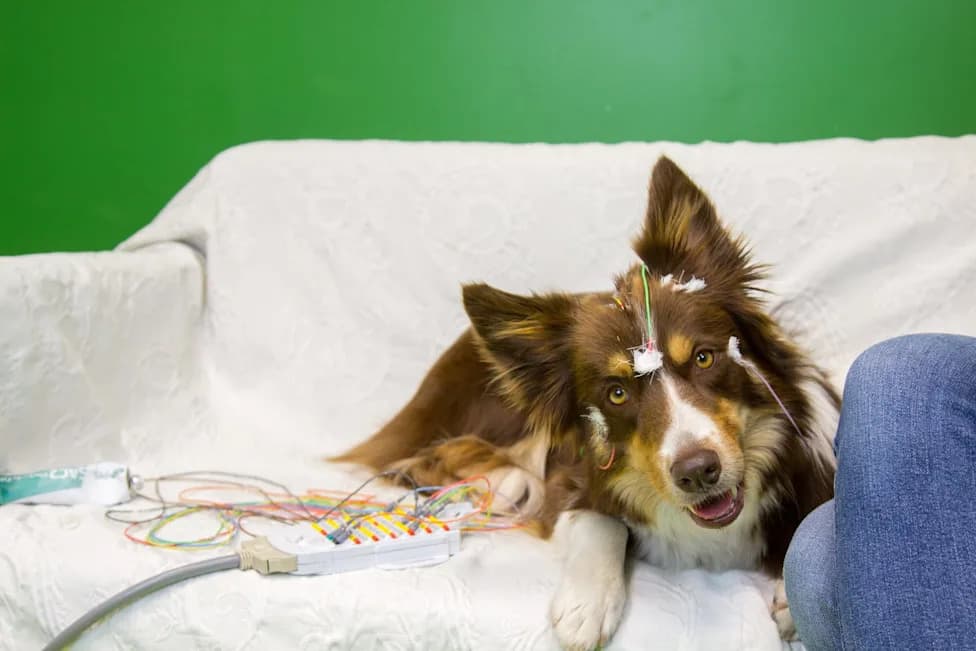
A new iScience study using fMRI scans found that dogs’ brains respond differently to human fear than to sadness or anger, with fear producing a distinct whole-brain pattern. The research included two experiments (8 and 12 pet dogs) and also showed that happy faces triggered activity extending into the caudate nucleus. Authors caution the results do not prove dogs experience emotions like humans and note limits such as small sample sizes, a predominance of Border Collies, and the use of static photos.
Dogs Can Tell Fear From Sadness — fMRI Scans Reveal Distinct Brain Responses
A person interacting with a dog indoors showing affection to the animalCredit: Getty
Many dog owners suspect their pets can read human moods — recoiling from tension or nudging during tears — and new brain-imaging data offer some of the clearest evidence yet that dogs distinguish at least some human emotions. A study published on August 10 in the journal iScience used functional magnetic resonance imaging (fMRI) to scan pet dogs' brains while they viewed photos of human faces and found that fear produced a neural pattern that differed from sadness and anger.
What the Researchers Did
The team ran two experiments using photographs of human expressions taken from human-validated databases. In the first experiment, eight dogs viewed happy and neutral faces; happy faces produced a stronger response in a region of the right temporal cortex that extended into the caudate nucleus. In the second experiment, 12 dogs saw faces showing happiness, anger, fear, or sadness while researchers analyzed whole-brain activity patterns.
Main Findings
Using pattern-based analyses, the researchers found that whole-brain activity reliably distinguished fearful faces from sad ones and fearful faces from angry ones. By contrast, the scans did not show a reliable neural distinction between angry and sad faces. In other words, fear appeared to stand out from the other negative emotions in dogs’ brains.
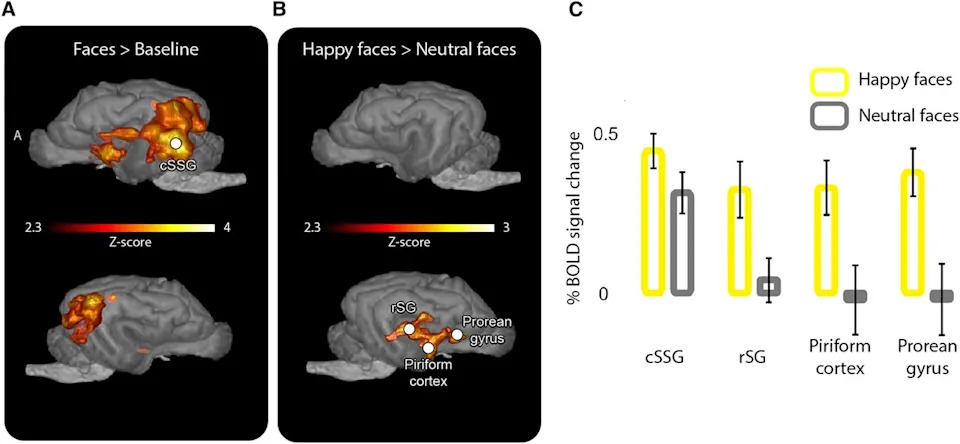
fMRI data from canine brain scans that show how dogs register happy and neutral expressions differentlyCredit: iScience Journal
The authors suggest this pattern may reflect the different behavioral demands these expressions place on an observer: fear and anger are more attention-grabbing and more likely to require a rapid response, while sadness signals less immediate threat. Previous behavioral studies align with this idea, showing dogs often respond faster and sometimes with larger physiological changes (for example, increased heart rate) to fearful or angry human cues.
Notable Signals and Interpretations
Researchers highlighted activity in the caudate nucleus in response to happy faces, which may indicate that positive expressions hold emotional significance for dogs. Co-author Raúl Hernández-Pérez (University of Vienna) noted that "humans are very good at picking up subtle facial cues, and dogs are too," while Laura Cuaya stressed that recognizing dogs as social and emotional beings can inform how we communicate with and care for them.
Limitations and Cautions
The authors stress important caveats. The sample sizes were small (eight and 12 dogs), the pool was largely composed of Border Collies, and the stimuli were static photographs rather than dynamic, real-life expressions. Also, the expression labels came from human-validated photo sets, so the findings describe how dogs' brains discriminate images — they do not prove that dogs consciously experience emotions in the same way humans do or that dogs assign the same social meanings to these faces.
Despite these constraints, the study advances our understanding of how dogs process human social signals and suggests new directions for research into dog–human communication and welfare.
Bottom line: fMRI evidence suggests dogs’ brains register human fear differently from sadness and anger, but small samples and still images limit broad conclusions about canine subjective experience.
Help us improve.