EDF reported that a swarm of jellyfish clogged seawater cooling pumps at the Gravelines nuclear plant in northern France, taking three reactors offline and halving output at a fourth. One reactor remained at full power while another was already shut for maintenance. EDF said there was no impact on safety or the environment. Experts link growing jellyfish blooms to overfishing, pollution and warming seas, and previous incidents have occurred in Sweden and Japan.
Jellyfish Swarm Forces Shutdown of Three Reactors at Gravelines, Halves Output of Fourth
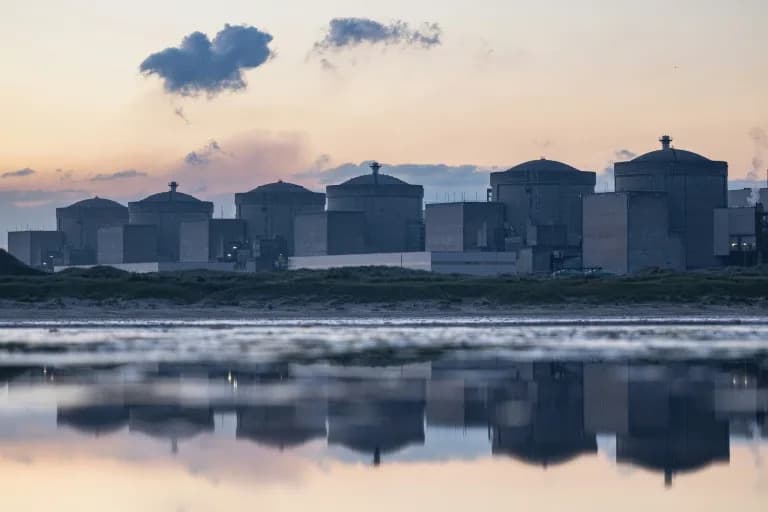
Gravelines is Western Europe's largest nuclear power plant with six reactors (Sameer Al-DOUMY)
A dense swarm of jellyfish clogged seawater cooling pumps at the Gravelines nuclear power plant in northern France, forcing three reactors offline and reducing the output of a fourth by half, the energy company EDF said on Tuesday.
EDF said the three reactors were taken offline on Monday. One unit continued to operate at full capacity, and a sixth reactor had already been offline for scheduled maintenance.
"This situation has no impact on the safety of the facilities, the safety of personnel, or the environment," EDF said.
The closures follow a year in which France's nuclear generation has been repeatedly affected by extreme weather. Multiple heatwaves and droughts in June and July prompted EDF to shut several reactors because coastal water temperatures were too high for safe cooling. AFP calculations based on EDF data published since 2015 showed that, before the most recent closures, France had recorded a 15.6% shortfall in nuclear production on Sunday compared with typical output.
The incident occurred at Gravelines, near Dunkirk — Western Europe’s largest nuclear complex — which comprises six 900-megawatt reactors (a combined capacity of about 5,400 MW).
Gravelines experienced a similar, shorter outage a year ago after jellyfish blocked its seawater pumping stations. Jellyfish swarms have previously forced temporary shutdowns elsewhere, including a three-day stoppage in Sweden in 2013 and a major drop in output in Japan in 1999.
Scientists and industry experts say factors such as overfishing, plastic pollution and warming seas linked to climate change have created conditions that allow jellyfish populations to expand. Plant operators commonly use intake screens, monitoring and temporary barriers to reduce risk, but large blooms can overwhelm these defenses.
Outlook: The episode underlines the vulnerability of coastal cooling systems to changing marine ecosystems and extreme weather, and highlights the need for resilient cooling strategies as oceans warm.
Help us improve.