The Danube's record-low water levels exposed an almost intact Wehrmacht DKW NZ 350-1 motorcycle near the Hungarian Parliament, recovered on 2 August. Preserved in river mud, the 1944-era bike has a two-stroke 11.5 hp engine and a distinctive metal pannier. Human remains of two Wehrmacht soldiers were found beneath it; identity tags are intact and the Volksbund will inter them at the German cemetery in Budaörs. The riverbed has also produced Teller mines, grenade fragments and shells, suggesting wartime debris was dumped there.
Record-Low Danube Reveals Intact WWII DKW Motorcycle Near Budapest Parliament
Low water: the story behind the Wehrmacht motorbike from the Danube
The Danube's unusually low water levels have exposed a remarkable wartime relic: an almost intact Wehrmacht motorcycle, identified as a DKW NZ 350-1, recovered from the riverbed opposite the Hungarian Parliament in central Budapest.
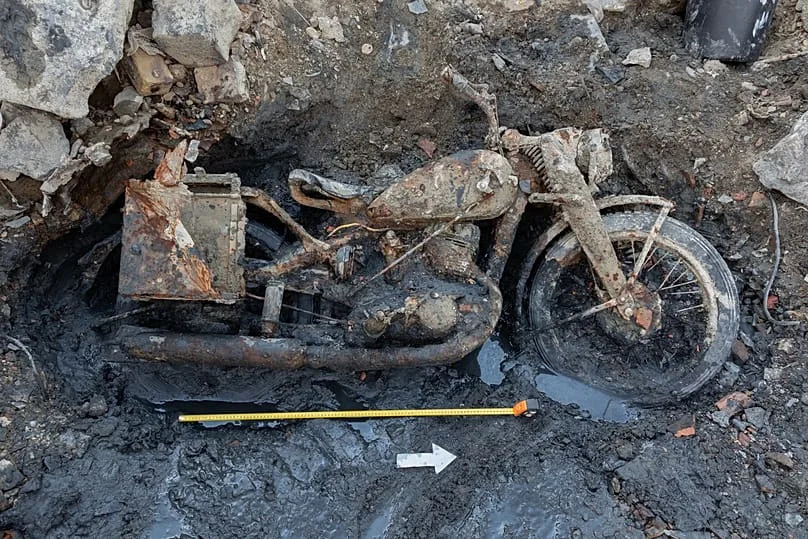
Low water level: Wehrmacht motorcycle found in the mud of the Danube in the heart of Budapest. (c) Volksbund - Volksbund
Discovery and Condition
Found on 2 August near the Batthyány Square harbour on the Buda side of the river, the machine was preserved in mud and is reported by the Institute and Museum of Military History in Budapest to be a "once-in-a-century" find. The bike is largely intact and still bears the characteristic metal pannier mounted at the side.
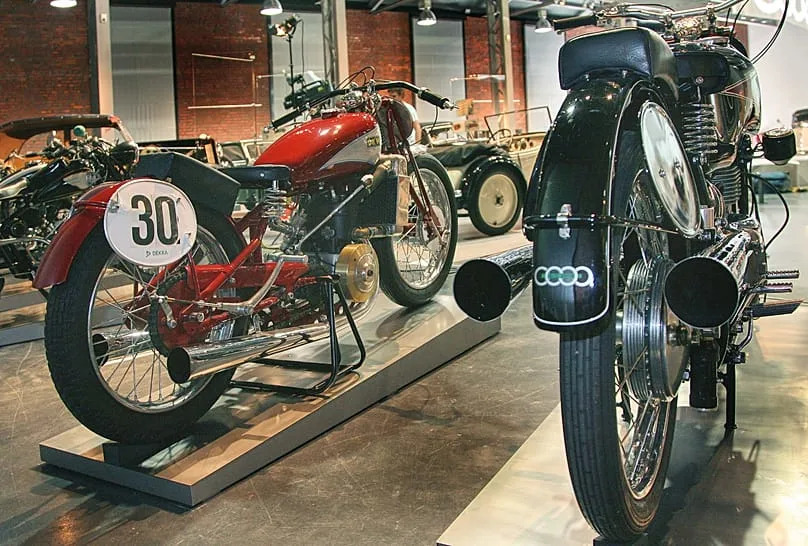
DKW racing motorcycles from 1939 and 1931, archive - Copyright 2007 AP. All rights reserved.
Model Details
The recovered motorcycle is a wartime NZ 350-1 model, produced from 1944 and powered by a two-stroke engine rated at approximately 11.5 hp. Around 12,000 examples of this military-spec model were built by the end of World War II. The predecessor model, the DKW NZ 350, is reported to have had a top speed near 105 km/h.
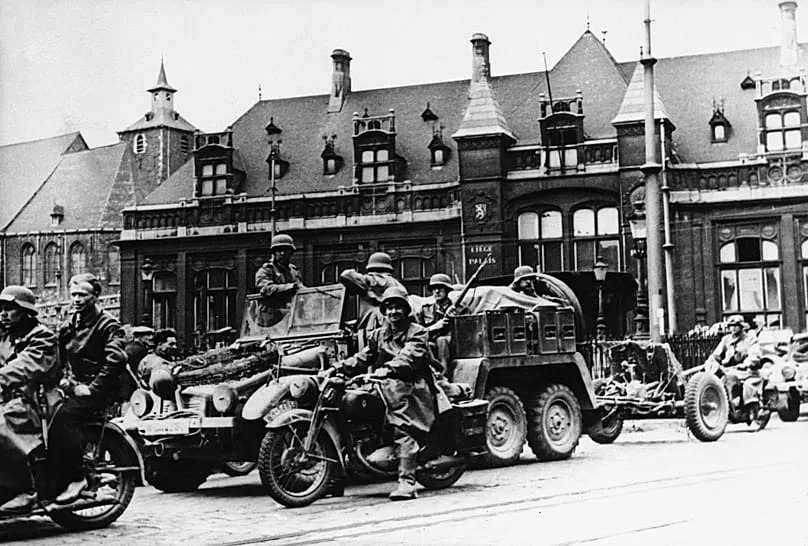
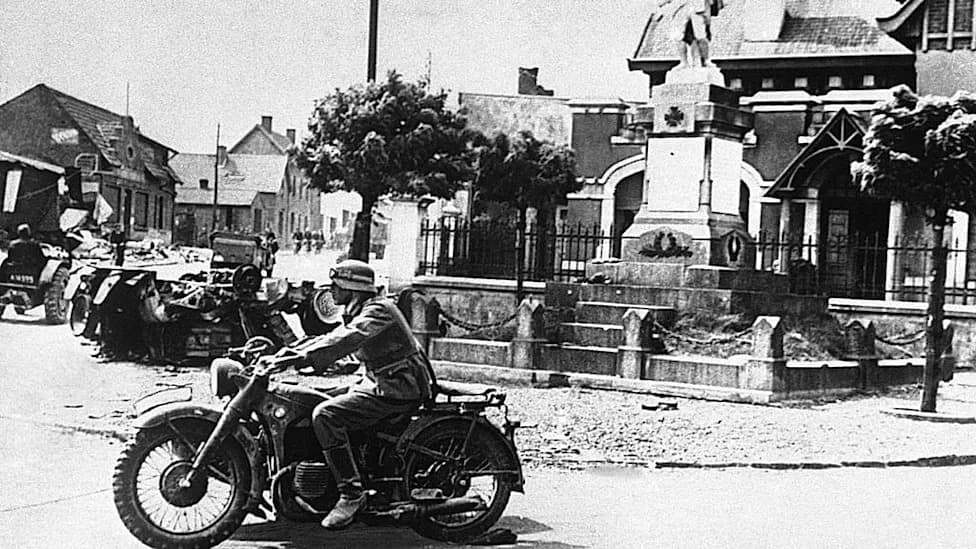
German troops driving through Liège in Belgium, 30 May 1940 - AP
Manufacturer Background
DKW—originally an abbreviation for Dampf-Kraft-Wagen—was a significant German motorcycle and car maker based in Zschopau. In 1932 DKW became part of Auto Union AG, a group formed by merging several marques including Audi. Early DKW frames used bolted joints; the NZ series moved to welded frames, work that reportedly required substantial electricity and was often carried out at night to avoid straining local power grids.
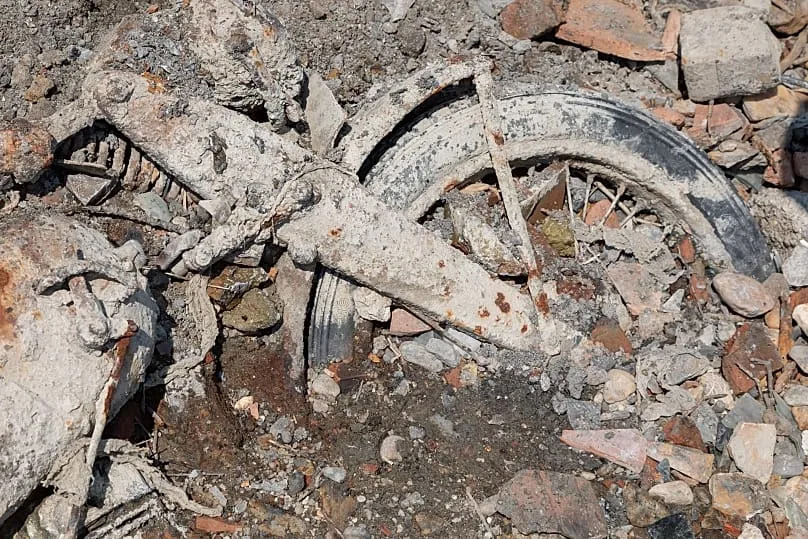
On 2 August the motorcycle was discovered on the Buda side of the Hungarian Parliament – next to the harbour at Batthyány Square. Volksbund - Volksbund
Wartime Context and River Finds
The riverbed in this section of the Danube has also yielded wartime ordnance: German Teller anti-tank mines (model 35), fragments of hand grenades and artillery shells. Hungary's Military History Institute has suggested the stretch may have been used as a de facto wartime debris dump during or after the fighting.
Historical note: From March 1944 German forces besieged Budapest. Between October 1944 and February 1945 the city endured the Battle of Budapest, with heavy casualties among German, Hungarian, Soviet and Romanian forces. German units surrendered on 13 February 1945.
Human Remains and Recovery
During recovery work, human remains were found beneath the motorcycle. The Volksbund Deutsche Kriegsgräberfürsorge (German War Graves Commission) took charge of the retrieval. The organisation reports the remains belong to two Wehrmacht soldiers; their identity tags were found well preserved and are expected to enable identification. The two servicemen will be interred at the German war cemetery in Budaörs, west of Budapest, which holds more than 16,000 graves.
Aftermath and Legacy
After World War II, DKW's production facilities were dismantled and taken to the Soviet Union as part of reparations; the equipment was used to produce a similar model, the ISCH-350, in Moscow and other locations until about 1951. The Volksbund, a non-profit that searches for and buries war dead abroad on behalf of the German federal government, handled more than 5,500 cases in 2025 alone.
Note: This article was translated with the assistance of artificial intelligence; local authorities provided primary details of the recovery.
Help us improve.