The Trump administration's higher‑education compact has been revived through an open letter from Education Secretary Linda McMahon and a Heritage Foundation model bill that would give state legislatures a legal path to enforce the compact’s principles. The model bill is highly prescriptive — from recognizing the CLT and banning DEI offices to conditioning state funding on compliance — and could prompt a sharp partisan split in how public colleges operate. College leaders must decide whether to engage, resist, or hope the effort targets only a subset of institutions.
McMahon Letter and Heritage Model Bill Seek To Reinstate Trump’s Higher‑Education Compact

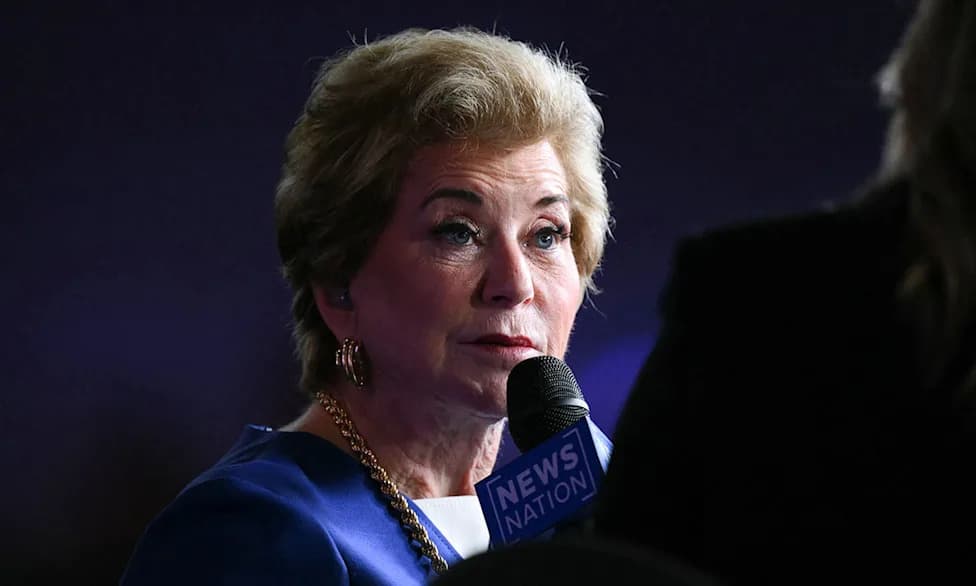
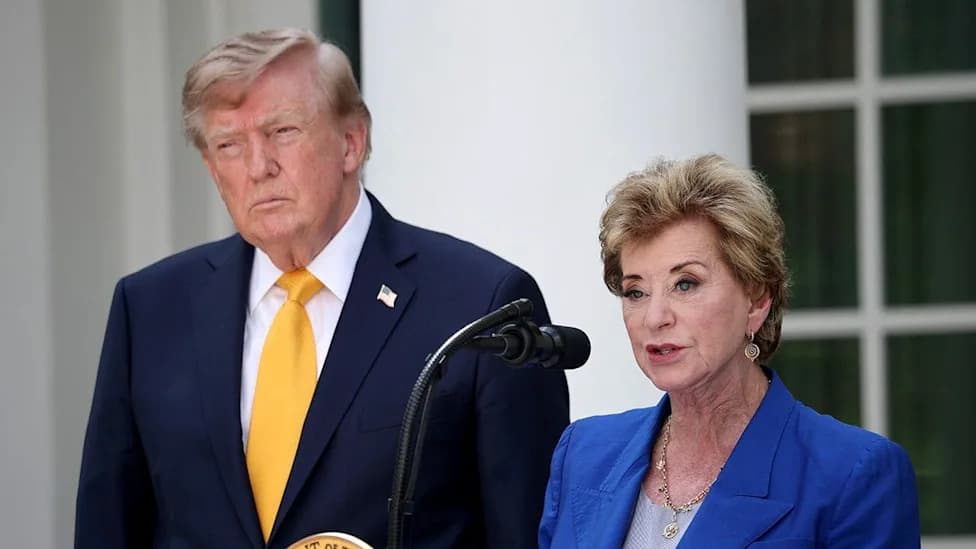
Linda McMahon's open letter and the Heritage Foundation's new model bill for higher education are reviving the Trump administration's higher ed compact.getty
Education Secretary Linda McMahon's public letter and a new Heritage Foundation model bill have revived efforts to advance the Trump administration's higher‑education agenda, offering a legislative pathway to enforce a previously rejected federal "Compact For Academic Excellence in Higher Education."
McMahon asked colleges and universities to adopt reforms aligned with the administration’s priorities. Within a day, the conservative Heritage Foundation released a detailed model bill for state legislatures designed to codify those principles into law — shifting from voluntary persuasion to potential statutory mandates.
What the Model Bill Would Do
The Heritage proposal is highly prescriptive and reaches into admissions, curriculum, hiring, international students and campus DEI activities. Key provisions would:
- Require institutions to "recognize the Classic Learning Test (CLT) for undergraduate admissions in the same manner and to the same extent as the SAT and ACT."
- Prohibit use of proxies for race, ethnicity, national origin or sex in admissions outreach or decisions — listing neighborhood, school, ZIP code and family income as examples.
- Mandate institutional neutrality so that universities "shall not take official action or express opinions on the political and social issues of the day."
- Ban the establishment or maintenance of a diversity, equity and inclusion (DEI) office and "any of the programming or practices" associated with such offices.
- Prioritize hiring in under‑represented academic subfields as judged by departments and the chief academic officer, except where a unit has intentionally specialized.
- Require "free expression training" for all newly enrolled students as part of orientation.
- Allow governing boards and state higher‑education regulators to disqualify courses from general education requirements for reasons including "failure to ensure a broad spectrum of viewpoints."
- Mandate that institutions "immediately suspend or terminate" a student’s enrollment or an employee’s position if notified by a federal agency that the individual's visa has been invalidated.
Choices and Consequences for Colleges
The combined federal outreach and state legislative blueprint create difficult choices for college leaders. Institutions must decide whether to engage with the administration in dialogue about admissions, affordability and campus speech — or to resist, viewing McMahon’s letter as a subtle coercion. Macalester College president emeritus Brian Rosenberg described the letter as "a threat packaged as a gift," arguing that subtle tactics can achieve what the compact could not accomplish directly.
State policymakers will also shape outcomes. Democratic governors and legislatures are likely to shield public colleges from these mandates, while Republican‑led states may adopt broad restrictions and conditioning of state funding on compliance. The result could be a growing policy divergence among states in the governance and academic policies of public institutions.
Why It Matters
Where the original compact relied on voluntary commitments and faced widespread rejection, the Heritage model bill offers a way to convert those objectives into enforceable state law. If enacted, these measures would reshape admissions practices, curricular authority, hiring priorities and campus policy on race‑related programming — fundamentally altering institutional autonomy in many states.
Note: This article was originally published on Forbes.com.
Help us improve.