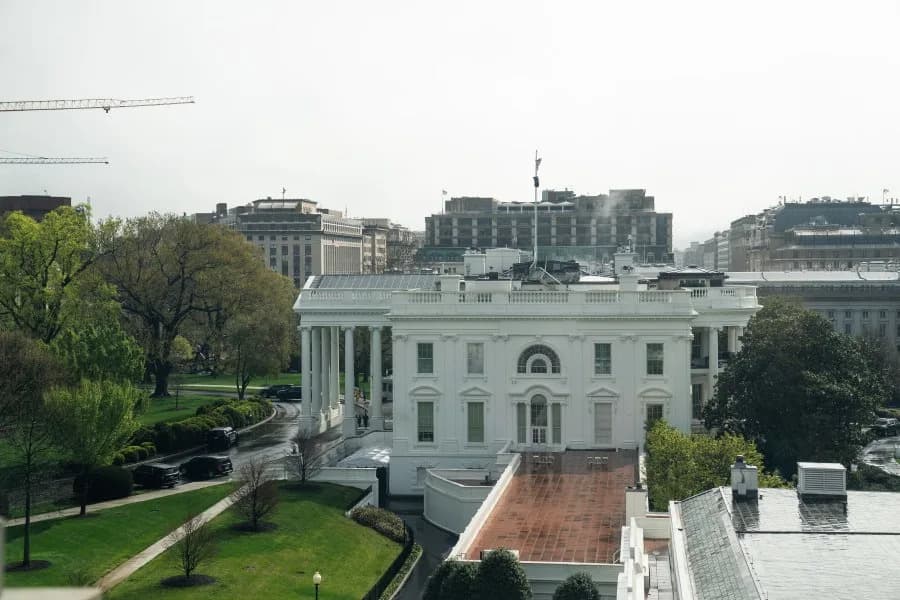
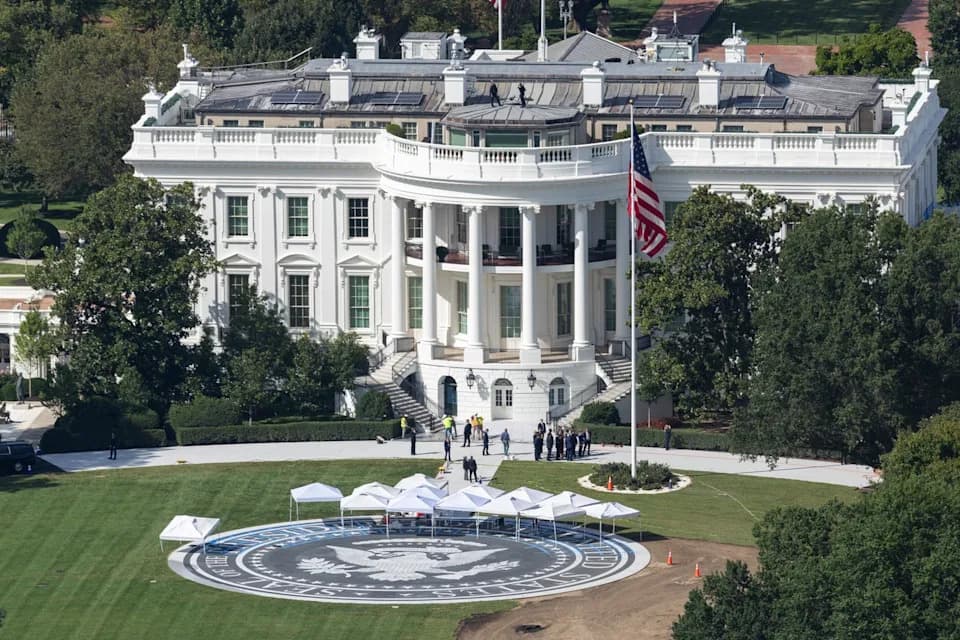
President Trump posted three apparently AI-generated images on Truth Social depicting the planned White House ballroom roof as a militarized "drone port," renewing a visual campaign he launched in May. A federal appeals court has ordered construction halted until Congress grants approval, and funding for the ballroom was removed from earlier legislation after failing to secure Senate support. The administration is now emphasizing the project's security features while related D.C. renovation work — notably the Lincoln Memorial Reflecting Pool resurfacing — has produced maintenance problems and legal fallout.
Trump Shares Ominous AI-Style ‘Drone Port’ Images of Planned White House Ballroom Roof
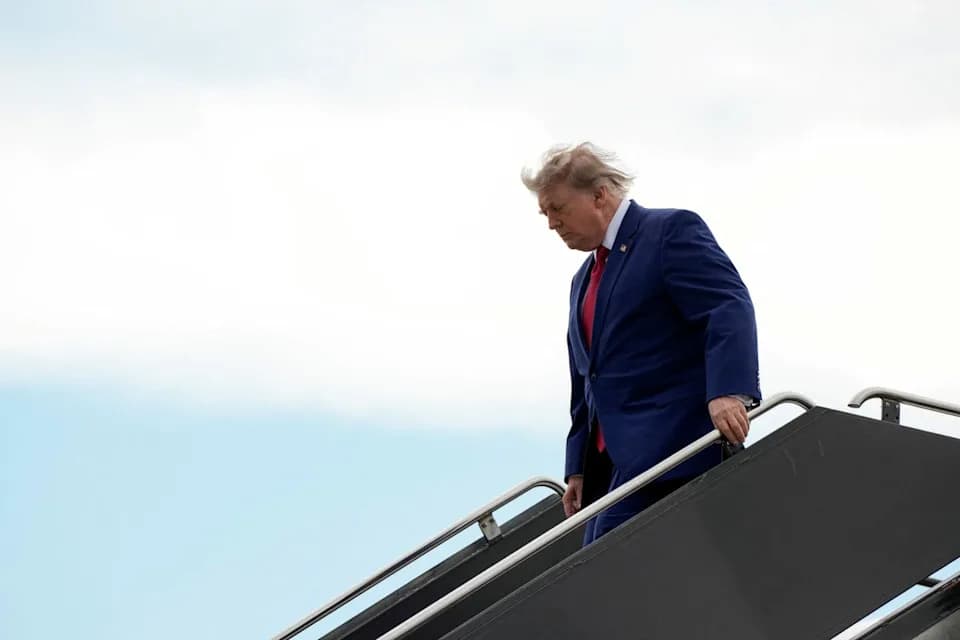
Donald Trump disembarks Air Force One in New Jersey on 7 August. The president continues to insist a deal is coming with Iran to reopen the Strait of Hormuz (Reuters)
President Donald Trump posted three apparently AI-generated images on Truth Social that depict the planned White House ballroom rooftop as a militarized “drone port,” repeating imagery he first shared in May. The posts show drones, armed personnel and refueling vehicles covering the ballroom roof and frame the construction as a national-security imperative.
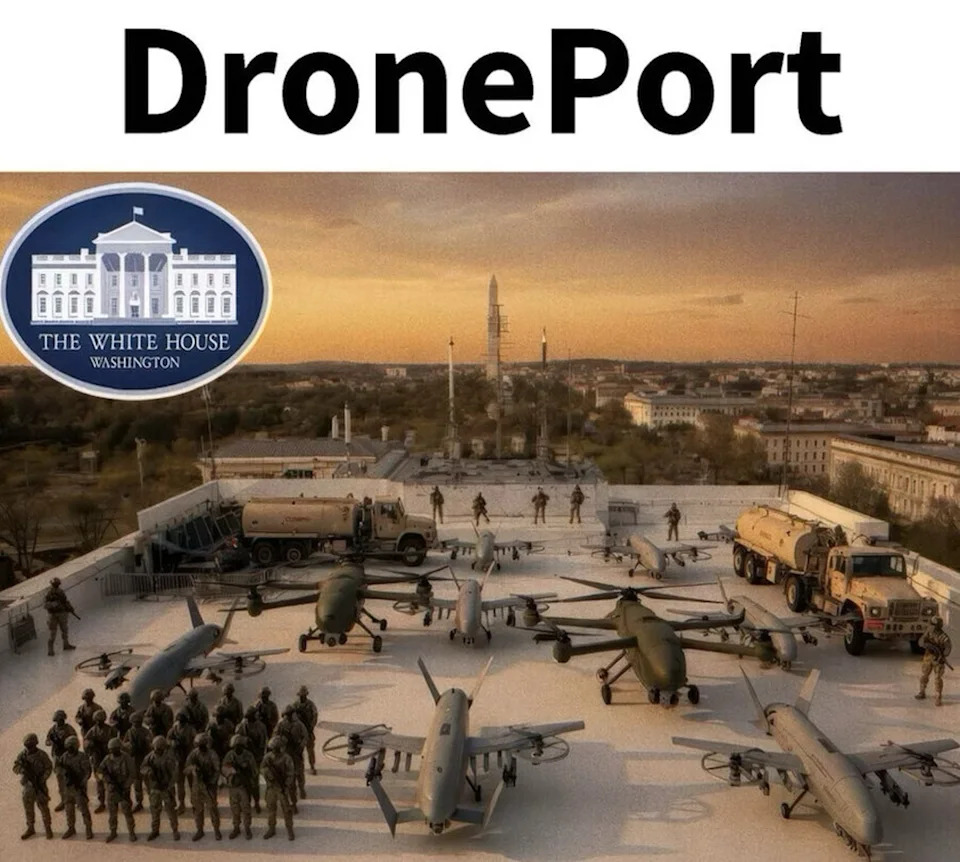
One of three AI-generated images depicting the planned White House "drone port" (The White House)
What He Posted
In three separate images, each labeled "DronePort," the president portrays the ballroom roof transformed into a heavily defended military installation. He used the visuals to criticize a federal judge who delayed construction, arguing the administration lacks congressional authorization, and to press Congress for funding.
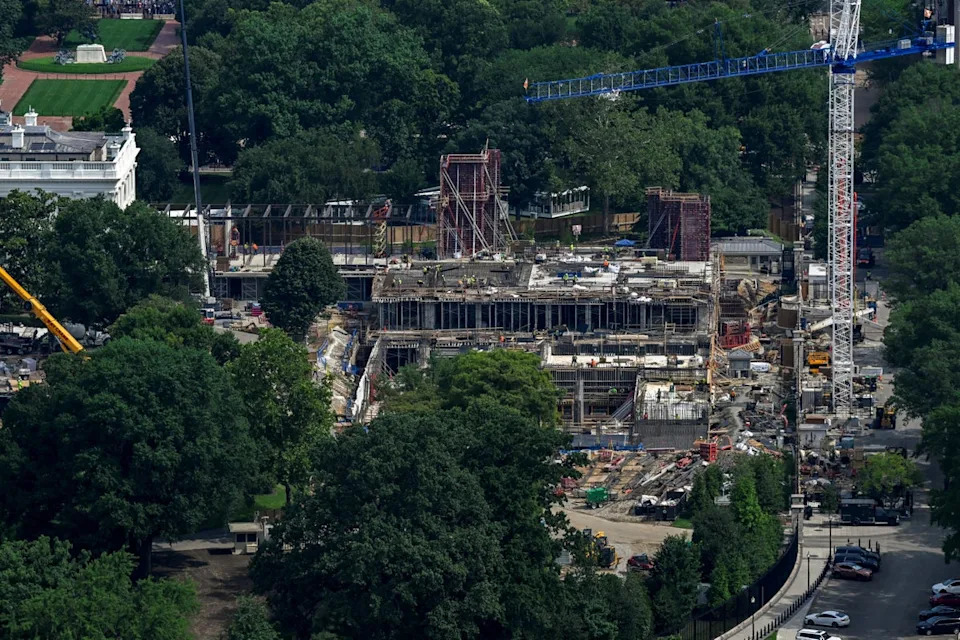
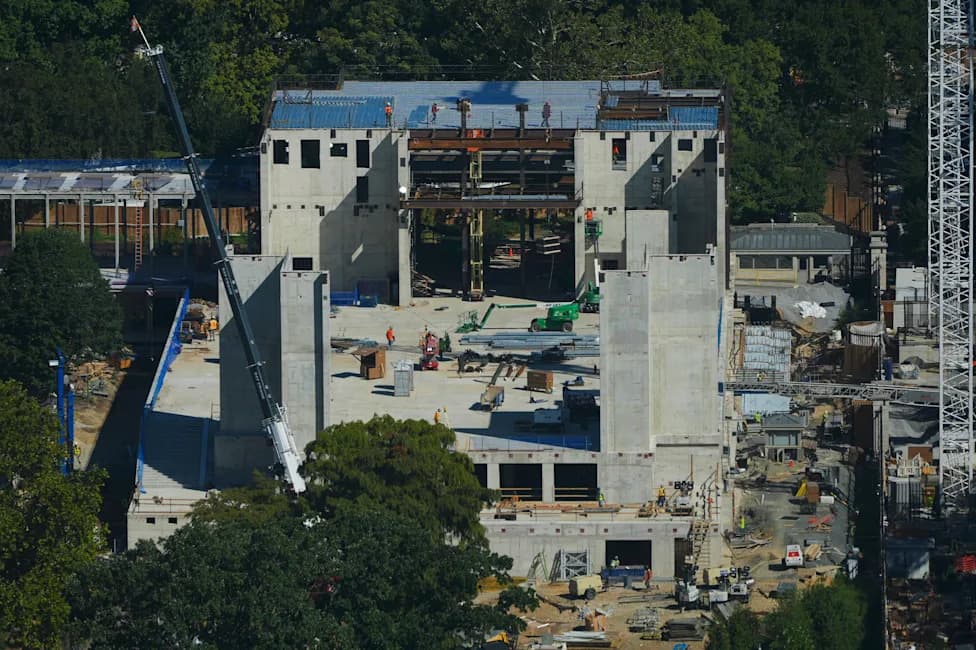
Construction of the White House ballroom and 'drone port' remains in limbo after an appeals court ruled it must be halted (Reuters)
Legal And Political Setbacks
A federal appeals court on Friday ordered construction halted until the administration secures congressional approval, putting the project in legal limbo. Funding that had been included in earlier legislation was removed after failing to attract enough support in the Senate, leaving lawmakers to weigh the administration's security argument against procedural and budgetary concerns.
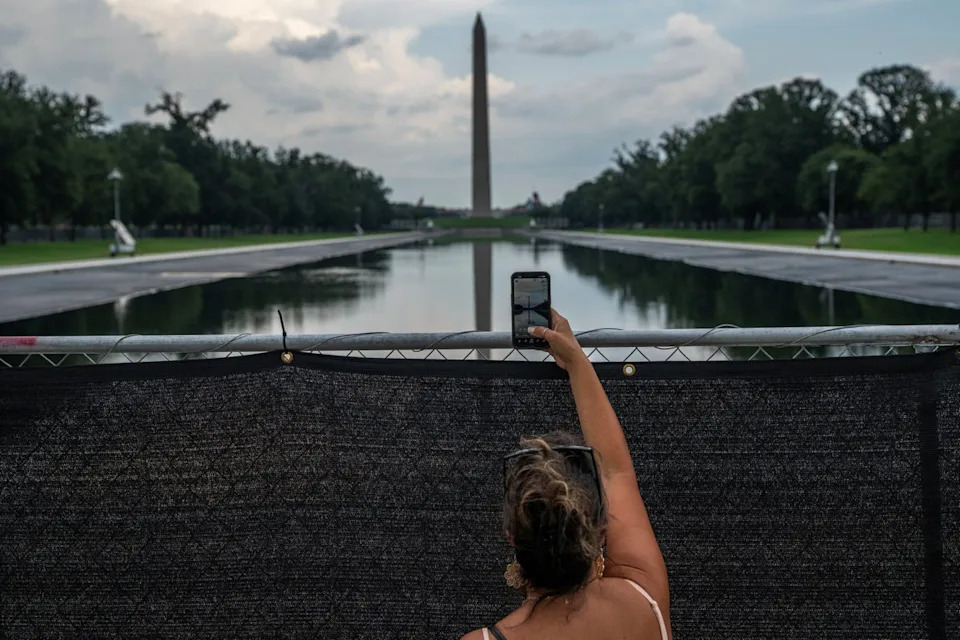
The Reflecting Pool is once again closed to the public as efforts to properly resurface it continue (Reuters)
"This great and very important military asset sits atop the heavily protected Ballroom at the White House. It provides National Security for Washington, D.C., and will protect future Presidents!!!" — President Donald Trump, Truth Social
Related D.C. Renovation Issues
The ballroom project is part of a broader push to renovate Washington, D.C., public spaces. One prominent effort — resurfacing the Lincoln Memorial Reflecting Pool — has encountered setbacks: resurfacing materials failed in places, workers battled a large algae bloom that turned the water lime-green, and the pool has been closed while crews continue repairs.
Those problems generated legal fallout as well: the administration’s U.S. attorney for the District of Columbia, Jeanine Pirro, dropped charges against an Olympian who had been accused of damaging the pool’s new coating. Court filings acknowledged that visible chunks of coating appeared to result from faulty installation, not vandalism.
Why This Matters
Facing waning support on Capitol Hill, the president has reframed the ballroom and its rooftop anti-drone features as matters of national security. The administration argues that the structure would protect occupants of the White House, while critics and the courts have pressed for adherence to congressional authorization and oversight. With midterm elections approaching, the dispute presents a politically sensitive test for Republican leaders in both chambers of Congress.
Photo Note: The images the president posted are the same mock-ups he shared in May; at least one accompanying image was released publicly alongside his Truth Social posts.
Help us improve.