Jill Lepore's forthcoming book, The Rise and Fall of the Artificial State, argues that Silicon Valley companies are increasingly performing functions traditionally reserved for democratic governments. Lepore— a Pulitzer Prize–winning historian and New Yorker writer— traces this trend through policy history, platform behavior, and science fiction, from Apple's 1984 ad to recent moves by AI firms. She warns that machine-led governance risks environmental and democratic collapse and calls for democratic oversight and greater historical engagement with technologists.
Jill Lepore: How Silicon Valley Misreads Sci‑Fi and Quietly Erodes Democracy

NEW YORK, NY - OCTOBER 04: The New Yorker staff writer Jill Lepore speaks onstage at The Hillary Question during The New Yorker Festival 2015 at SVA Theater on October 4, 2015 in New York City. (Photo by Thos Robinson/Getty Images for The New Yorker) | Image Credits:Thos Robinson / Getty Images
Historian Jill Lepore warns that tech companies are increasingly taking on roles once reserved for democratic institutions — a trend she calls the rise of the "artificial state." In her forthcoming book, The Rise and Fall of the Artificial State, Lepore argues that private corporations and charismatic tech leaders sometimes treat science fiction as a manual rather than a cautionary tale, with dangerous consequences for democratic accountability.
The Artificial State Defined
By "artificial state," Lepore means a form of governance in which corporations, algorithms, and machines perform core functions of the nation-state. She stresses that she is not anti-technology — in fact, she says she embraces many intellectual and technological advances — but objects to the growing unconsented transfer of public power to private entities.
From Advertising to Authority
Lepore traces the idea through cultural and policy history. She points to Apple's iconic 1984 Super Bowl ad, which framed personal computers as liberating tools against monolithic mainframes, and argues that such imagery has sometimes been taken literally by tech leaders. Over time, images and rhetoric that began as marketing or optimism have helped normalize the notion that tech firms can legitimately perform state-like roles.
Concrete Examples
Her interview highlights several emblematic moves: platforms treating themselves as civic forums, companies creating internal oversight bodies (like Facebook's so-called "Supreme Court"), and startups commissioning ethical charters or constitutions (for example, Anthropic hiring a moral philosopher). Public remarks by executives — such as Sam Altman's comment that an "AI president would be a great idea" — illustrate how seriously some leaders take these possibilities.
Twitter, Distortion, and the Myth of the Town Hall
Lepore uses Twitter as a case study of unintended civic consequences. What launched as a playful, personal-sharing app became a political amplifier: a small, highly active minority produced a disproportionate share of political content. Lepore calls Twitter's later claim to be a "town hall in your pocket" misleading, noting that the platform often reflected and magnified partisan extremes rather than representing the broader electorate.
Science Fiction as Parable—and Misreading
The second half of Lepore's book examines science fiction as a recurring literary parable about machines assuming human and governmental functions. Stories from the 19th century onward — including E. M. Forster's prescient 1909 tale "The Machine Stops" — imagine societies that become dependent on centralized systems and suffer catastrophic consequences when those systems fail. Lepore argues some Silicon Valley leaders read these works as blueprints or selective inspiration rather than warnings.
Why the Artificial State Is Unsustainable
Many of the speculative narratives Lepore analyzes frame the artificial state as inherently contradictory: it requires vast natural resources to run while often accelerating environmental degradation. That tension — dependence on, and destruction of, the natural world — is one reason science fiction commonly depicts machine-led governance as ultimately doomed.
Democratic Remedies and the Roads Not Taken
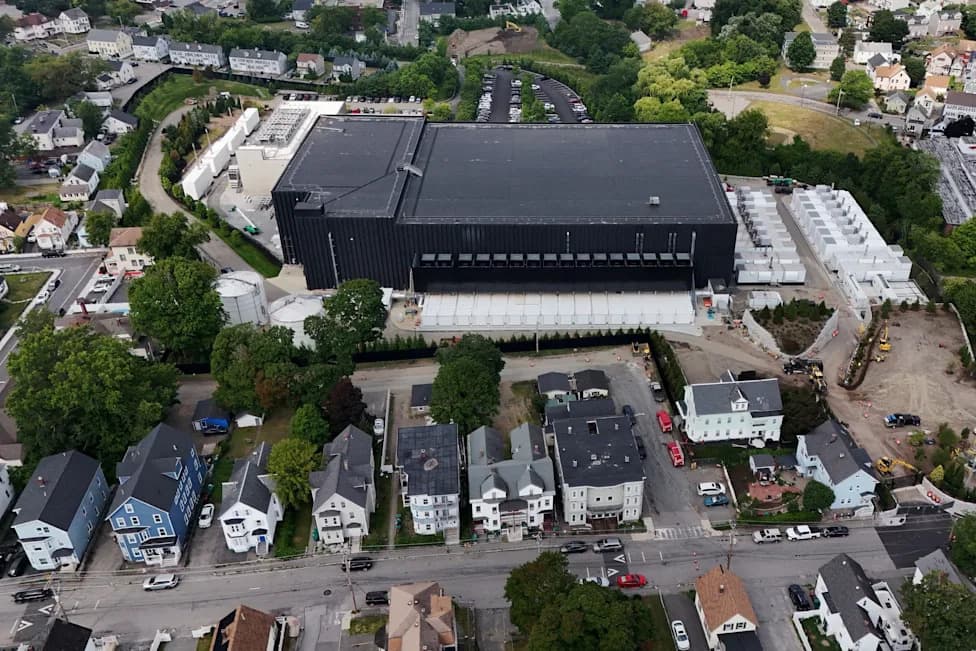
Lepore does not offer a step-by-step playbook. Instead she calls for restoring democratic decision-making and accountability in debates over data centers, AI governance, and other infrastructure. Local pushback — for example, reported opposition in a Salt Lake community where well over 70% of residents opposed a planned data center — shows citizens asking questions about energy, water, jobs, and environmental impact that companies and representatives must address.
Historical Perspective Matters
Returning to an earlier intervention, Lepore reiterates her long-standing critique of the "disruptive innovation" narrative as insufficiently historicized. She urges more sustained dialogue between historians and technologists so policy and institutional guardrails can be better informed by past experiences with transformative technologies (automobiles, radio regulation, etc.).
"I'm not anti-technologist," Lepore says. "My concern is private power assuming public authority without consent or democratic oversight."
Conclusion: Lepore's book reframes contemporary tech trends as part of a longer cultural and political story. Her warning is not a Luddite rejection of progress but a call to strengthen democratic institutions, scrutinize corporate claims to public authority, and learn from historical and fictional accounts of machine-centered governance.
Help us improve.