Christof Koch argues that consciousness may be a fundamental feature of reality and that the brain could act as a filter or shaper of Mind‑at‑Large rather than its producer. Speaking at the Bial Foundation symposium (Porto, April 2026) and in an unpublished essay, he cites a profound personal experience and shifts in physics as motivations to revisit long‑held metaphysical assumptions. Koch urges researchers to convert these ideas into empirically testable hypotheses and notes implications for whether scaling computation alone will produce conscious AI.
What If Consciousness Isn't Produced By The Brain? Christof Koch Suggests It Could Be Fundamental
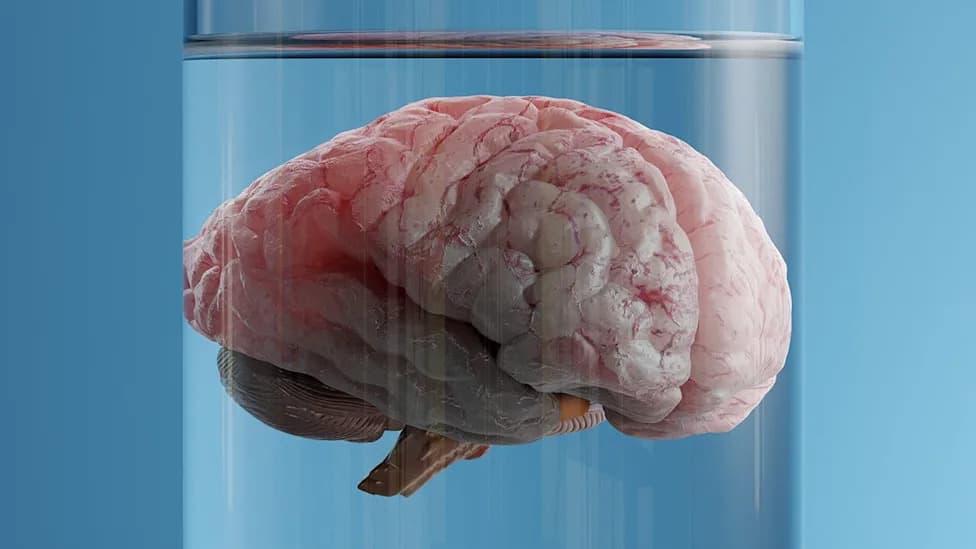
(Mevans/E+/Getty Images)
Neuroscientist Christof Koch of the Allen Institute is urging colleagues to reconsider a foundational assumption: that the brain produces consciousness. Speaking at the Bial Foundation's "Behind and Beyond the Brain" symposium in Porto in April 2026 and in a new unpublished essay shared with ScienceAlert, Koch argues that consciousness might instead be a fundamental feature of reality — with the brain acting as a filter or shaper of experience rather than its generator.
The Puzzle
Despite major advances mapping perceptual, memory, emotional and decision-making circuits, neuroscience still struggles to explain why physical brain activity accompanies subjective experience. As Koch puts it in his essay:
"Nothing in science explains how three pounds of matter, a piece of furniture of the Universe like any other, subject to the same natural laws, can love, hate, dream, imagine, fear or hope for its future."

(Ashley Batz/Unsplash)
Analytic Idealism And A Personal Turning Point
To approach that gap Koch draws on a philosophical framework called analytic idealism, which treats consciousness as a basic feature of reality. Within this view the brain does not create consciousness from inert matter; it filters or structures a broader field of mind. Koch credits a profound, private experience — a dissolving of boundary between self and world while alone on a beach — with prompting him to take these metaphysical questions more seriously. He describes that experience as "the most meaningful of my life" and says it "flipped my view of reality." He is explicit that such experiences are not scientific proof, but he argues they merit consideration rather than dismissal.
Where Physics, Philosophy And Neuroscience Meet
(Dmitry Berdnyk/Unsplash)
Koch points to the history of physics to remind scientists that deep assumptions about reality have changed when evidence demanded it. He is careful not to claim quantum physics solves consciousness; instead he uses physics as an example of how scientific worldviews can shift. Ultimately, Koch urges a reconstruction of our picture of reality that accommodates both objective empirical findings and subjective experience.
Implications For Artificial Intelligence
If consciousness is not merely an emergent property of complex computation, then building machines that are conscious may not follow simply from scaling up algorithms or hardware. Koch does not rule out conscious AI, but he contends that the question cannot be settled by computational sophistication alone; it requires clear theories and empirical tests.

Subscribe to ScienceAlert's free fact-checked newsletter
Next Steps: Make It Testable
Koch acknowledges analytic idealism is a metaphysical framework, not an established scientific theory. The critical task, he says, is to translate these ideas into empirically testable hypotheses that neuroscience can evaluate. His public engagement continues a long-running effort — including a 2016 paper in Nature Reviews Neuroscience and a widely noted 25-year wager he conceded to philosopher David Chalmers in 2023 — to push the field to confront the hard problem of consciousness.
Bottom Line
Christof Koch is not abandoning neuroscience's empirical foundations; he is calling for a broader conceptual conversation. Whether one accepts analytic idealism or not, his challenge emphasizes that solving consciousness may require new metaphysical perspectives, clearer experimental predictions, and interdisciplinary work bridging philosophy, physics and brain science.
Help us improve.