Tsutomu Yamaguchi survived both atomic bombings of Japan: Hiroshima on August 6, 1945, and Nagasaki on August 9. Severely burned and exposed to radiation twice, he recovered, worked as an engineer and translator, and raised a family while facing long-term health challenges. Later in life he became an anti-nuclear advocate, spoke at the United Nations in 2006, and was officially recognized by Japan in 2009 as a "twice-bombed" survivor. He died in 2010 at age 93, leaving poems that bear witness to the aftermath he saw.
Twice Bombed, Twice Survived: The Extraordinary Story of Tsutomu Yamaguchi
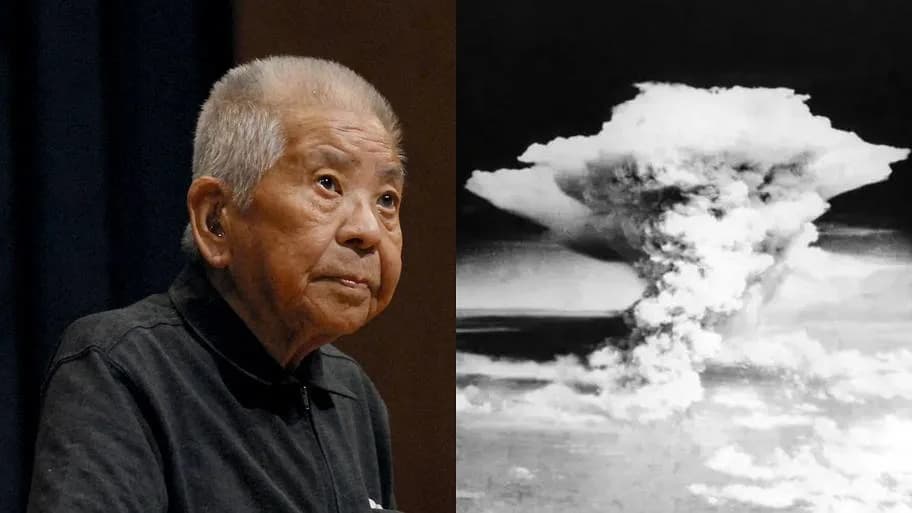
Tsutomu Yamaguchi / Nuclear explosion over Hiroshima, August 6 1945 | Jemal Countess / History / Getty Images
On the morning of August 6, 1945, 29-year-old engineer Tsutomu Yamaguchi was preparing to return home after a three-month business trip to Hiroshima. As he walked to collect his belongings, the sky suddenly seemed to ignite and a deafening blast tore through the air. Yamaguchi dove into a roadside ditch, and a moment later a shockwave hurled him into the air. He had been less than two miles from the point where the atomic bomb detonated over Hiroshima.
When he regained consciousness, Yamaguchi described an appalling scene. "I didn't know what had happened," he later told The Times. "I think I fainted for a while. When I opened my eyes, everything was dark, and I couldn't see much. It was like the start of a film at the cinema before the picture has begun when the blank frames are just flashing up without any sound." The sun was almost completely blotted out by dust and ash, and in the distance he saw a towering mushroom cloud.
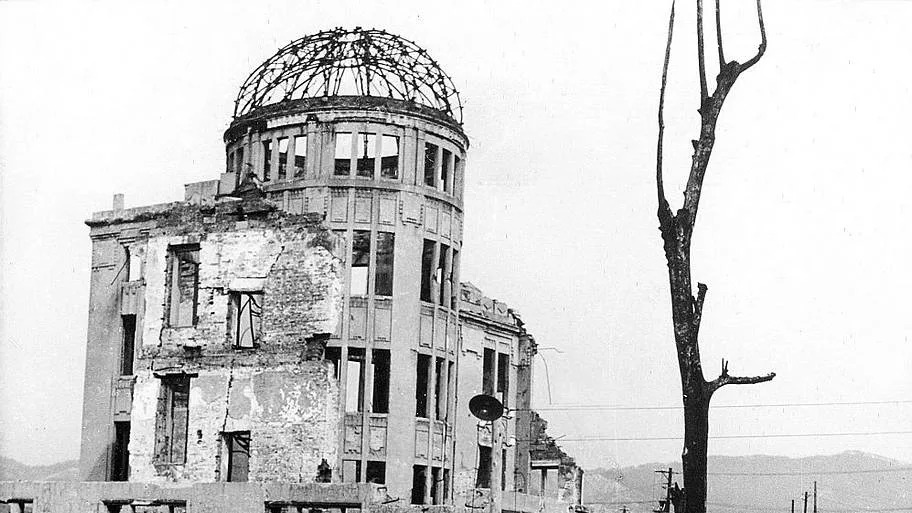
The center of the explosion of the a-bomb in Hiroshima: in the foreground a cemetery | ullstein bild Dtl./GettyImages
Severely burned, Yamaguchi wandered until he found coworkers. They spent a painful night in an air-raid shelter and the next day made for the train station. The streets were littered with bodies and many bridges had been destroyed, forcing him at one point to swim through a river clogged with corpses. Against those odds, he managed to board a train that was miraculously still running and returned to his home city, Nagasaki.
At a Nagasaki hospital he learned what had occurred: the United States had dropped an atomic weapon, nicknamed "Little Boy," on Hiroshima, killing an estimated 70,000 to 80,000 people instantly. A former schoolmate who treated him did not recognize Yamaguchi because his face was so badly burned, and when he reached his family home his mother initially thought he was a ghost.
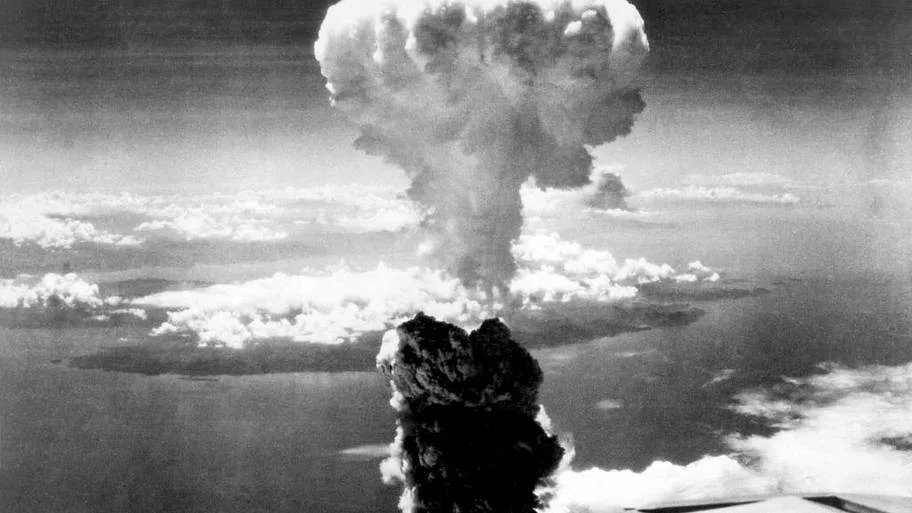
Japan/USA: Nuclear explosion over Nagasaki, 9 August 1945 | Pictures from History/GettyImages
On August 9, Yamaguchi went back to work. His company's director asked him to describe the devastation in Hiroshima but refused to accept that any weapon could cause such destruction. Mid-conversation, the sky went white, windows shattered, and the world collapsed again: a second atomic bomb had been dropped on Nagasaki. Yamaguchi later said he momentarily believed the mushroom cloud from Hiroshima had followed him. The blast tore off his bandages and exposed him to another dose of radiation, yet he survived.
After the second explosion he returned to his wife and infant son. Their house had been destroyed, but both were alive. Yamaguchi later reflected that because his burn injuries from Hiroshima had kept his wife and child outdoors searching for ointment for him, that circumstance may have unexpectedly spared his child's life.
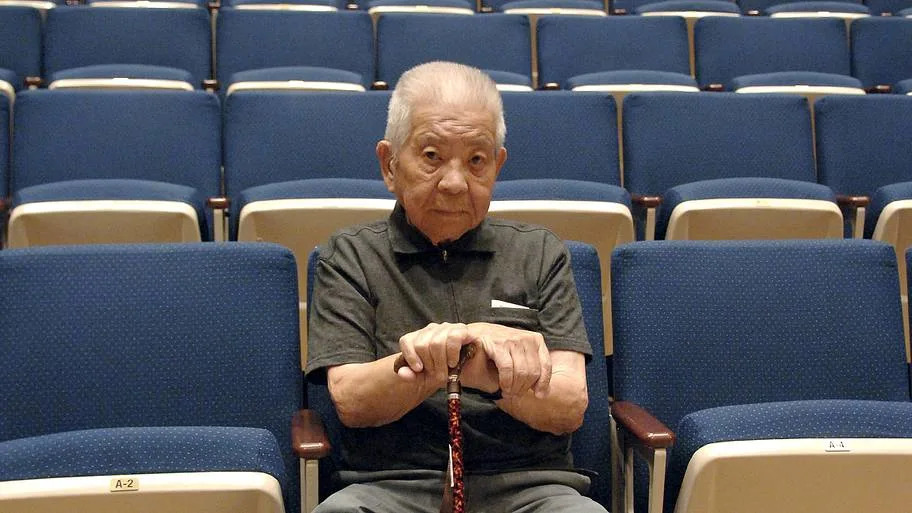
"Nijuuhibaku: Twice Bombed, Twice Survived" Screening and Q&A with Tsutomu Yamaguchi | Jemal Countess/GettyImages
Recovery was long and painful. "Until I was about 12, he was wrapped in bandages for his skin wounds, and he went completely bald," Yamaguchi's daughter Toshiko told The Independent, recalling the years of healing. His wife was soaked in the radioactive "black rain" and suffered poisoning.
Life After the Bombs
Despite the trauma and ongoing health struggles—including an episode of leukemia from which he recovered—Yamaguchi rebuilt his life. He worked as a translator for U.S. armed forces during the occupation, returned to engineering work at Mitsubishi, and raised two more children. His wife died at 88 and his son at 59, both later succumbing to cancer.
For decades Yamaguchi avoided public attention, processing his memories privately and through tanka, a concise form of Japanese poetry. In the early 2000s he joined the anti-nuclear movement and in 2006 spoke at the United Nations in New York, urging disarmament and the preservation of survivors' testimony. In 2009 the Japanese government officially recognized him as a niju hibakusha—a "twice-bombed person." He welcomed the designation as a way to ensure younger generations would learn the truth.
They [corpses] are piled atop one another high.
And the ground will never dry.
It is soaked with the fat of all the people
who burned and died.
Tsutomu Yamaguchi died in 2010 at the age of 93. His life—marked by survival, recovery, and advocacy—remains a powerful, personal testament to the human cost of nuclear weapons.
Help us improve.