The author, who grew up under bombing in Tehran, responds to a reported U.S. strike on a wedding in Kuhestak that wounded more than 60 and killed five, including two children. Drawing on childhood memories of sirens and basements during the Iran–Iraq war, he argues that the cost of military strikes goes beyond immediate casualties — it can turn the sky into a lasting source of fear for children. His visit to the U.S. Space & Rocket Center and later spaceflight transformed his view of rockets into symbols of hope and underlines his plea that policymakers must account for the long-term psychological harm to civilians, especially children.
I Grew Up Under Bombs in Iran — Why Children Carry the Hidden Costs of War
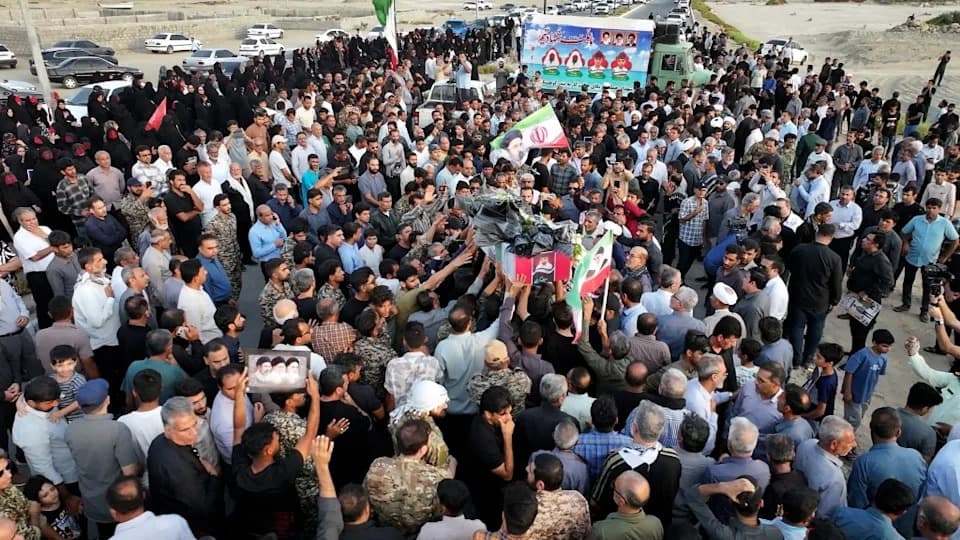
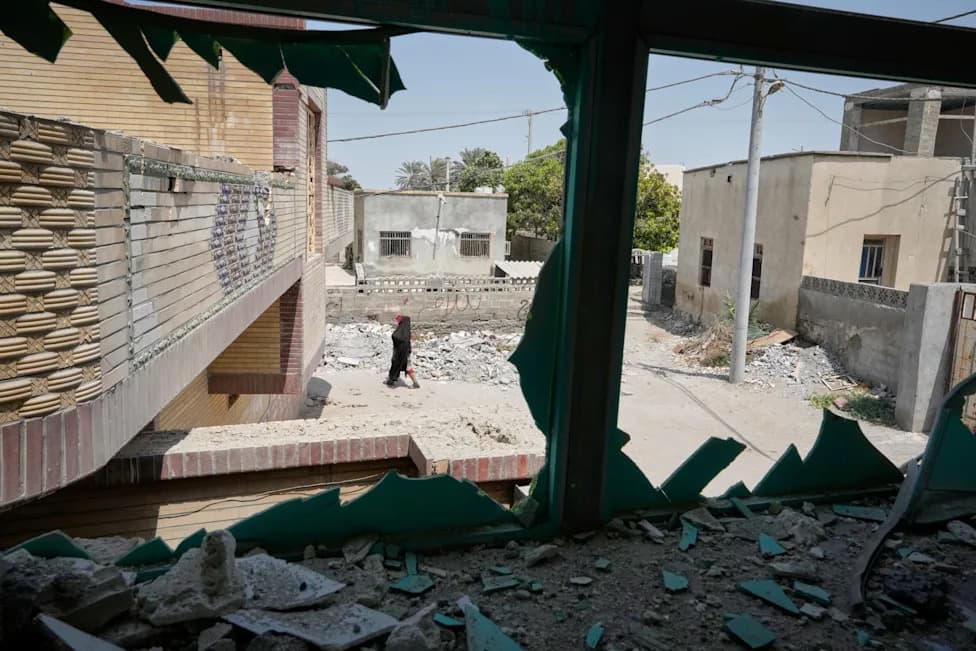
Funeral and burial ceremonies for the victims of an alleged U.S. strike on a wedding party on September 3, 2026, in the village of Kuhestak, Sirik County, in the Hormozgan Province of Iran.
A recent strike in Kuhestak reportedly hit a house during a wedding, wounding more than 60 people and killing five, including two children. Elsewhere in Iran today, other children are hearing war overhead — running with their parents to whatever place feels safest, and decades from now they may still recall exactly what that sound was like.
I know that memory because I was one of those children.
My earliest recollections are of a Pinocchio-themed tent and a siren. It was 1984. My brother and I were small boys in Tehran and Iran had been at war with Iraq for three years — my whole life until then. We played in that tent, and when the sirens started our parents carried us down to the basement. At that age I did not yet understand that people could travel into space; I only knew that things came out of the sky, and when they did the adults were afraid.
Later that year my parents left their professions, the life they had built, and brought us to the United States.
What War Teaches Children
Let me be clear about what I am not claiming: the strategic decisions surrounding Iran are complex, and I am not a diplomat. I am a physician. But I have lived experience that matters: when governments decide to use force, the consequences for children cannot be reduced to a casualty count. The effects of a bomb are measured not only by who dies that day but by what the children who survive carry for years afterward.
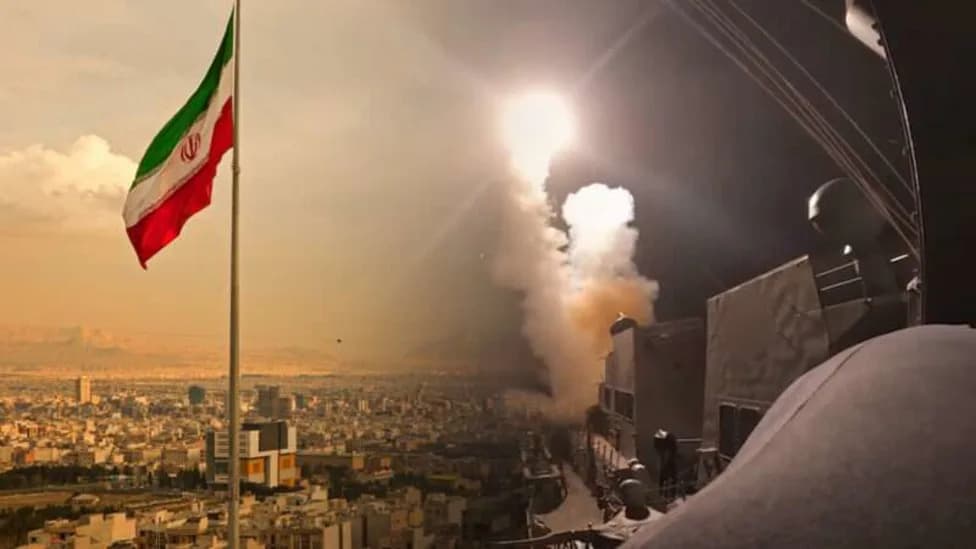
Beyond physical destruction, war reshapes a child's sense of safety. It can make the sky an enemy. For a small child there is no geopolitics, no military objective — only the knowledge that danger comes from above and that the adults meant to protect them are sometimes powerless. That cost is rarely factored into public debates about strikes, but it is real: I carried that fear out of Iran with me, and it took years to undo.
From Fear To Possibility
When I was six, my parents drove me two hours from Nashville to the U.S. Space & Rocket Center in Huntsville, Alabama. Seeing a Saturn V for the first time changed something in me: I finally understood that objects sent into the sky can be vessels of exploration and hope, not only instruments of destruction. That afternoon helped set me on a path to medicine, and decades later, on August 29, 2024, I strapped into a rocket in West Texas, passed above the Kármán line and looked down at Earth.
From space I could not make out borders, the lines people die over. The planet is one continuous expanse beneath a thin blue skin — and every person is there together.
That view is familiar to many who have flown above the atmosphere and it is not mere sentiment: it is an observation that convinced me those who decide to use force owe it to the people below to see them clearly and account for them humanely.
Who Pays the Price
The children in Iran today are not the government. They did not choose policies or leaders. Some may be hiding in basements right now; many, I hope, will grow up. They will not remember our policy debates. They will remember the sound that came from the sky, being carried to safety, and the faces of adults who could not stop what was happening.
Military leaders and policymakers must weigh threats and security needs, but protecting innocent life — especially children — cannot be an afterthought. The psychological and developmental harms children endure survive long after casualty statistics are tallied. More than 40 years later I still recall the siren, the basement and the fear on the adults' faces.
Over time I learned to see the sky differently. A rocket that once represented terror became the vehicle that carried me above Earth. The children living under the sounds of war today deserve the same chance to grow beyond fear. In this moment we are choosing whether the sky will be a source of dread they spend their lives trying to escape.
Years from now, many of them will still remember what we chose.
Eiman Jahangir, MD, MPH, is a professor of medicine and radiology in Nashville, Tennessee, and the author of the bestselling book A Heart for Space: An Astronaut's Guide to Achieving the Impossible. On August 29, 2024, he became the first Iranian-American man to travel to space, flying aboard Blue Origin's New Shepard (NS-26).
The views expressed in this article are the writer's own.
Help us improve.