A recent study used digital reconstructions of endocasts from three preserved dodo skulls to challenge the bird’s reputation for stupidity. Scans of two complete crania show a forebrain similar in size to modern pigeons, implying comparable cognitive potential. However, much smaller optic lobes and stronger olfactory imprints suggest adaptations for low-light foraging and a reliance on smell and touch. The dodo’s tame behavior likely reflected a predator-free environment, not low intelligence.
Inside the Not-So-Dumb Mind of the Dodo: New Scans Reveal Surprise Sensory Skills
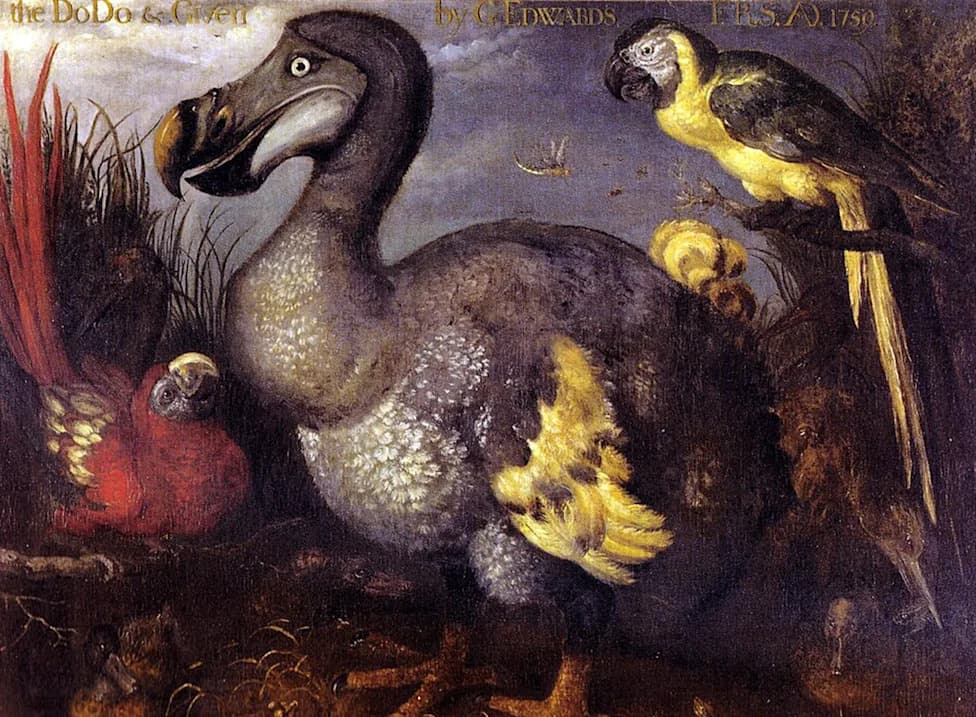
European sailors who first encountered the dodo on Mauritius labeled it awkward and fearless, and Carl Linnaeus later listed it as Didus ineptus—a name that reinforced the bird's reputation for clumsiness. A new digital study, however, shows the dodo may have been far more specialized and capable than that unflattering label suggests.
Researchers at the University of Lethbridge scanned three preserved dodo skulls from museum collections in Denmark and the United Kingdom, including two of the only complete crania known to science. The internal cavities of those skulls preserved endocasts—imprints left by the brain—which the team digitally reconstructed and compared with endocasts from 36 living pigeons and doves (order Columbiformes).
“Although the dodo's brain disappeared centuries ago, it left an imprint on the inside of the skull,” said co-author Christy Anna Hipsley of the Natural History Museum Denmark. “By digitally reconstructing those spaces and comparing them with the brains of living birds, we can begin to piece together how the dodo sensed, behaved, and interacted with the world around it.”
The reconstructions revealed several notable features. The dodo’s forebrain—associated with memory and higher cognition—was proportionate in size to that of modern pigeons, which are known for impressive cognitive skills such as long-term image recognition. This suggests the dodo’s apparent tameness toward 16th-century sailors likely reflected a lack of predators on Mauritius rather than simple-mindedness.
At the same time, the dodo showed sensory specializations: its optic lobes were more than 3.5 times smaller than those of pigeons, a pattern consistent with vision adapted to low-light conditions (dawn, dusk, or night). The dodo’s heavily domed skulls resembled those of some owls, and the olfactory bulb imprints point to a relatively strong sense of smell. A pronounced upper beak suited for probing further supports the idea that dodos foraged in dim light, relying on smell and touch as well as vision.
Far from being merely inept, the available anatomical evidence indicates the dodo had a brain organization and sensory toolkit compatible with complex and specialized behaviors. The extinct species, now known as Raphus cucullatus, vanished by 1662, but modern digital reconstructions of its skulls are helping scientists better understand how it lived and perceived its environment.
Lead image: Roelant Savery / Wikimedia Commons
Help us improve.